
Deep Dive: Ludlow Property Group & Self-Storage in America's Leisure Towns
Inside self-storage's most overlooked opportunity
Inside self-storage's most overlooked opportunity

Meet the 100 people shaping the future of the built world, Part II

Meet the 100 people shaping the future of the built world
Inside self-storage's most overlooked opportunity

Don’t miss Thesis Driven’s Spotlight interview with the Ludlow team next Wednesday, April 15th. We’ll be exploring how they’ve built a self-storage platform around America's most supply-constrained leisure towns. Register here
In 1962, Sam Walton opened his first Walmart in Rogers, Arkansas, a town of 6,000 people that every major retailer had written off as too small to matter.
His thesis was simple: small-town America was full of underserved consumers, and the absence of competition meant that a well-run operation could dominate entire markets. Over the next three decades, Walton built the world's largest retailer by systematically rolling up small towns before anyone else took them seriously.
Sixty years later, that playbook is unfolding in self-storage.
The $50 billion self-storage industry has spent the past decade consolidating in metros and suburbs, where REITs and institutional capital have professionalized operations, compressed cap rates, and bid up land. What has gone almost entirely untouched is a different kind of market altogether: the leisure towns scattered across America's mountain corridors, lake regions, beach communities, and island markets.
These are places like Vail, Crested Butte, Lake Tahoe, and Hilton Head, communities built around tourism, seasonal population swings, and severe constraints on new development. Their storage facilities tend to be owned by local operators who inherited them or built them decades ago, running them with handwritten ledgers and word-of-mouth marketing. Nearly 99% of storage facilities in these markets are independently owned.
Ludlow Property Group, founded by Michael Forrest and Jason Udoff, is the only institutional platform designed to acquire, operate, and develop self-storage exclusively in these supply-constrained leisure markets. With 35 properties comprising more than 6,000 units and $125 million in assets under management, the firm has built a portfolio with no direct institutional competitor.
In this deep dive, we cover:
In major metros, institutional operators have professionalized virtually every aspect of the self-storage sector: dynamic pricing, digital marketing, sophisticated revenue management. New supply has flooded those markets in recent years. Cap rates have compressed, and most of the easy gains have already been captured.
But the dynamics in leisure towns are fundamentally different.
These markets—ski towns in Colorado and Utah, mountain communities in the Smokies and the Sierra, coastal enclaves in the Carolinas and New England—share a set of characteristics that create natural moats around existing supply:
The result is structural undersupply that no amount of capital can easily solve.
Even in the rare case where a developer secures an entitled site, the timeline from permitting to certificate of occupancy can stretch to three or four years, an eternity in a market where existing owners face no competitive pressure to improve.
"In most of these towns, the barriers to building new storage aren't cyclical—they're permanent," says Michael Forrest, Ludlow's co-founder and Managing Partner. "You can't manufacture more land in a valley surrounded by national forest. The supply picture five years from now is going to look a lot like it does today."
Meanwhile, demand in these markets is growing. Remote work has driven a sustained migration toward lifestyle destinations, swelling both permanent and seasonal populations. Second-home ownership is rising. And the storage needs are acute. Residents carry seasonal gear—skis, boats, off-road vehicles, hiking and camping equipment—but often live in homes built without garages or adequate closet space. It’s the legacy of an era when these were modest vacation towns rather than year-round communities.
The mismatch between available living space and the demands of expanding recreational lifestyles keeps growing.
If the supply picture in leisure towns favors incumbents, the ownership picture favors acquirers.
The typical storage facility in a resort or recreational market was built in the 1980s or 1990s by a local landowner who recognized that a gravel lot and some metal buildings could generate steady cash flow with minimal oversight. Many of these operators are now in their sixties and seventies, running their facilities the same way they always have: fixed rents that haven't moved in years, no website, a phone number that may or may not get answered, and a padlock-and-key system that predates the smartphone era.
The operational gap between these facilities and an institutionally managed property is enormous. Revenue management software, paid search campaigns, tenant insurance, ancillary services—none of it exists in most of these operations. Formal market rent surveys are rare. Unit pricing is set by intuition and inertia, not by demand. The result is a portfolio of assets that are generating a fraction of their potential income, simply because the operator never had the tools, the training, or the incentive to capture it.
These are also aging owners with few succession options.
The self-storage brokerage ecosystem in small towns is thin. Many owners don't know what their facilities are worth, and most have never been approached by a credible buyer. "These are relationship-driven transactions," Forrest explains. "You're sitting across the table from someone who built the facility with their own hands. They want to know the buyer will take care of it. That kind of trust takes time to build, and it doesn't scale through a broker blast."
The same characteristics that protect leisure-town storage from new supply also create operational challenges that have deterred institutional buyers.
Recruiting on-site management is difficult and expensive in resort markets, where ski instructors and restaurant workers already compete for the same limited housing stock. The typical facility runs 50 to 200 units, too small for most institutional operators to underwrite individually, and too remote to staff conventionally.
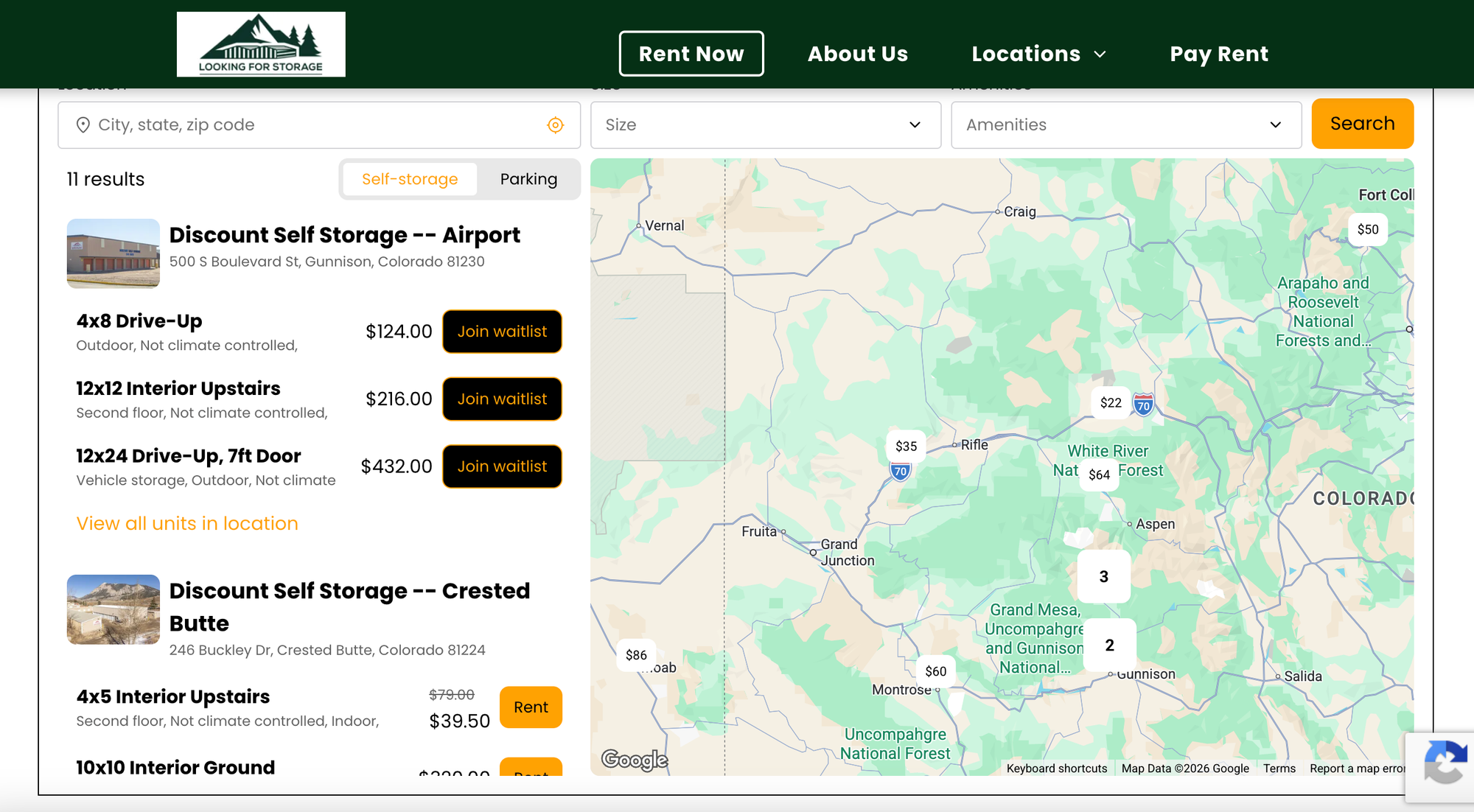
Ludlow built its platform specifically around these constraints. The firm operates its entire portfolio through Looking For Storage, a fully virtual property management subsidiary that eliminates the need for on-site staff altogether. Every facility runs on a centralized technology stack: cloud-based access control, remote monitoring, automated billing, and a call center that handles tenant inquiries across the portfolio. "We don't need to convince someone to manage a 100-unit facility in a ski town where a one-bedroom apartment costs $3,000 a month," says Jason Udoff, co-founder and CIO. "The whole model is built so we never have to."
This remote-first infrastructure allows Ludlow to operate efficiently at a scale that would be uneconomic for a traditional manager. It also creates a repeatable acquisition playbook.
When Ludlow acquires a facility, it immediately brings in:
The operational lift is substantial, and the reason is simple: the baseline is so extraordinarily low. Most sellers have never run a Google ad, tested a rate increase, or offered insurance to a tenant.
Beyond acquisitions, Ludlow has demonstrated the ability to develop ground-up in these constrained markets. Its Vail Airport Storage project—569 units totaling 85,000 square feet—represents one of the few new institutional-quality storage developments in a major Colorado ski corridor. The firm navigated the entitlement process, managed construction in a high-cost environment, and delivered a purpose-built facility designed for the specific tenant profile of the Vail Valley. Projects like this require deep local knowledge and years of relationship-building with municipal stakeholders, commodities that most institutional developers direct elsewhere.
The Gunnison Valley is where Ludlow’s thesis becomes concrete. The firm has assembled a portfolio of storage facilities serving Crested Butte, one of Colorado's most supply-constrained resort markets. Crested Butte sits at 8,900 feet in a narrow valley surrounded by Gunnison National Forest. Buildable land is scarce, permitting is onerous, and the nearest metro of any size is four hours away.
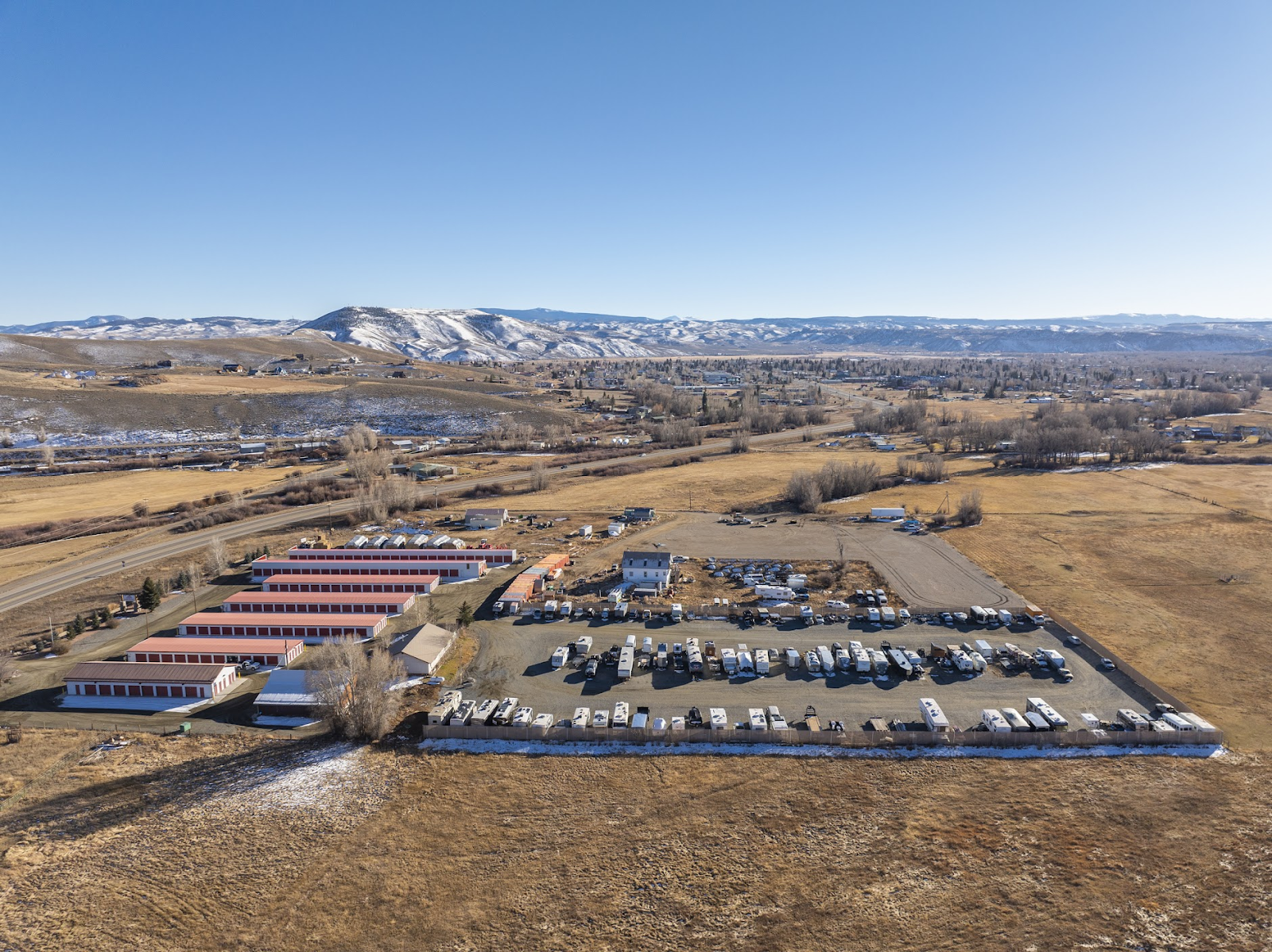
When Ludlow acquired its Gunnison Valley properties, they exhibited the hallmarks of the typical leisure-town storage facility: below-market rents, no online presence, minimal operational infrastructure, and long-tenured occupants who had never been asked to absorb a meaningful rate increase. The average tenant stays roughly six years, compared to a national average closer to one, a gap that reflects the stickiness of storage tenants in communities with few alternatives and operators who never implemented active revenue management.
Ludlow's value-add program produced measurable results. Within the first year of ownership, the Gunnison Valley portfolio achieved a 36% increase in revenue, driven by a combination of rate optimization on existing tenants, a digital marketing push that filled vacant units, and the introduction of tenant insurance. Performance exceeded the original underwriting by 23%, and the firm returned 12% of invested capital to its partners from operations alone, before any realization event.
"The thesis isn't complicated," Forrest says. "You're buying facilities where the previous owner never had the tools or the incentive to optimize. You're layering on professional management in a market where new supply functionally cannot be built. And your tenants stay for years because there is simply nowhere else for them to go. That combination is rare in real estate."
Ludlow has identified more than 2,000 storage facilities across its target leisure markets, representing an addressable opportunity north of $6 billion.
The vast majority remain independently owned by families, small-town entrepreneurs, and retirees who built a facility on land they already owned and operate it as a low-maintenance income stream. Many of these owners are aging out of the business with no succession plan. Institutional penetration in these markets remains negligible.
The opportunity bears a structural resemblance to other fragmented real estate niches that have been consolidated over the past two decades: manufactured housing, RV parks, and medical office buildings. Patient capital and operational specialization eventually displaced a patchwork of amateur owners. In leisure-town storage, the barriers to entry are even higher, the competitive set is even thinner, and the demographic tailwinds are stronger. There is no Public Storage or Extra Space coming for a 75-unit facility outside Steamboat Springs. The major REITs have built their platforms around dense suburban markets with hundreds of thousands of potential tenants, and a town of 5,000 permanent residents will never register on their acquisition screens.
For Ludlow, the path forward is disciplined accumulation. The firm is not chasing growth for its own sake, but is methodically building density within specific geographic corridors where it already has operational infrastructure and local relationships. Each acquisition adds incremental efficiency to the platform. Each market it enters becomes harder for a competitor to replicate.
The network effects of the virtual management model mean that the marginal cost of adding a facility decreases as the portfolio grows.
"This is a business where being early matters more than being big," Udoff says. "There are only so many facilities in these towns, and most of them will only trade once in a generation. We want to be the buyer when they do."
Sam Walton's insight, six decades ago, was that the most durable opportunities are often hiding in places serious capital hasn't bothered to look. Ludlow is making the same bet, in the storage units and gravel lots of small towns tucked into mountain valleys and along rural coastlines.
Don’t miss Thesis Driven’s Spotlight interview with the Ludlow team next Wednesday, April 15th where we’ll explore their self-storage platform and discuss America's most supply-constrained leisure towns. Register here

Meet the 100 people shaping the future of the built world, Part II

How Angeleno is structuring deals and executing projects in a market where affordable housing is notoriously difficult to build

What marketing and leasing audits reveal about multifamily's hidden performance problem


Covering the future of real estate and the people creating it
