
The Thesis Driven Innovation 100, 2026 | #51-100
Meet the 100 people shaping the future of the built world
Meet the 100 people shaping the future of the built world

A 90-minute tactical workshop for real estate professionals and vendors who want to get the most out of conferences
After years of false starts and regulatory confusion, a few serious projects are pointing toward what this technology can actually deliver for real estate

Tracking the past three months of notable land use and zoning decisions


Real estate is—and will always be—a local business. The direction of our built environment is not driven by big decisions in Washington but by thousands of little decisions made every month by city councils and planning boards.
So we’ve partnered with ReZone, a Shovels company, on a quarterly feature capturing the most notable, impactful, and unique local land use decisions made over the past 90 days. The decisions offer a lens into where urban America is heading—and, just as importantly, where it’s not.
Today’s letter will feature the acceleration of cities banning algorithmic “price-fixing,” El Paso, TX’s implementation of Missing Middle Housing, Atlanta, GA nearing the elimination of minimum parking requirements, the struggle of state vs. city control, and big projects including 10,000+ seat stadiums, turning federal land into 6,000+ homes, and the largest rezoning in NYC in the last two decades.
Let’s dive in.
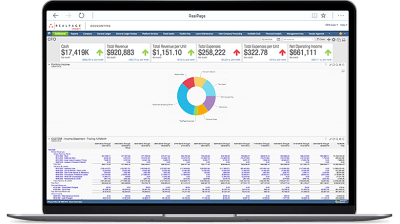
A late-2025 Justice Department settlement with RealPage—a provider of revenue management software for the multifamily sector—is now setting a new federal baseline for how algorithmic rent-setting tools can legally operate. That enforcement action is cascading rapidly through state and local policy.
As recently as mid-2025, ReZone was tracking only a handful of cities with explicit bans on rental price-fixing software—primarily San Francisco, Berkeley, Philadelphia, Seattle, and Minneapolis. But over the past three months, there have been a wave of additional cities enacting similar prohibitions.
New York, California, and the city of Portland have now effectively banned or severely restricted algorithmic rental price fixing as well.
At the federal level, the DOJ settlement establishes a new compliance floor for software providers and their customers. Several operational constraints now apply:
California: Broad Antitrust Expansion (AB 325)
In October 2025, California took a sweeping approach by amending the Cartwright Act (the state’s antitrust statute). Unlike other bills that target housing specifically, California AB 325 targets the mechanism itself: the use of a “common pricing algorithm” across competitors.
The bill raises legal exposure for operators in several ways. Plaintiffs no longer need to rule out the possibility of “independent action.” They only need to demonstrate that a conspiracy to restrain trade is plausible, significantly lowering the threshold for civil cases to survive early dismissal. And the law explicitly prohibits the use of any algorithm that “coerces” another party to adopt a recommended price. Paired with SB 763, corporate violators now face potential criminal penalties of up to $6 million per violation.
New York: The First State-Level Housing Ban (S.7882)
While California approached the issue through broad antitrust reform, New York became the first state to specifically ban algorithmic rent-setting in residential housing as of November 2025.
The law prohibits any software with a “coordinating function”—defined as collecting data from two or more unaffiliated landlords in order to recommend rental prices or lease terms. Both the software provider and the landlord can be held liable for violations. The law applies a “reckless disregard” standard, meaning ignorance is not a defense. Landlords have an affirmative duty to understand if their software uses pooled competitor data.
The only exceptions apply to affordable or government-regulated housing programs.
Portland: The "Smoky Back Room" Ordinance
Portland joined the list of cities banning such tools as RealPage on November 19, 2025. Its ordinance (Code Section 30.01.088) is notable for its direct rhetoric regarding the intent of these technologies.
The City Council’s findings were blunt:
“This is the algorithmic equivalent of gathering the city’s landlords in a conference room to share sensitive competitor data... The algorithm acts as a middleman, and not the free market.”
Portland’s ban broadly restricts both the sale and use of these tools for setting rents or occupancy levels, with enforcement relying on civil penalties and tenant-initiated legal actions.
From eliminating parking requirements to complete zoning overhauls, cities and states are experimenting aggressively with policies designed to unlock “missing middle” housing. While much of this activity is aimed at making it easier to build small-scale housing, the outcomes—and political reactions—remain mixed.
El Paso, TX: Implementing State-Mandated Density & Adaptive Reuse
On November 18, 2025, the City Council voted unanimously (8–0) to adopt a suite of ordinances (019813 through 019816) that fully integrate Texas Senate Bills 15 and 840 into the city code.
The decision represents a significant deregulation of the city’s zoning (Title 20) and subdivision (Title 19) standards, explicitly designed to encourage smaller lots, higher densities, and more flexible multifamily development.
The amendments strip away discretionary review for projects that comply with the new state mandates. New apartment and mixed-use developments that meet baseline requirements no longer require a “Detailed Site Development Plan” or a special permit.
Under SB 840, the definition of “apartment” was broadened to begin at three units (down from five), while separate definitions for triplexes and quadplexes were removed or consolidated, effectively liberalizing smaller multifamily formats. For compliant multifamily and mixed-use projects, the city raised the maximum height to 45 feet (previously 35 feet) and the maximum density to 145 units per acre.
And to spur starter home construction under SB 15, the city created new “small lot” standards for tracts of five acres or more, allowing single-family lots as small as 2,250 square feet with a 30-foot minimum width.
The revised code also explicitly prohibits the city from requiring Traffic Impact Analyses (TIA) or additional parking when converting commercial buildings (office, retail, or warehouse) that are more than five years old into residential use.
Taken together, these changes materially lower the barrier to entry for gentle density. By reducing parking mandates to one space per unit for both small-lot homes and apartments, El Paso is removing one of the largest financial hurdles to middle housing development.
Atlanta: Moving Toward Citywide Parking Reform
Atlanta is considering eliminating off-street parking minimums citywide. While it previously removed parking minimums within its popular BeltLine Overlay District, the City Council is now moving to take that policy citywide as part of its "Zoning 2.0" rewrite.
The legislation, sponsored by Councilmember Jason Dozier, explicitly links parking mandates to the city’s inability to deliver missing middle housing typologies, citing cottage courts and small multifamily buildings as casualties of the city’s 40-year-old zoning code.
State vs. City Control
Most policymakers agree that expanding missing middle housing is essential to addressing housing affordability and supply constraints, but the paths to achieving that goal remain highly contentious.
While we’ve previously reported on state-vs.-local control issues in California, similar tensions are now surfacing in smaller communities across the country. One illustrative case is Sherwood, OR.
In our Q3 report, we covered Oregon’s liberalization of ADUs, but the state has also moved aggressively on broader missing middle housing reforms. HB 2001 established the Oregon Housing Needs Analysis, which allocates specific housing production targets to cities with populations over 10,000. If cities fail to meet those targets or adopt acceptable compliance strategies, the state may intervene, placing municipalities into a “housing acceleration program” or issuing enforcement orders requiring code amendments.
The state didn't stop there. Subsequent legislation has further tightened the leash on local planning boards:
The Backlash: Sherwood, OR
While these state-level mandates are intended to reduce red tape and regulatory friction, in communities like Sherwood they are increasingly viewed as a bypass of the local democratic process.
Sherwood Mayor Tim Rosener has publicly argued that the state is "cutting local residents out of the democratic process" by removing public hearing requirements and reducing notification radii for new developments from 1,000 feet to just 100 feet.
Sherwood is going to the polls on January 13, 2026, to vote on two measures designed to reassert local authority. Measure 34-347 would require at least one public hearing for major residential developments, effectively pushing back against state-mandated streamlining. And Measure 34-348 would strengthen city control over annexations, ensuring that Sherwood—rather than the state—dictates how municipal boundaries expand.
Oregon is testing the limits of how far a state can go in stripping local control to solve a housing crisis. While developers cheer the predictability created by SB 974 and SB 1537, local officials are signaling that they will not give up their zoning powers without a fight. Watch for the results of the Sherwood election to set a precedent for other similarly situated municipalities across the Pacific Northwest.
Stadiums Are Becoming Mixed-Use Destinations
Would you like to live next to a stadium? As an avid soccer fan, I certainly would.
Living adjacent to a stadium—once considered undesirable—is increasingly becoming part of a broader mixed-use lifestyle proposition. Cities across the country are now pairing stadium construction with large-scale mixed-use redevelopment of surrounding parking assets.
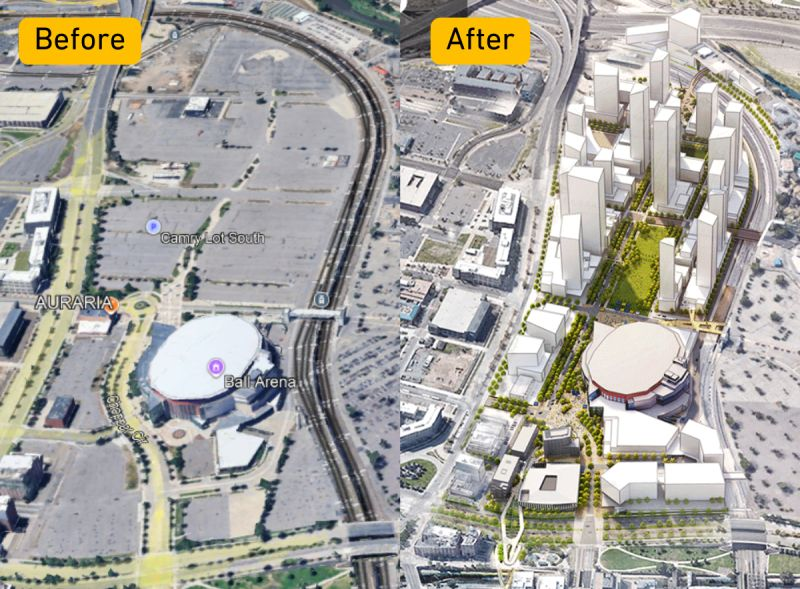
For example, Kroenke Sports & Entertainment — dubbed by Forbes the most valuable sports empire in 2025 — had its development agreement amended for 57-acre Ball Arena Project in downtown Denver, CO.
The revised plan includes approximately 6,000 residential units, with 18% (1,080 units) designated as affordable, alongside a full mixed-use district replacing what had previously been surface parking.
Las Vegas is Turning Federal Land into 6,000+ Homes
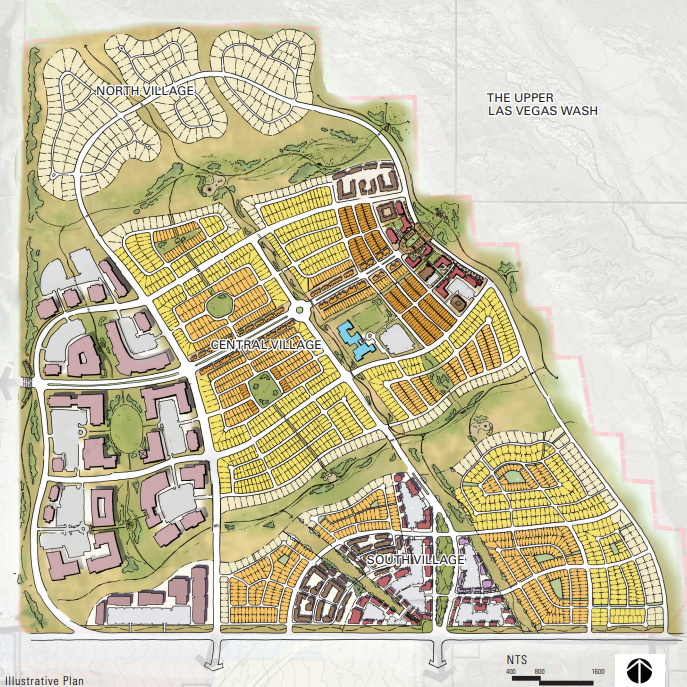
On November 19, 2025, the Las Vegas City Council approved the entitlements for "Monument Hills," a 940-acre master-planned community located directly adjacent to the Tule Springs Fossil Beds National Monument.
While a 6,000-unit subdivision is big news on its own, the mechanism behind this deal is what makes it a land-use case study. This wasn’t a standard private land acquisition; it was a direct sale from the Bureau of Land Management (BLM) to the city and developer, bypassing the typical public auction process.
To qualify for a direct sale under the Federal Land Policy and Management Act of 1976, the project had to demonstrate a specific public benefit. The approved development agreement (25-0286-DIR1) delivers that requirement through targeted housing mandates. Specifically, the developer must reserve 290 units for Air Force personnel stationed at nearby Creech and Nellis bases, creating an integrated military housing component within the community.
Another 300 units are earmarked for households earning up to 150% of the Area Median Income (AMI).
The decision included a 30-year regulatory "code freeze," a provision that many developers would no doubt appreciate. This clause freezes the city’s Unified Development Code (Title 19) as it exists today, meaning that even if zoning regulations evolve materially in future decades, Monument Hills will continue to vest under the 2025 framework.
NYC Approves Largest Rezoning in Decades
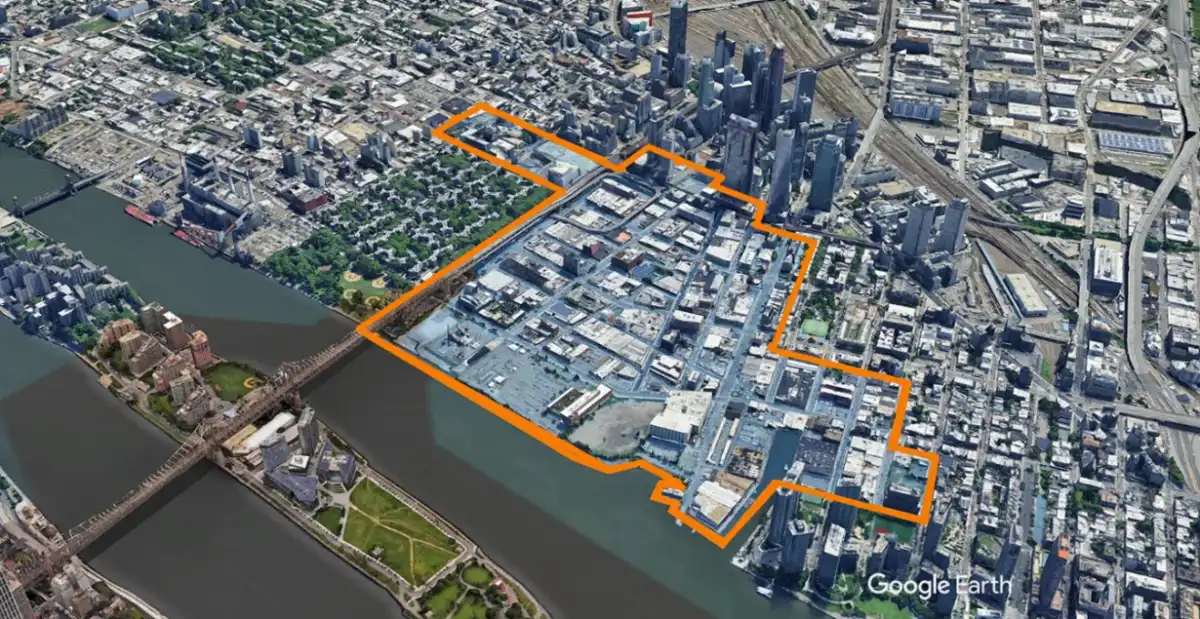
On November 12, 2025, the New York City Council passed the OneLIC Neighborhood Plan, authorizing the rezoning of approximately 54 blocks in Long Island City, Queens.
This is significant not just for its scale—nearly 15,000 new homes and 3.8 million square feet of commercial and industrial space—but for its historical significance. It marks the fifth neighborhood rezoning approved by the council in the last two years and stands as the single largest land use action in New York City in more than two decades.
Development at this scale requires infrastructure investment, and the council leveraged its negotiating authority to secure substantial capital commitments.
In exchange for the added density, the plan delivers several major public benefits. The rezoning includes approximately 4,350 permanently affordable homes delivered through Mandatory Inclusionary Housing and on publicly controlled sites. It also funds more than 1,300 new school seats alongside extensive sewer and utility upgrades. Public-realm investments include restoration of the park beneath the Queensboro Bridge, new waterfront esplanades, and upgraded pedestrian lighting for safety.
New York is demonstrating that the traditional "grand bargain" rezoning model is still a viable tool. By bundling massive housing density with tangible quality-of-life improvements—in schools, parks, and safety—the city has reinforced a template for how mature urban markets can densify without overwhelming existing infrastructure.

Tackling NYC's biggest challenges in a live event on December 4th


Tracking the past three months of notable land use and zoning decisions

Driverless technology is crossing the chasm to must-have while our politicians doze (at best)
Covering the future of real estate and the people creating it