
The Thesis Driven Innovation 100, 2026 | #51-100
Meet the 100 people shaping the future of the built world
Meet the 100 people shaping the future of the built world

A 90-minute tactical workshop for real estate professionals and vendors who want to get the most out of conferences
After years of false starts and regulatory confusion, a few serious projects are pointing toward what this technology can actually deliver for real estate

How purpose-built rentals designed for a single tribe–like Birdie Houses’ group golf trips–can triple ADRs


Short-term rentals spent the last decade trying to look like hotels—bigger housekeeping networks, glossy booking apps, and a faceless promise of “professional management.” The result? Thin margins, a 97 percent drawdown in Vacasa’s share price, and guests still scrolling endless listings that rarely solve the reason they’re traveling.
Now, a new playbook is emerging: STR micro-brands that anchor around a single, passionate user group, bake that tribe’s rituals into the real estate, and funnel direct demand through shareable moments.
See Exhibit A: Birdie Houses.
Few travel rituals ignite a group chat—yet implode at checkout—like the annual buddy-golf trip. More than 12 million Americans now travel to play golf each year, yet most foursomes end up in generic Airbnbs miles from the clubhouse, juggling tee-time logistics and late-night Ubers.
Birdie Houses solves the pain at the property level: Custom-designed rental homes with 6,000 square foot, tour-quality putting greens outside, Foresight & PuttView simulators inside, tee-time concierge on speed dial, and gear partnerships with Callaway and Foresight.
Most importantly, the model unlocks $1,390 ADRs—2.4X local comps—at 75 percent gross margins, with 94 percent of bookings direct thanks largely to its social media presence.
Birdie’s success signals a broader shift: design for the tribe first, let social content replace OTAs, and capture both nightly cash flow and long-term appreciation through an opco/propco structure. Cardinal Lands is doing this with Aspects, creating group mountain retreats for nature-lovers and ski groups. While Stomp Capital has been delivering Edgecamp Sporting Clubs with a unique focus on the kite-boarding community.
In today’s Thesis Driven letter we’ll explore:
Thesis Driven is a reader-supported publication. To receive new posts and support my work, consider becoming a free or paid subscriber.
Roll the tape back to 2018-2021, when venture decks promised to “do for Airbnbs what Marriott did for hotels.” Capital flooded in: Vacasa alone raised more than $500 million and struck a SPAC deal that set its equity value at $4.5 billion—for a business that didn’t own a single bedframe.
The recipe sounded simple:
What got lost in the blitz was the guest. Generic labeling didn’t solve the real pain points of family reunions, bachelor weekends, or ski crews—it just added a corporate layer (and fee) to inventory consumers could already find on Airbnb.
By 2023 the cracks were hard to ignore:
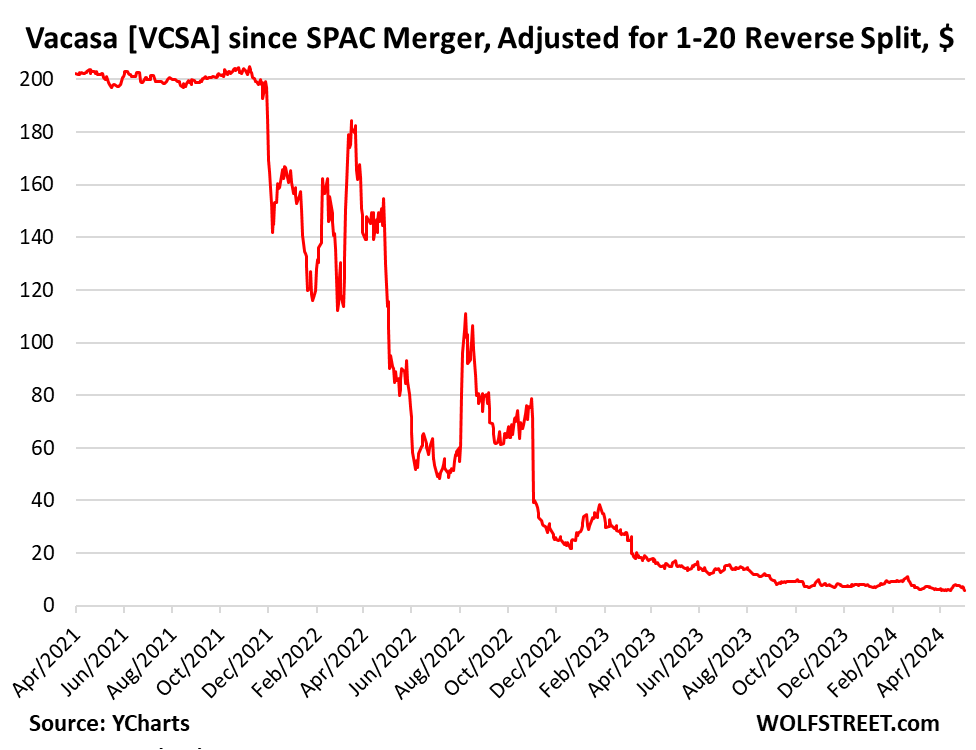
Financial gravity arrived on schedule. Vacasa’s shares have lost 97% of their value since the 2021 listing, endured two reverse splits, and were forced into a fire-sale to rival Casago at $128 million—a 97 % haircut from the SPAC headline number. Revenue fell 18% year-over-year in 2024, active listings shrank, and thousands of employees were laid off as the company scrambled to cut costs.
The lesson: professionalization alone creates scale, not loyalty. Without a clear “why” for guests—or a margin-expanding direct channel—the model devolves into a low-margin cleaning service wearing a tech hoodie. That vacuum is precisely where user-obsessed micro-brands like Birdie Houses are now driving wedges.
Birdie Houses didn’t start with a spreadsheet. It started with a truth every golfer knows: the real magic of a buddy trip lives in the gaps between tee times—putting around the green at dusk, arguing over carry distances on a simulator, and swapping clubs and stories while someone mans the grill.
So founder Tom Evans designed the house to host the ritual, then built a media flywheel to make sure every would-be foursome saw it.
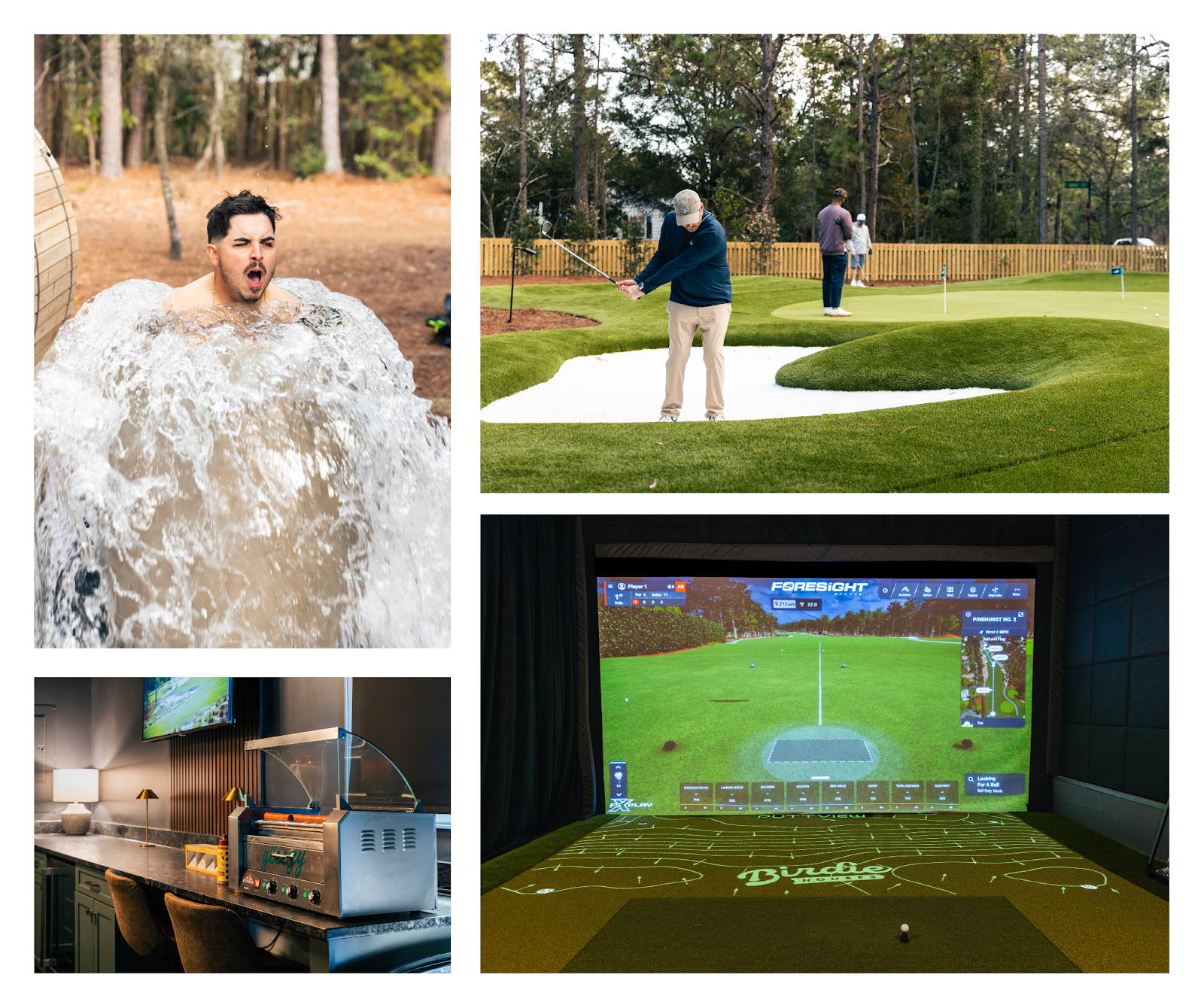
Each custom property is less a “vacation rental” than a private short-game campus:
A video tour on Birdie’s Instagram shows how this all comes together.
That hardware is expensive—unless the brand turns it into content. Birdie’s first house in Pinehurst turned an Instagram reel of a downhill 18-footer into 2.8 million views, part of 4.4 million cross-platform impressions last month. The company grew its email subscribers from 2,000 to 11,000 since January, and the marketing engine funneled 94% direct bookings, sidestepping OTA fees and ownership of guest data.
The economic tailwind is immediate: $1,390 ADR—2.4X the $575 market average for comparable five-bedroom homes—at a 75% gross margin. Even the Myrtle Beach property, still under renovation and photo-less, has $65k in future revenue on the books, with reservations stretching into October 2026.
Behind the scenes runs an opco/propco stack that widens the spread. Birdie signs lease-option deals that secure control for modest upfront equity, proves performance, then “graduates” each house into a JV capitalized propco—capturing real-estate upside—while the operating company scales brand, content, and ancillary services (tee-time fees, merchandising) at fat incremental margins. The goal is to design and own a portfolio of 30 properties over the next five years.
The result is a virtuous loop: outrageously on-brand amenities → shareable moments → low-cost acquisition → premium ADRs → cash-flow data that unlocks cheaper real-estate capital. It’s professional management, yes—but with a soul, a story, and an ownership structure built to compound both.
If Birdie Houses feels intuitive, that’s because its playbook mirrors the most successful direct-to-consumer brands of the last decade—only transplanted into real estate. Strip away the golf jokes and you’re left with a repeatable five-step framework that any operator can run on a different tribe:
A micro-brand that nails all five steps unlocks a triple flywheel: experience drives content; content drives direct demand; demand drives yield and valuation. Miss even one—say, you outsource marketing to OTAs or lease inventory you can’t eventually buy—and the yield advantage evaporates.
Birdie Houses shows the math pencils out when every piece is aligned. And concepts like Aspects and Edgewater Sporting Club are emerging alongside, creating a constellation of small, fiercely loyal brands that out-earn their generic predecessors (think Yeti, not Marriott).
The open question (and opportunity) is how many other tribes are waiting for their own purpose-built “temple.” The answer is: more than most STR investors think.
Birdie House’s success is a reminder that golf is just one passionate sub-culture hiding in plain sight. Scroll a little further down the travel ledger and you find user-obsessed communities of equal or greater size still bunking in ill-fitting Airbnbs. The same five-step framework can unlock outsized yield in dozens of arenas; here are a few that feel most ripe.
Wellness-first retreats
Wellness tourism is already a $1 trillion global market poised to top $2 trillion by 2034 , yet most Airbnb listings still treat cold plunges and infrared saunas as boutique-hotel luxuries, not table stakes. Imagine a “Recover House” network where every bedroom has a MyoKore pulley wall, morning begins with guided breathwork around a cedar plunge, and the pantry is pre-stocked with WHOLE30-compliant meals. Partner revenue (nutrition plans, supplement bundles, physio workshops) becomes the Birdie-style gravy.
Pickleball squads
America added 6 million new pickleball players in 2024 alone, reaching 19.8 million participants. Yet tournament teams still split into highway motels and city-center hotels nowhere near the courts. A “Rally House” concept could drop two pro-spec courts, ball machines, and a video-analysis booth into a mid-market suburb, wrap the stay with a local-league concierge, and watch ADRs climb as fast as SFIA participation charts.
Surf-squad compounds
The $68 billion surf-tourism sector is tracking 6% CAGR toward $96 billion by 2030. Purpose-built “Quiver Homes” would place shaping bays, board-lockers, heated outdoor showers, and Red camera edit suites within a quick bike of the break. Add a tie-in with a local shaper and a surf-forecast Telegram channel and you have the wave-rider analogue to Birdie’s tee-sheet concierge.
Esports bootcamps
While the global esports market is smaller in absolute dollars today, it’s projected to grow 21% annually, topping $25 billion by 2035. Pro teams already spend tens of thousands to rent high-bandwidth “scrim houses” ahead of tournaments. A brand that embeds fiber-optic backbones, blackout pods, and sponsor-ready streaming studios could capture both corporate bootcamps and collegiate programs—plus an avalanche of shareable Twitch content that feeds direct demand.
Endurance-cycle sanctuaries
Cycle tourism is a $135 billion category today and heading toward $234 billion by 2030 . The pain points are familiar: secure bike storage, in-house mechanics, massage-table recovery space, and altitude-ready nutrition. A cluster of six-bed “Peloton Villas” at 7,000 feet in Arizona could flip the script on shoulder-season ADRs
To turn a themed STR concept into a true micro-brand, plant it where the target community already gathers, then pour the budget into the signature amenity—the putting green, surf rack, or pickleball court—because that’s both the experience and the marketing.
Design every corner to be filmed and shared, funnel those eyeballs into your own booking channels, and lock up the property through lease-options or JV equity so cash flow converts into long-term upside.
Nail all of that and you capture premium rates, ancillary spend, and real-estate appreciation in one swing… along with a formula to build a portfolio of homes large enough—and profitable enough—for institutional investment.
—Paul Stanton
Thanks for reading Thesis Driven! This post is public so feel free to share it.

Meet the 100 people shaping the future of the built world

How Angeleno is structuring deals and executing projects in a market where affordable housing is notoriously difficult to build

What marketing and leasing audits reveal about multifamily's hidden performance problem


Covering the future of real estate and the people creating it
