
New Workshop: Doing Conferences the Right Way
A 90-minute tactical workshop for real estate professionals and vendors who want to get the most out of conferences
A 90-minute tactical workshop for real estate professionals and vendors who want to get the most out of conferences

After years of false starts and regulatory confusion, a few serious projects are pointing toward what this technology can actually deliver for real estate

Addressing the under-appreciated implications of broad Level 4 autonomy

It was December 2014, and my wife Amanda and I were spending a few weeks traveling through Vietnam. We had booked a few days in Sa Pa, a picturesque mountain town near the Chinese border, where we had reservations to stay at the Victoria, a high-end resort in the region.
Sa Pa is an extraordinary place, and the Victoria is an excellent hotel. The problem, of course, is accessibility. Sa Pa is an unpredictable, nauseating, five-hour-at-best drive from Hanoi on questionable Vietnamese surface roads. There are no major airports nearby. Most Vietnamese would make the trip either by motorbike or overnight government train, and nothing says “luxury resort experience” like taking an overnight government train.
The owners of the Victoria, like true luxury hoteliers, came up with a very creative solution to this problem. Instead of leaving it to guests to find their own way to the resort, the hotel took ownership of the problem by taking over several cars on the aforementioned overnight train, transforming the overnight train ride into a hospitality experience unlike much else.

For guests, the Victoria experience starts at the Hanoi train station in the late evening, where they’re greeted by hotel staff offering hot towels and glasses of champagne. Guests are then brought to a dining room on the train, where dinner is served, before being shown to private cabins to sleep away the seven-hour train ride.
The Victoria solved its accessibility problem by extending the hospitality experience far closer to the guest’s origin: the Hanoi train station 300 kilometers away. By doing so, it was able to unlock an extraordinary destination that—otherwise—most luxury-seeking travelers would avoid.
Of course, most Thesis Driven readers are not building hotels in rural Vietnam. But I share this anecdote because it offers some lessons about where real estate—and hospitality specifically—might be headed as autonomous vehicles become very real, very quickly. Today, we’ll tackle autonomous vehicles’ accelerating progress, the implications for the hospitality sector, and changing notions of how we think about hospitality as conceptually.
We called the arrival of autonomous vehicles in a Thesis Driven letter a year ago. If anything, we underestimated the speed at which AVs would progress; Waymo’s publication of some very positive safety stats earlier this year turned heads and convinced a many that the AV wave is coming sooner than anyone thought.
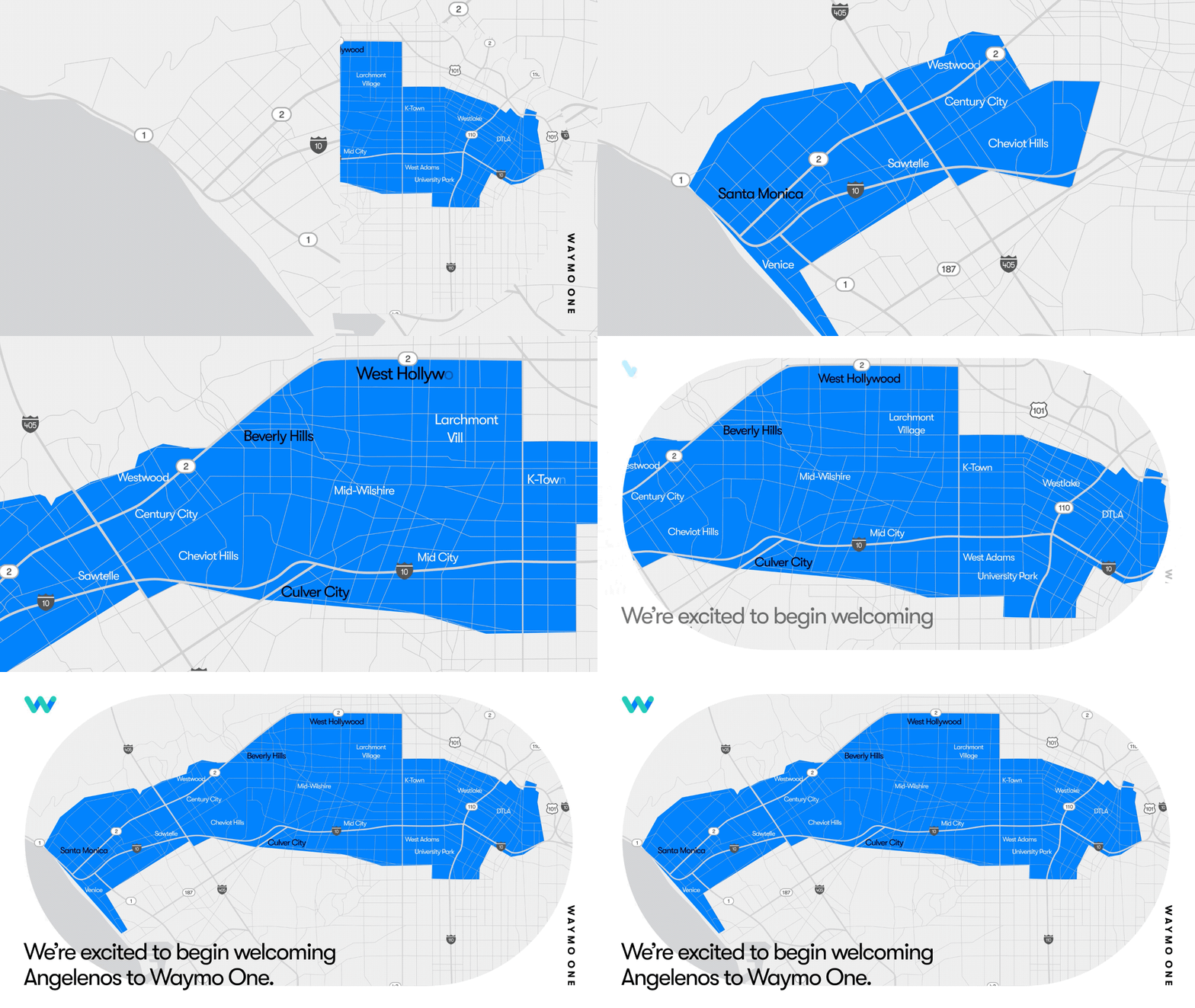
From a media perspective, AVs are slowly overcoming the hangover of their 2016-18 hype cycle in which several operators—Musk and Kalanick, specifically—talked up the tech well before it was ready for prime time. This convinced a lot of people in the media, as well as regular folks, that driverless cars were forever vaporware.
While we could write an entire letter on why AV technology took a little longer than anticipated to be ready for prime time, it largely comes down to the inherent problems with Level 3 autonomy. Level 3 autonomy, as defined by the Society of Automotive Engineers, is a form of conditional autonomy in which the car can drive fully autonomously until it encounters some anomalous condition and forces control back onto the human driver.
While Level 2 autonomy—think Tesla’s “FSD” or the lane centering and cruise control features available in many luxury cars today—requires that the human driver constantly stay engaged and alert, Level 3 does not. In other words, the human driver might be reading a book, watching a movie, or sleeping until suddenly being asked to take the wheel and drive, a situation that appears plainly unsafe. Experts agree, which is why car companies generally decided to skip over Level 3 autonomy. Drivers must either be fully engaged or not, at which point they might as well be in the back seat.
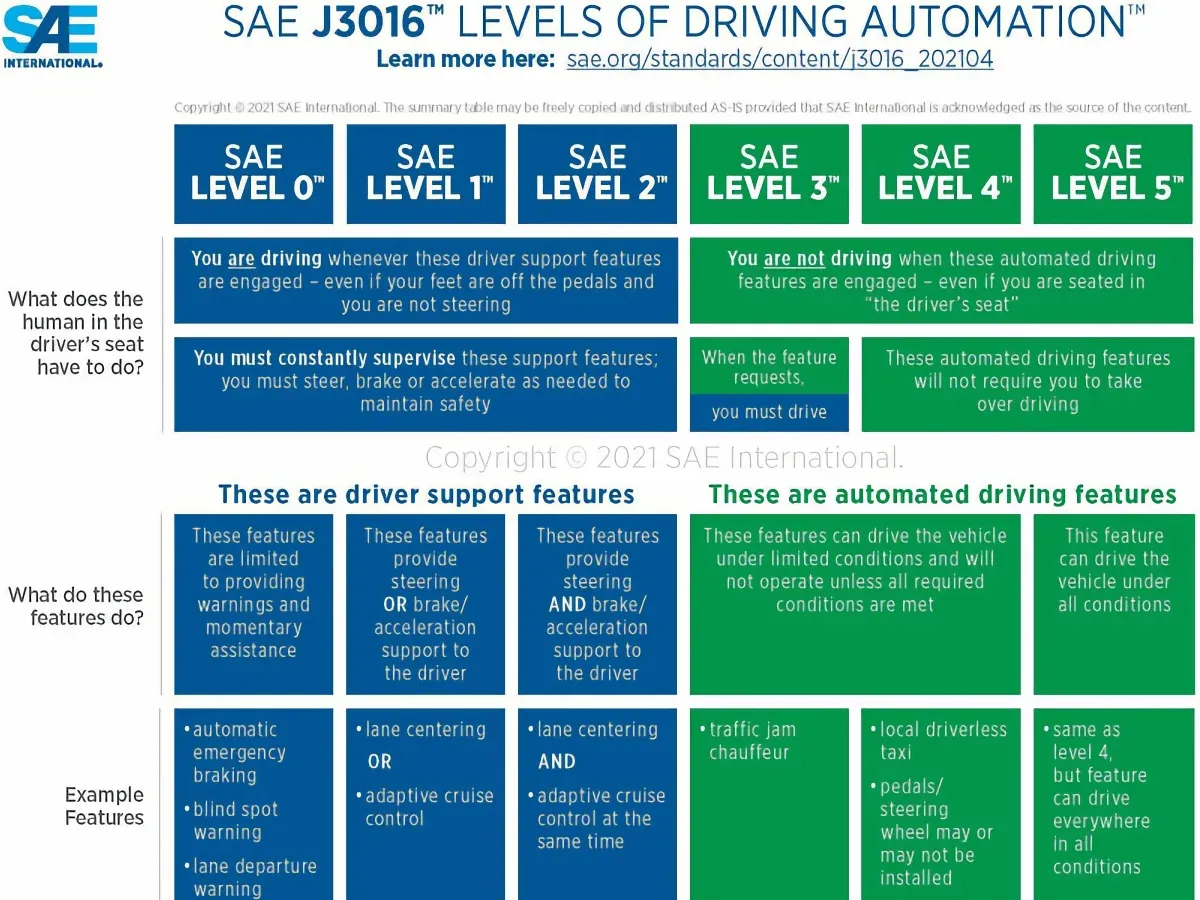
Of course, this “leap to Level 4” meant that autonomous technology appeared to stop meaningfully progressing in ~2017. True Level 4 only began to emerge in 2020—and even then only in a very modest way—as Waymo and Cruise began tests in Phoenix and San Francisco. Waymo wouldn’t open up to the general public until June 2024, limiting the technology’s exposure and buzz.
For better or worse, many in the media and general public felt they had been—yet again—misled about a new technology that turned out to be overhyped with little substance to back up the buzz. So journalists have been far more hesitant to write about driverless vehicles this time around, speaking in measured tones lest they yet again fall victim to a huckster with a monorail to sell them. It doesn’t help that Waymo is press-shy, at least relative to the previous generation of AV leaders, Uber and Tesla.
The end result is that much of the general public—as well as most of the real estate industry and policymakers—are sleeping on AVs. The fact that I can take a robot car at any time across large swathes of metro Phoenix, the west side of LA, the San Francisco Bay Area, and Austin seems like a much bigger deal than we’re making it out to be.
At this point, bears usually raise one of three objections: (1) autonomy has not yet meaningfully brought the cost of transportation down, (2) AVs might work in sunny LA and Phoenix but they’ll never be able to navigate snow-swaddled Boston or Chicago, and (3) Tesla will eventually win so it’s only worth watching them.
Regarding (3), I don’t really have a dog in that fight. It’s totally possible Tesla will leverage their data advantage and manufacturing prowess to eventually retake the lead from Waymo. But given Waymo’s current advantage and the rate at which they’re progressing, belief in an ultimate Tesla victory is actually a very bullish view on an autonomous future. Tesla would have to move really quickly to catch up, which would bring us to ~ubiquitous autonomy sooner. (In general, this argument comes from hardcore Elon fans who are annoyed that Waymo is outperforming Tesla at the current moment, negatively polarizing them into talking like AV bears.)
The conditions objection (2) was far more serious a year ago; since then, Waymo has been conducting winter testing in Buffalo and actively expanding in Austin and Atlanta—hardly winter wonderlands but not 72 and sunny year-round either. While the cars made headlines for pulling over in San Francisco fog last year, the driving condition was arguably just as unsafe for human drivers.
The cost issue (1) is a frequent point of discussion among AV followers. While autonomous cars have gained popularity, they haven’t meaningfully undercut human-powered alternatives like Uber or Lyft in price. If a Lyft ride costs $25, a Waymo ride will cost about the same. This has led some to believe that driverless vehicles will never be able to outperform human-powered cars on cost. This is a big deal, because much of the impact on the built world that comes from full autonomy depends on AVs being far lower cost per mile.
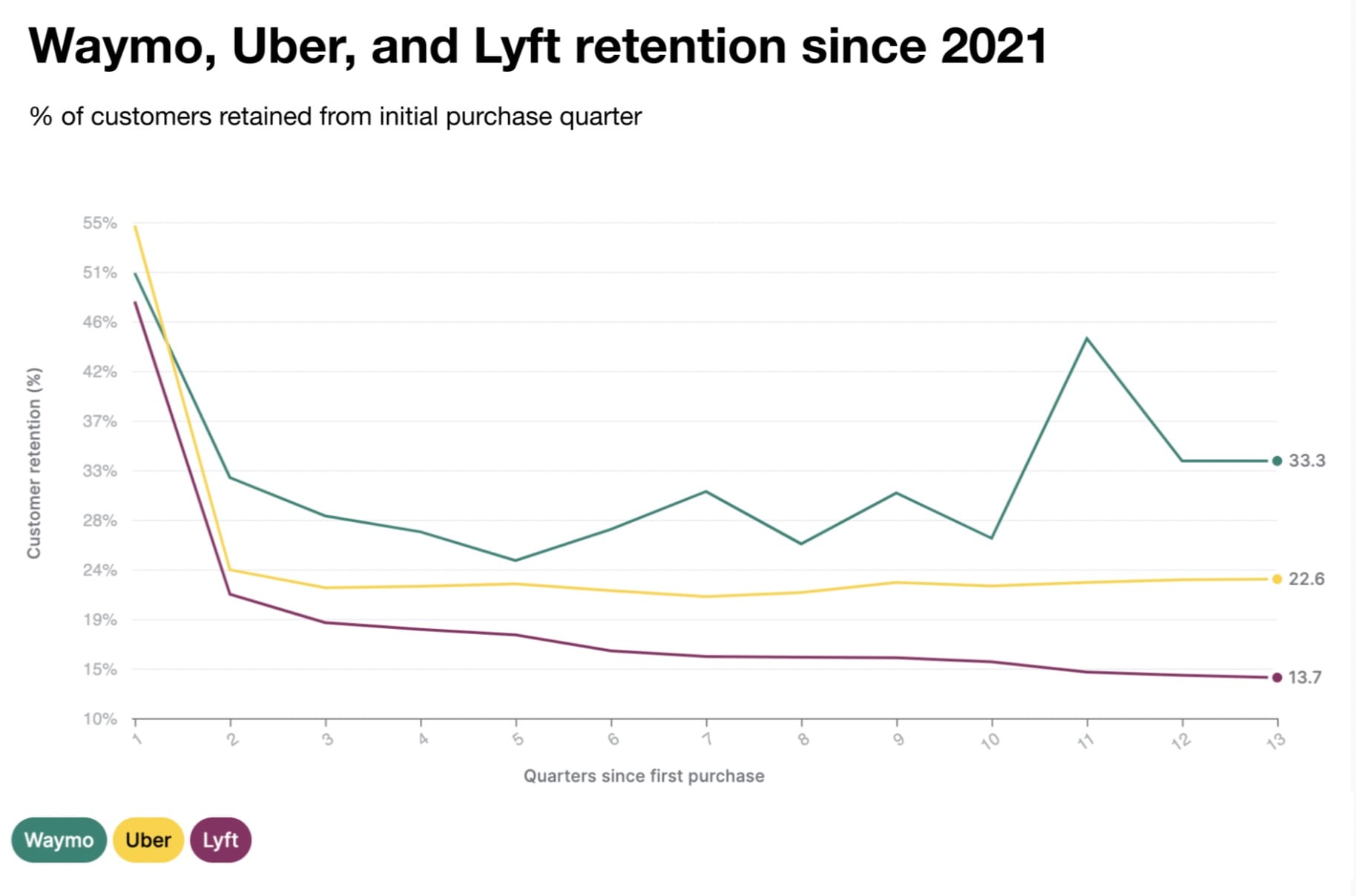
Fortunately, this likely has more to do with demand management than any inherent flaw of driverless vehicles. Where available, Waymos are highly in demand; the company has far better customer retention metrics than either Uber or Lyft. Driverless cars, after all, don’t smoke, don’t have BO, don’t engage in awkward conversation, don’t do drugs, don’t occasionally drive like a maniac, and probably won’t drive to a remote industrial area to rob and kill you. It’s not at all crazy to assume that people would pay more for a robot-controlled ride than a ride from a human driver.
Instead, Waymo’s limitation is fleet supply (an argument for Tesla’s eventual victory, I suppose). Without more cars, Waymo might as well charge a price that balances supply and demand and ensures some level of availability. This is, of course, a problem that goes away with maturity and scale.
I’ve already written about the broader implications of autonomy on real estate, so I won’t go too broad here. Some are fairly obvious; gas stations and urban parking garages struggle while urban loading zones, industrial lots with good electrical hookups, and nice exurban developments will command a premium.
For the end user, driverless technology changes the cost of door-to-door transit dramatically. Not so much financially—although I do believe driverless tech will ultimately settle in at a fraction of current rideshare prices—but in terms of what a passenger can do while in transit. With Level 4 autonomy, there’s no expectation that the human will ever drive. This frees the human from needing to pay any attention to the road; they can watch a movie, answer emails, or do other productive things. Or sleep.
On that point, driverless technology changes what’s possible in the interior of cars. Zoox—Amazon’s driverless car concept—is probably the most mainstream example of this in action. The Zoox has two bench seats facing each other and sliding doors—more of a very nice ski slope gondola than a car.
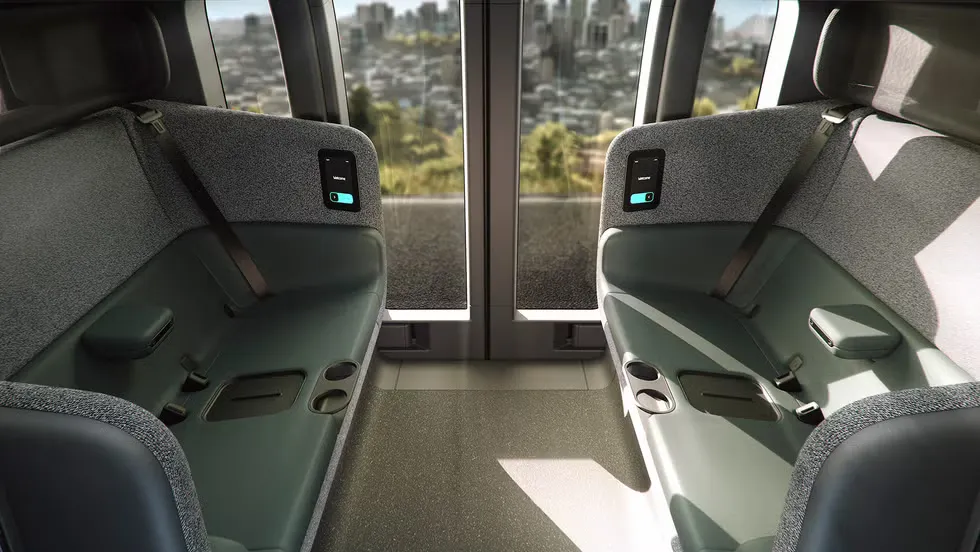
But my favorite example of what’s possible is actually Germany’s Xoio, a concept car that’s little more than a sleeping pod on wheels. Like the Zoox, it reimagines the interior of the car from scratch unconstrained by the requirements of a human driver. But unlike the Zoox—which doesn’t look like something I’d want to ride in for longer than 30 minutes—the Xoio model actually looks like a step forward in user experience. For a certain type of drive, at least.
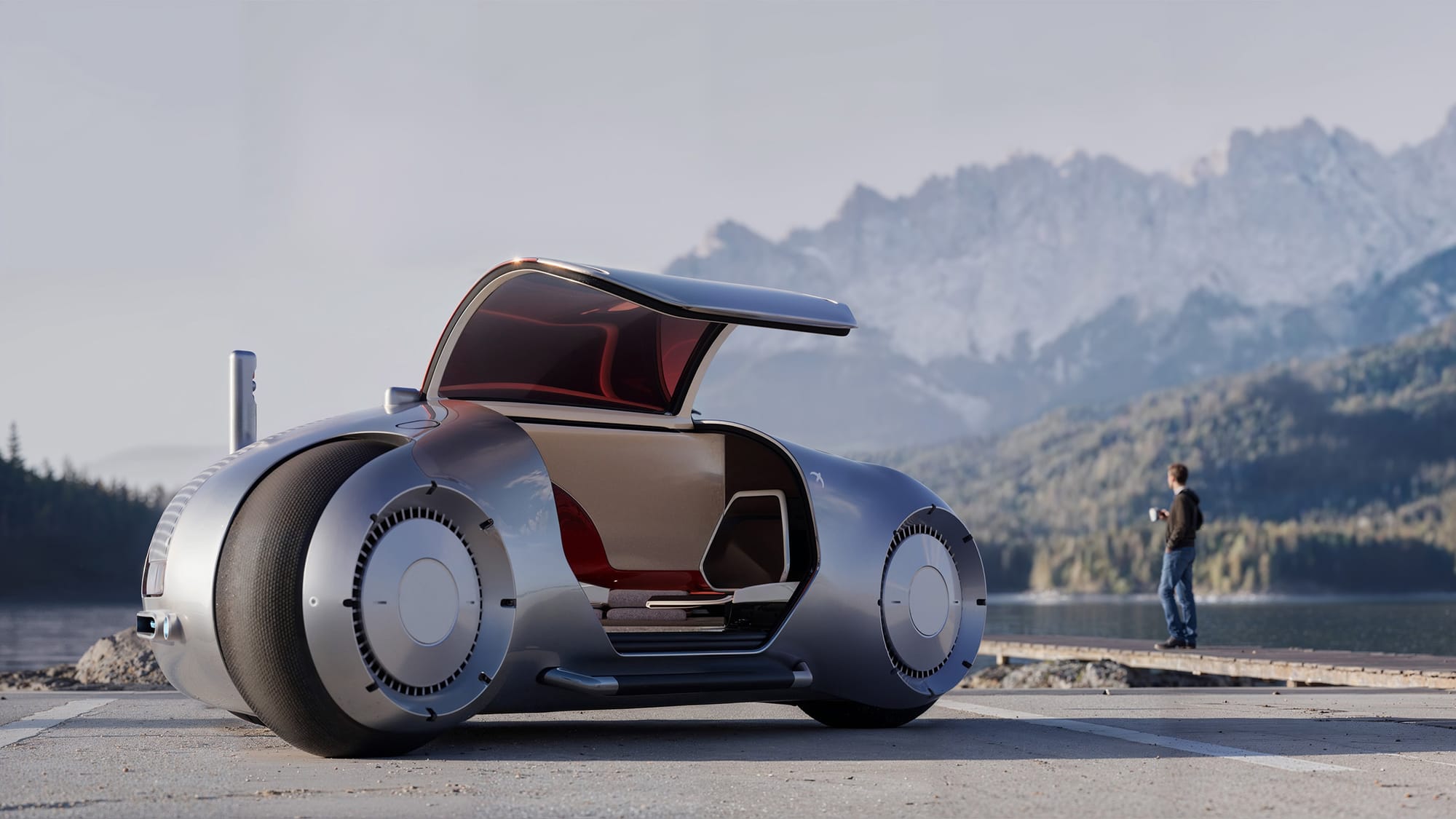
“Sleeping in your car” is not something most people want to do and for good reason. But sleeping on a train wasn’t something I wanted to do before I went to Vietnam, either.
The worst part about the weekend getaway is, without question, the drive. Beginning a relaxing weekend away with hours in bumper-to-bumper traffic on Friday afternoon—and ending it with hours in bumper-to-bumper traffic on Sunday evening—is rough, to put it mildly. Anticipating the slog of a drive limits both my appetite to take weekend trips as well as how far I’m willing to travel. Two-and-a-half hours might be tolerable; four would be exhausting.
In practice, this creates a ring of destinations feasible for a weekend trip outside New York City. Eastern Long Island, the Jersey Shore, and parts of the Hudson Valley are within the 2.5 hour (with moderate traffic) zone; the Berkshires are pushing it but probably doable. Great destinations within that zone—like the Hamptons and Jersey beach towns—have flourished. The same could be extended to other metro areas; Stinson Beach (1-1.5 hours) is a reasonable weekend trip for a San Francisco resident whereas Tahoe (3.5 hours at best) is probably too far for a weekend.
Driverless cars change this math by allowing hotel and resort companies to create door-to-door hospitality experiences. While the prospect of sleeping in a car may seem unappealing today, the design freedom unlocked by driverless vehicles combined with the creativity of the best hospitality minds will create some truly exceptional experiences not unlike the Victoria Express to Sa Pa.
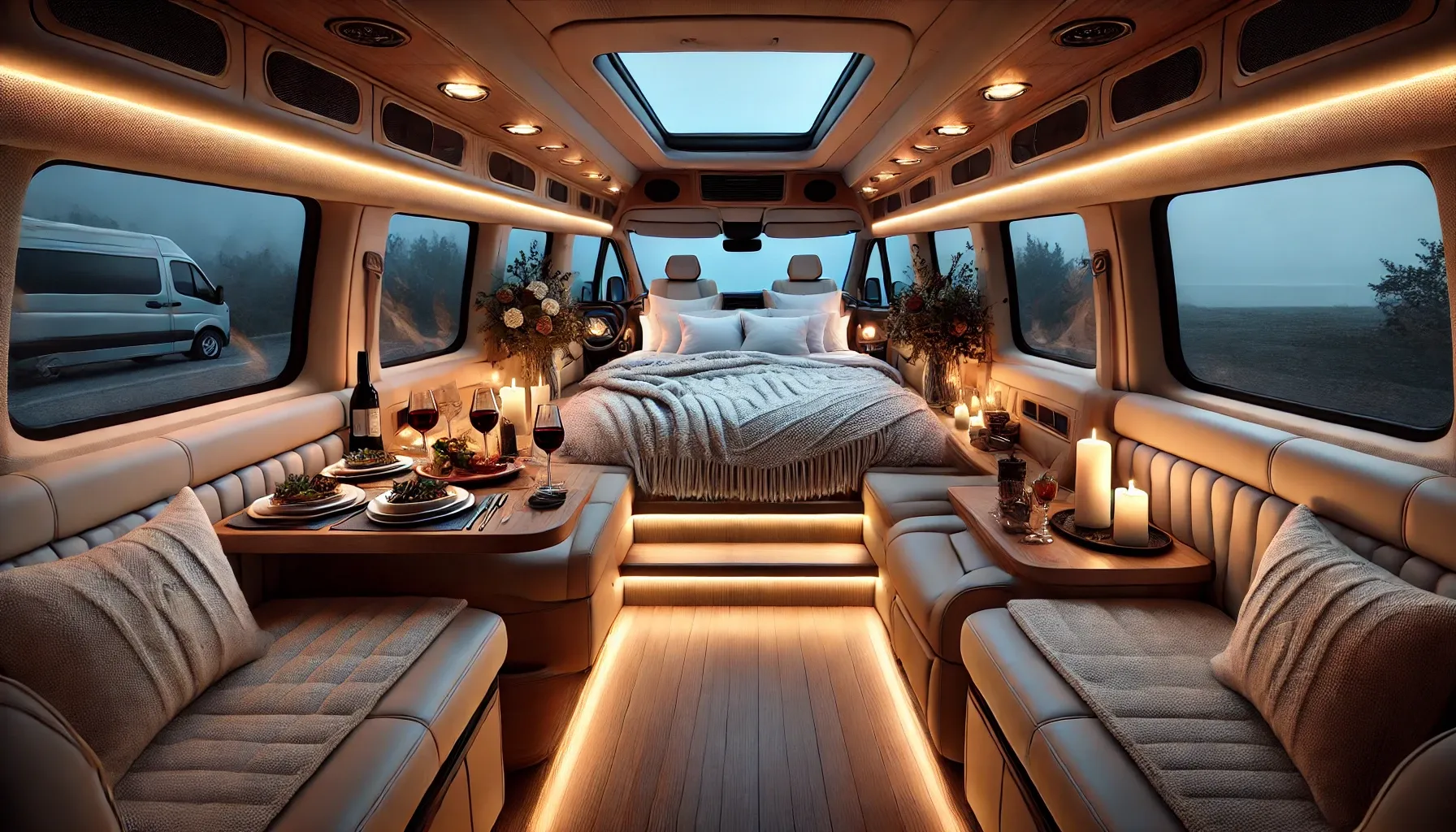
Consider: a driverless vehicle pulls up outside your apartment at 10pm on Friday night. You’re in your pajamas ready to sleep. You get in, greeted by a nice spread of food and a bottle of wine. The vehicle, somewhat like an RV but without a steering wheel or dashboard, slowly pulls away, driving carefully, in the far right lane, slightly below the speed limit all the way to your destination. You arrive at 6am, just in time for coffee and a hot shower.
This is, of course, still a ways off. And this kind of overnight travel isn’t the first application of driverless technology; routine intra-metro commutes and intercity freight travel, for example, will both come sooner. But given the arc of driverless technology over the past few years and Trump’s promise to relax self-driving regulations, it’s not unreasonable to believe this kind of thing will be possible by 2030.
Needless to say, this dramatically changes what’s possible for the casual weekend trip. Suddenly, the New Yorker finds that destinations previously far too remote—North Carolina’s Outer Banks, the Finger Lakes, the coast of Maine, for instance—are well within weekend trip range.
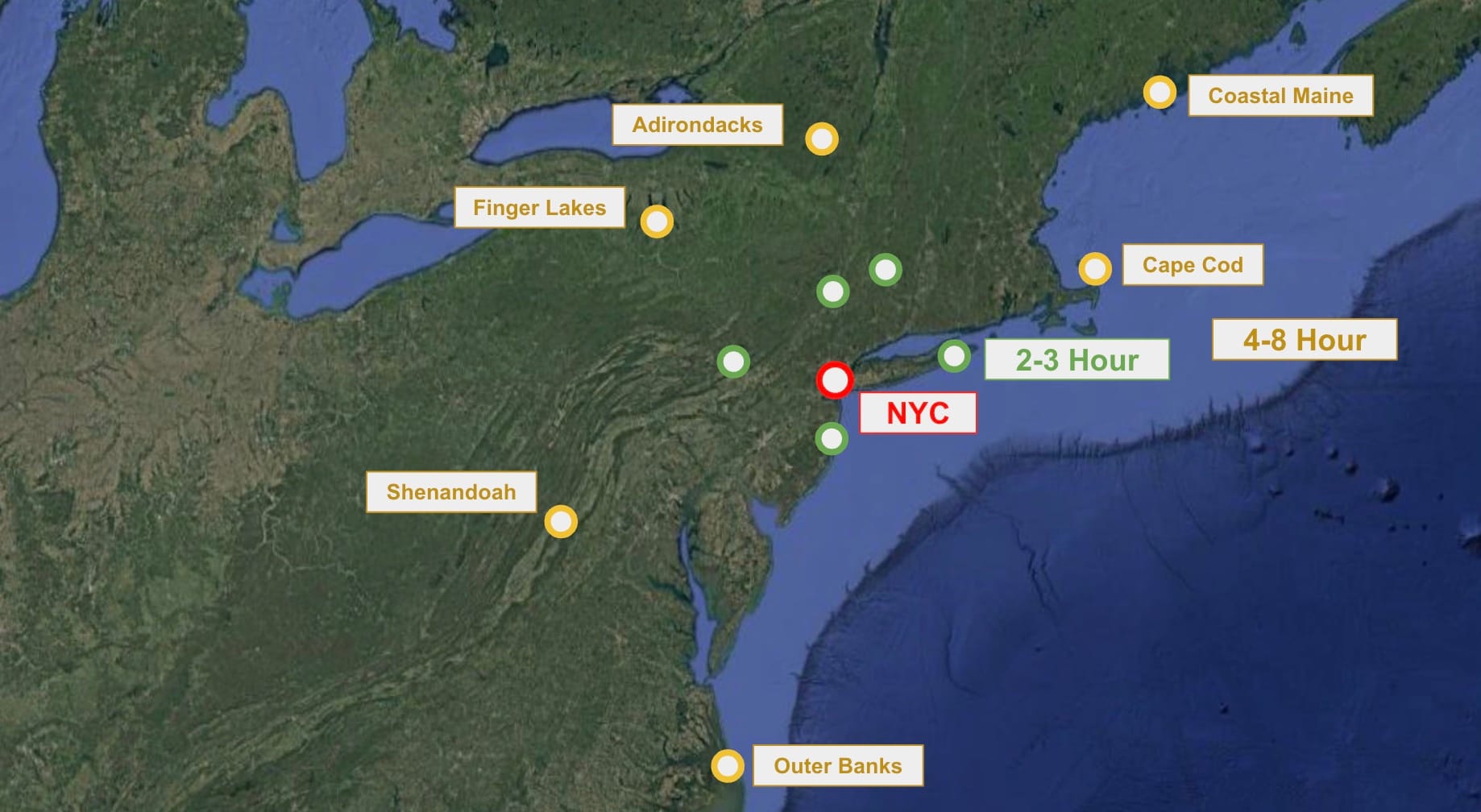
This new travel math has a few downstream effects on the hospitality industry:
This is a good thing for the hospitality industry. It delivers a better experience for guests and opens up competition, allowing far-flung resorts to compete for wealthy travelers from top metros. And it allows travelers to experiment with places and destinations they may otherwise never try.
—
This is perhaps a little more fanciful than most of our readers are used to seeing. I get that. I go out on a limb here not because I’m particularly interested in any investment thesis coming out of this, but because I believe the second- and third-order effects of driverless technology on various aspects of the real estate industry are radically under-explored.
Autonomous vehicles are coming whether we’re ready for them or not. They’ll hit the obvious things—gas stations and parking garages, to name two—as well as a bunch of other parts of the built world we haven’t even yet considered. As a writer covering the future of real estate, the least I can do is push our collective Overton window.
I, for one, welcome our new robot sleeping pods on wheels.
—Brad Hargreaves
Thanks for reading Thesis Driven! If you enjoyed this letter, feel free to share.

After years of false starts and regulatory confusion, a few serious projects are pointing toward what this technology can actually deliver for real estate

For an industry built on spreadsheets and market analysis, asset management may be the next AI target.

When ultra-exclusive resort towns like Jackson Hole and Aspen run out of space and affordability, demand moves down the road

AI comes for property diligence – with major implications for real estate acquisitions
Covering the future of real estate and the people creating it