


To Mod or Not to Mod?
The U.S. modular construction industry has struggled for decades without a large-scale institutional buyer. The Department of Defense may be changing that.

Today’s letter was guest written by Cara Eckholm and Eddie Palka, the founder and director, respectively, of AKA Urban, an advisory firm that works with public-sector and private clients on complex building programs. Both have worked inside the U.S. modular industry.
Modular construction has been called the future of American homebuilding for so long that the phrase has started to sound like a punchline. Every few years a new cohort of investors convinces itself that factory-built housing will finally break through. Every few years it ends the same way: a well-funded startup fails, projects are abandoned mid-construction, and the industry retreats into another long stretch of skepticism before the next wave of capital arrives to try again.
The skepticism is earned. Promising startups burned through venture capital and in some cases never delivered a single building. But the technology itself has never been the problem. Sweden has used prefabrication to deliver mid- and high-rise housing at competitive cost and high quality for decades, and the explanation has nothing to do with engineering. Sweden has a standardized national building code and, more consequentially, a Public Housing authority that has committed to enough repeat volume to give factories a reason to invest, improve, and stay in business.
In the U.S., that anchor buyer may finally have arrived, and it is not who anyone expected. The Department of Defense is one of the country's most prolific institutional builders, and it has spent the last three years positioning itself to drive modular adoption across its housing portfolio. Its building code authority, pipeline scale, and congressional backing give it tools no private developer has. Whether the program delivers at scale remains to be seen, but the domestic factory supply chain it is building has never had this kind of demand behind it, and private developers stand to benefit from the same factories the DoD is bringing to scale. Barracks, after all, look an awful lot like hotel rooms and student dorms.
Capturing those benefits is not automatic. It depends on whether a specific portfolio has the scale, repeatability, and schedule pressure to make modular economics work. This letter is a framework for making that assessment.
Based on interviews with leading modular program operators and our work with the Department of Defense, we outline how the domestic modular market is evolving, and where the opportunity lies in the future.
Today's letter covers:
- Why the U.S. modular sector has repeatedly failed to scale, and what its most instructive collapse reveals about the root causes
- What two successful programs, Public Housing Sweden and Marriott, show about what actually makes modular work
- How the Department of Defense is positioning itself as the anchor buyer the industry has never had, and what that means for developers and capital allocators evaluating modular today
- A four-part framework for determining whether a given portfolio is positioned to capture modular's benefits
Boom and Bust
Over the last 50 years, the United States has experienced a steep decline in construction productivity. The U.S. is worse at building homes today than it was in the postwar era, when developers like Levitt and Sons adopted assembly-line techniques to mass-produce affordable communities at scale.
In the last decade, investors poured hundreds of millions into startups aiming to modernize how the U.S. builds. Industry insiders now prefer "offsite" or "industrialized” construction to dodge the stigma of "modular," a word that still conjures grim Soviet-era housing blocks or the flimsy trailer homes of the 1970s. (This letter uses modular throughout.)
Whatever the label, the sector spans techniques from skilled tradesmen assembling buildings from flat, IKEA-like panels to fully finished three-dimensional rooms stacked like LEGO bricks. The common thread is that most of the work happens in a factory.
The factory model is straightforward in theory. In the U.S., it has proven nearly impossible to sustain. SoftBank-backed Katerra, which reached a $4 billion valuation before going bankrupt, left projects abandoned across the country. The companies that survived the latest hype cycle were mostly sold for pennies or followed speculative demand to the Middle East, chasing projects like NEOM as a temporary reprieve. We lived this cycle from the inside.
Why Has the U.S. Fallen Behind?
There is a range of theories about why the U.S. has failed to keep pace with other developed countries. Economists have posited that increasingly restrictive land use regulations fragmented the U.S. construction market into small companies that underspend on research and development. Approximately 4 percent of U.S. construction is manufactured offsite, a share that has barely moved in decades.
In our experience, the building code is as much to blame as land use policy. The U.S. has delegated code development to more than 20,000 local jurisdictions, each with its own byzantine requirements, making it nearly impossible to develop a standard product that can be sold at scale across state lines. Add NIMBY-coded land-use policies and antiquated permitting regimes, and the government can look like a head-banging obstacle to growth rather than an ally.
Relaxing land use regulation is part of the answer. But in most developed countries where modular has succeeded, the government has also played a proactive role as a large-scale buyer, providing the demand certainty that gives factories a reason to invest and optimize.
The learning curve for modular is steep, and first projects frequently go wrong. The case of 461 Dean Street, New York City's first offsite high-rise, is a vivid illustration. Forest City Ratner and Skanska projected the 32-story, 363-unit tower could be delivered in roughly 18 to 20 months. It took close to four years.
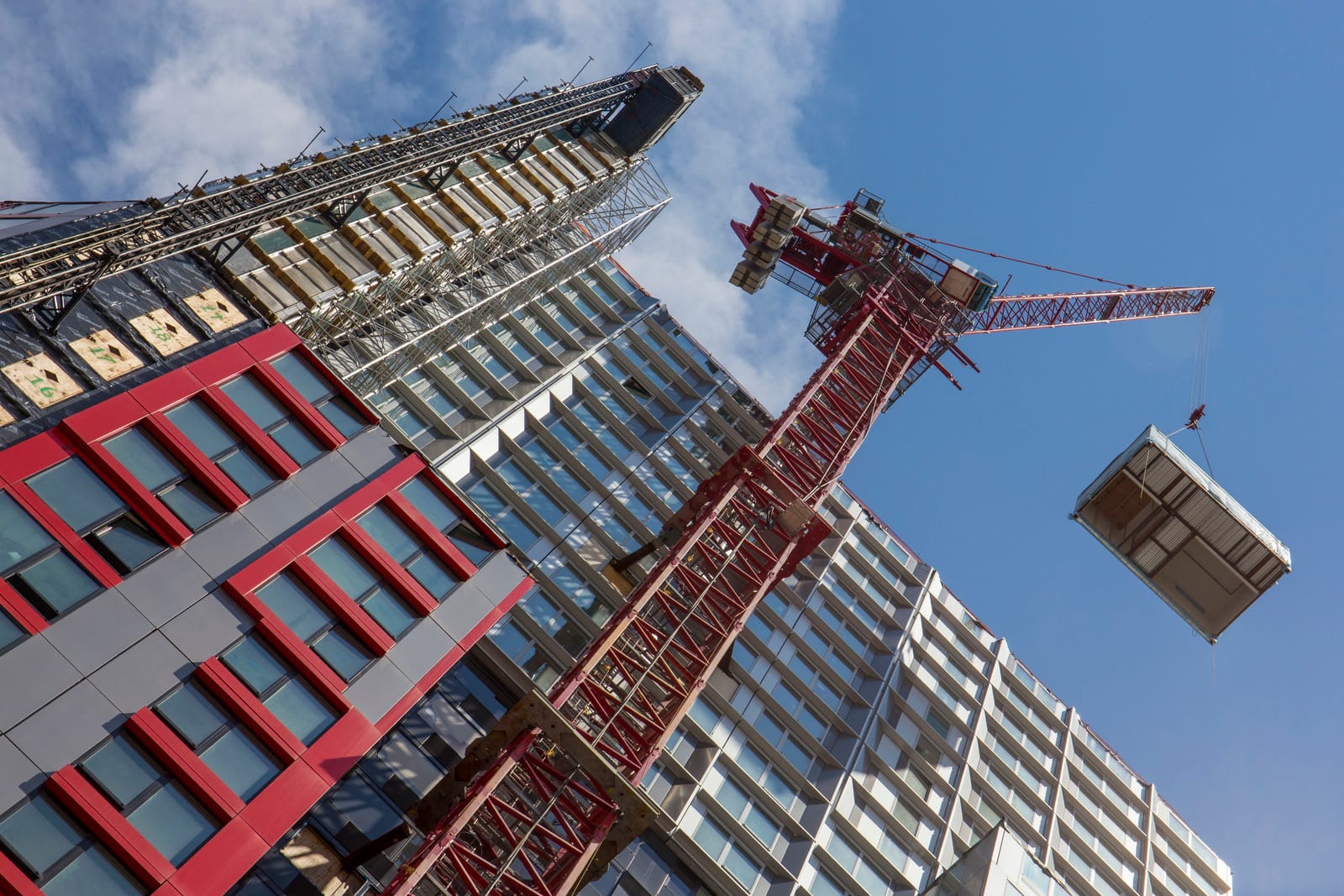
The problems were both technical and organizational. The steel-framed modules suffered chronic alignment issues that caused water damage in roughly half of the first 39 finished apartments and required the first four floors to be gutted. The problems, however, began in the factory long before a single module was lifted into place. The factory setup was rushed, leaving no time for the testing and prototyping that manufacturing at scale requires. A large general contractor ran the factory rather than a specialized manufacturer, and the team ended up practicing what the industry calls "construction under a roof," applying typical site tolerances rather than the more exacting standards that true factory production demands.
The project led to years of litigation and ultimately sold in 2018 for roughly $40 million less than cost.
Case Study: Public Housing Sweden
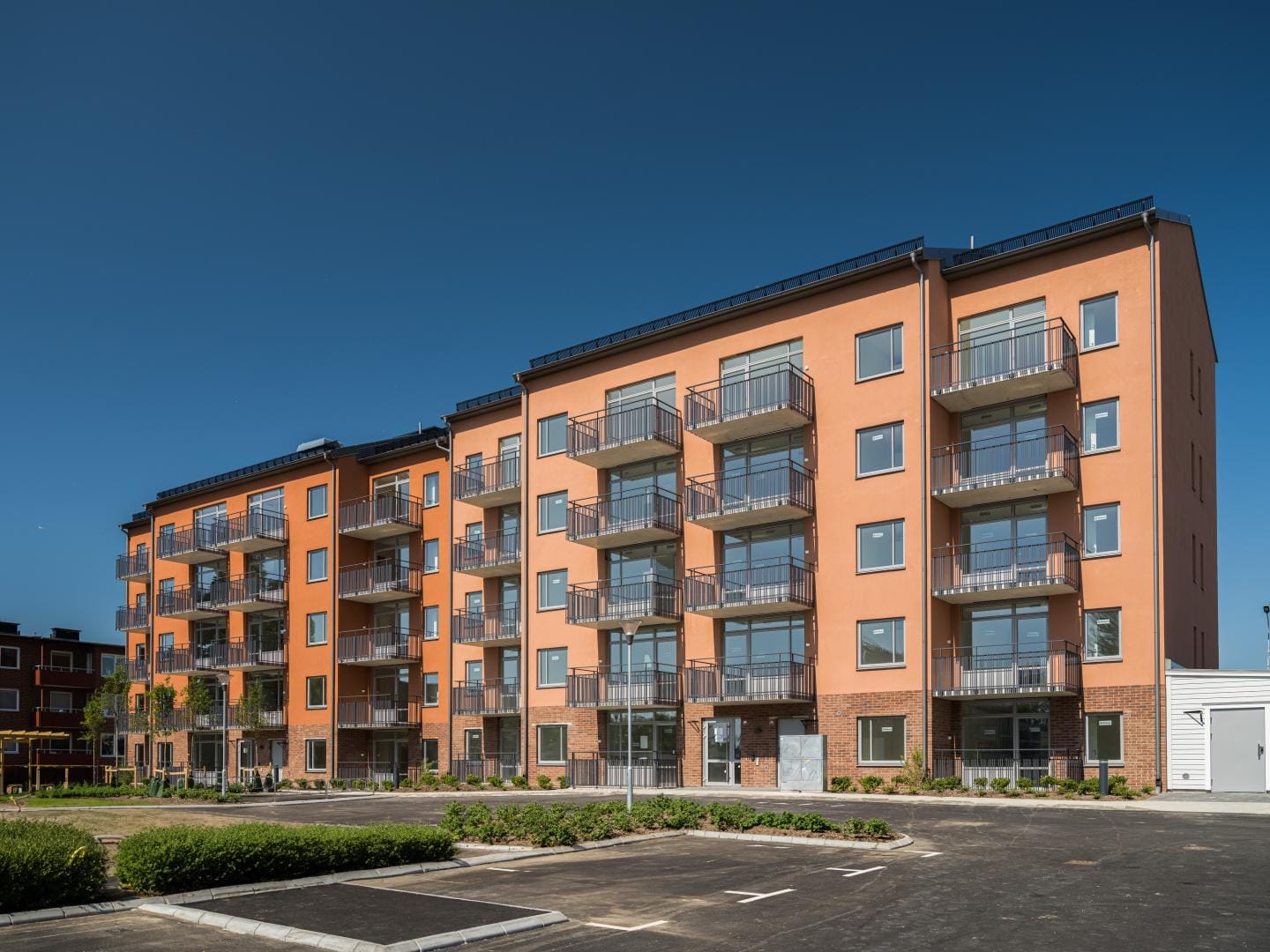
The most robust government-run modular program is Public Housing Sweden’s Kombohus program. PHS represents 310 municipally owned housing companies managing over one million rentals. In 2011, Sweden saw an acute need for more affordable rental housing but most of PHS's members had limited experience constructing new buildings. PHS had historically functioned as an advisor and auditor to its member companies rather than a developer, but the housing shortage pushed it into an unfamiliar role.
PHS launched an open call, asking regional builders to propose a Kombohus, or concept housing design, that they would deliver at a fixed price per unit. It selected three vendors with distinct designs and factories distributed across the country. Member housing companies could then purchase off PHS's master agreement at the pre-negotiated price.
The response was immediate. PHS quickly expanded into a full catalog: a basic mid-rise apartment building, an urban tower, a small-unit model for students and seniors, and row houses for peri-urban areas. In its first six-year term, PHS delivered more than 10,000 units, with buildings ordered on contract delivered five months faster and 18 percent cheaper than those procured off contract. PHS attributes the results to standardization, repetition, and predictable demand, which give suppliers the certainty to invest in their factories and improve.
Case Study: Marriott
Marriott offers the most compelling domestic example of a private modular program operating at scale. After success in Europe, Marriott launched its domestic modular program in 2015, which now covers eight of its 14 North American hotel brands. It hired a "Mod Squad," a small team that develops modular-adapted prototype packages for each brand. For each brand, it codifies roughly 100 pages of standards at 80 percent design development, locking in cost-driving details like room dimensions, fire ratings, and corridor and floor loads so that franchisee architects and pre-qualified manufacturers can price and adapt projects against a stable spec.
StudioRes, one of Marriott's most recent modular brands, is a four-story, 124-key extended-stay concept aimed at mid-market travelers: traveling nurses, project-based consultants, and government contractors on temporary assignment. The first StudioRes opened in Florida in July 2025, and Marriott is now offering the brand to franchise developers in batches of 50 buildings at a time. To support that pipeline, Marriott is vetting domestic manufacturers capable of delivering the typology across the country.
Marriott reports that modular construction has reduced schedules by an average of six to eight months, with some projects saving close to a year from groundbreaking to occupancy. On a straight construction cost basis, the program has effectively broken even.
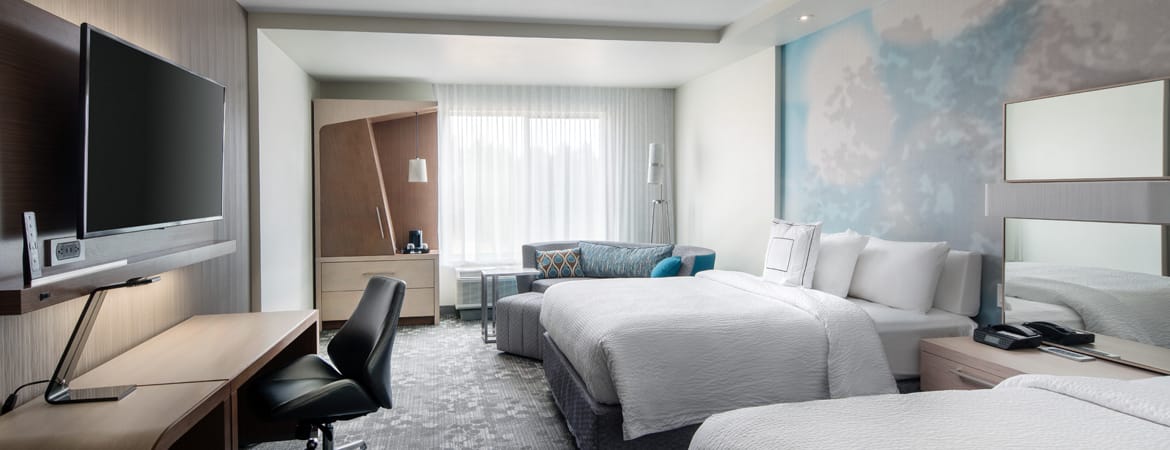
Marriott considers the program a success: schedule savings improve project IRRs, and the results have enticed more franchisees to participate. But the program also illustrates the limits of what a single private buyer can achieve. Many of the factories Marriott worked with in 2015 have since gone out of business, and the company still struggles to give new factories enough consistent volume to stay viable. The domestic supply chain remains fragile.
The (New) Modular Opportunity
The Department of Defense manages a nearly $20 billion annual domestic construction budget and a pipeline of military housing, much of which has fallen into disrepair. The modular push has been driven in part by the deteriorated state of its housing portfolio and an acknowledgment that the DoD pays a 68 percent premium for its housing projects relative to the private sector.
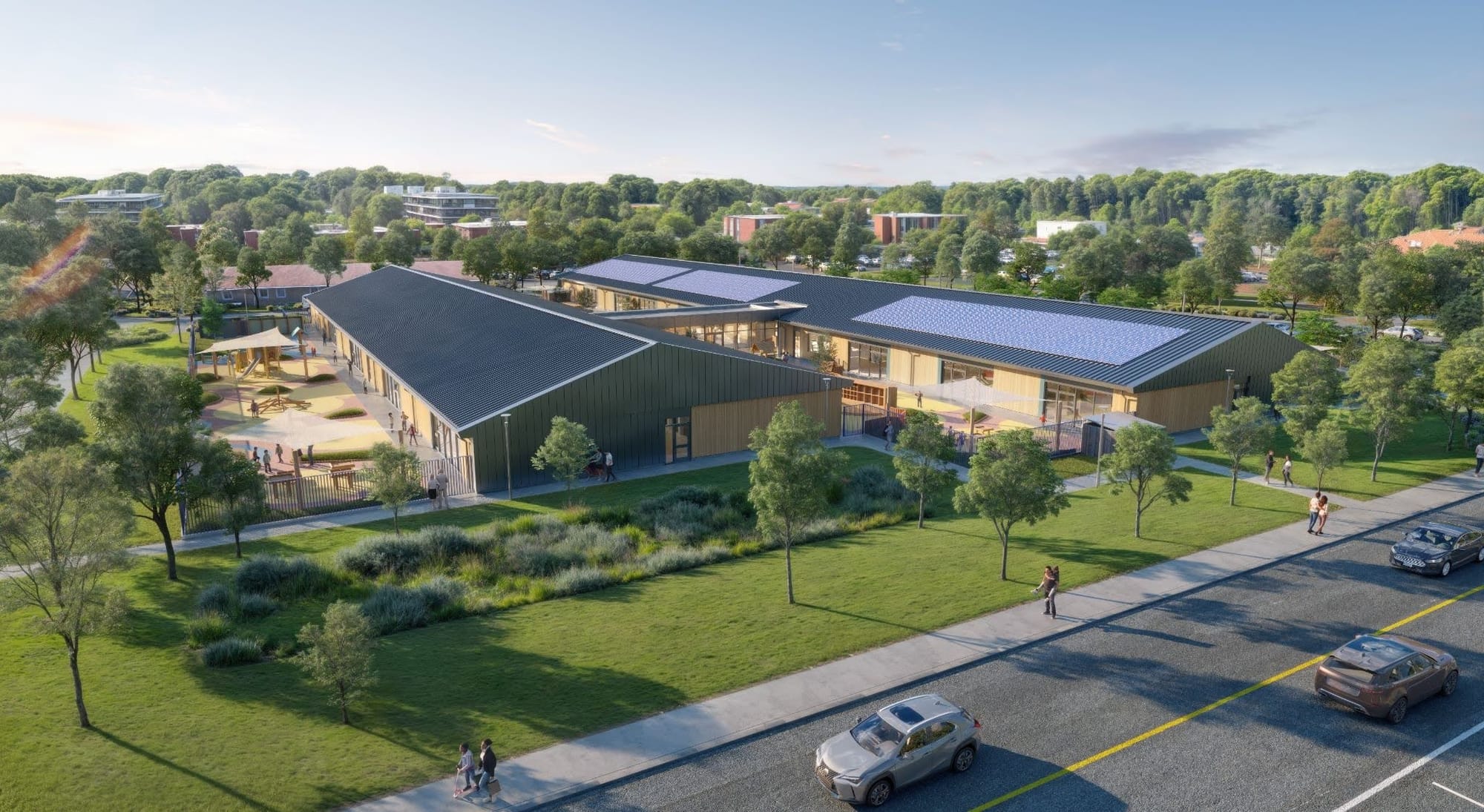

In each of the last two fiscal years, Congress has embedded provisions in the National Defense Authorization Act specifically designed to enable modular at scale for the military, and at a congressional hearing last year, lawmakers on both sides pressed leadership to accelerate. At the beginning of 2026, the DoD announced the Barracks Resilience Through Industrialized Construction (BR-IC) program, signaling a first step toward soliciting modular vendors. The DoD has released RFPs for dozens of modular barracks projects across the country, targeting 30 percent schedule savings and 20 percent cost reductions. The domestic industry has taken notice.
(Disclosure: The authors have advised parts of the DoD on its modular program.)
When Modular Makes Sense
Based on our experience advising governments and private clients, four criteria determine whether a given portfolio is positioned to capture modular's benefits.
1. Scale
Modular requires pipeline. Developers with programs of at least 150,000 square feet are far better positioned than those evaluating a single project; below that threshold, the upfront costs of design, engineering, and factory setup rarely justify the investment.
2. Repeatability
Buildings in the pipeline must be similar in size, layout, and program to justify factory tooling and drive standardization. Both Public Housing Sweden and Marriott succeeded by developing catalogs of standardized products. Hotels, workforce housing, affordable housing, multifamily, and student housing all lend themselves to this approach.
3. Schedule Pressure
Modular's most consistent benefit is schedule. Marriott has averaged six to eight months of savings per project, with some builds approaching a full year. Projects where speed to market carries real economic value, hotels, student housing, workforce housing near major employers, and programs with high carrying costs, see the greatest financial upside even when first costs are comparable to traditional construction.
4. High Cost Labor Market
Modular shifts labor from the jobsite to a factory, typically located in a lower-cost region. Markets with expensive, constrained, or heavily unionized construction labor tend to see the most favorable economics relative to stick-built alternatives. In lower-cost labor markets, the math gets harder.
Marriott and Public Housing Sweden did not wait for the supply chain to mature. They created the conditions for it to mature by committing to volume, and Marriott's earliest franchisees captured the economics before their competitors understood the opportunity. The DoD is now doing the same thing at a scale no private developer could. Those who engage now will deal with a supply chain that is still finding its footing. Those who wait too long risk being outcompeted by developers who figured out modular first.


Read next

When Housing Disappears Because It’s Too Cheap
In struggling urban markets, the path to preserving affordable apartments may begin with creating more expensive ones

Who is Investing in Real Estate Tech? 2026 Edition
Our annual list of firms actively investing in real estate technology companies

Reinventing the Tribe: RidgeRunner and the New American Village
How a new model for rural communities built on shared identity is driving both demand and backlash

What's Happening in Local Land Use | Q1 2026
Tracking the past three months of notable land use and zoning decisions with Shovels Decisions
