
When Will Spec Office Get Built Again?
Office demand is recovering, but speculative development in most markets remains stubbornly out of reach
Office demand is recovering, but speculative development in most markets remains stubbornly out of reach

New data from Tailorbird shows why two-thirds of real estate operators blow their capex budgets and where AI could actually help
How the Steers Center for Real Assets is evolving to meet the job market needs of a new generation


Editor’s Note: About a year ago, we wrote about why traditional MSRED programs were falling behind the realities of today’s capital markets. Since then, Georgetown’s M.S. in Global Real Assets (GRA) program has become one of the most compelling responses to that gap.
We’re hosting a 60-minute live interview with Bob Steers & Matt Cypher next Thursday, February 5th at 3pm EST. Register here.
Have a potential candidate for Georgetown’s GRA program & Steers Scholarships? Share a candidate’s email here and we’ll send along materials.
Real estate is no longer a standalone asset class. It increasingly overlaps with infrastructure, energy systems, digital networks, and public policy—reshaping how capital is deployed and where job growth is emerging.
Bob Steers, executive chairman at global asset manager Cohen & Steers, describes the shift in capital-markets terms: “Investors don’t think in silos anymore,” he says. “Real assets have become a continuum, with real estate, infrastructure, and energy increasingly underwriting together because the risks and the return drivers clearly converge.”
Over the past decade, hiring has accelerated substantially in data centers, logistics infrastructure, energy transition, transportation, and digital infrastructure. Traditional real estate recruitment, by contrast, has grown more slowly. In some sectors, it has even declined.
But while the commercial real estate industry is going through a period of fundamental transformation, most Master of Science in Real Estate & Development (MSRED) programs have not evolved at the same pace.
Traditional MSRED programs still largely train students for a property-centric world: office, multifamily, brokerage, PERE, and debt investing. While those skills remain valuable, they no longer reflect the full scope of opportunity across the built environment. The fastest-growing segments of the market now require professionals who can combine real estate fundamentals with infrastructure finance, sustainability, regulatory environments, digital asset systems, and global capital flows—often simultaneously.
Georgetown’s Master of Science in Global Real Assets (GRA) represents one of the most deliberate responses to this shift. Positioned at the intersection of real estate, infrastructure, and the future of energy, the program expands the academic mandate beyond property while still grounding students in core real estate and investment fundamentals.
That evolution has been accelerated by Bob and Lauren Steers, whose recent commitment to the program includes 20 full-tuition scholarships per year, known as Steers Scholars, and two endowed full-time faculty positions. The goal is to attract top talent and build a pipeline of professionals fluent across both traditional real estate and emerging real asset sectors.
This letter explores:
For decades, graduate real estate education has been built around a relatively stable conception of the industry.
MSRED programs have historically trained students for careers in real estate investment, development, brokerage, lending, and asset management, with coursework centered on traditional asset classes such as office, multifamily, retail, and industrial. That model reflected the structure of capital markets at the time, and for many students, it continues to provide a valuable foundation.
But the boundaries and definitions of commercial real estate have widened faster than most academic programs have adapted.
Capital that once flowed primarily into property is increasingly being deployed across infrastructure, energy systems, logistics networks, digital infrastructure, and policy-linked real assets. These sectors demand financial skills that look familiar on the surface—but are shaped by different regulatory regimes, operating models, and technology risks.
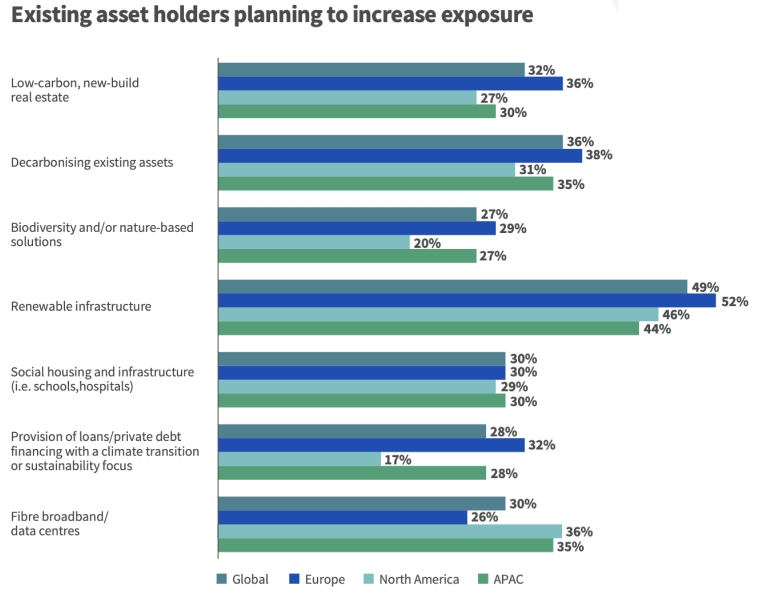
Employers hiring across adjacent real asset categories increasingly prefer candidates who can operate across multiple domains. The expectation now extends beyond property-level financial literacy to include comfort with asset types that behave more like operating businesses than passive buildings.
Many MSRED curricula, however, remain optimized for a narrower set of legacy roles. Coursework often emphasizes property-specific case studies and career paths while offering limited exposure to the fastest-growing segments of the real assets ecosystem. Students interested in data centers, energy transition, transportation infrastructure, or digital networks frequently have to piece together relevant training across departments, or seek it outside their degree programs altogether.
This mismatch does not suggest that real estate education has lost relevance. But it does point to a lag between how capital markets have evolved and how academic institutions have retooled their offerings. As the definition of real estate continues to expand, programs that remain property-centric risk preparing students for a market that no longer represents the full opportunity set.
Georgetown’s GRA program emerges against this backdrop as a structural response to changing capital markets and career paths in the built world.
“The fastest-growing career opportunities today sit at the intersection of real estate, infrastructure, and energy,” says Bob Steers, who serves on the advisory board of Georgetown’s Steers Center for Global Real Assets. “Students who understand how capital flows across those categories—and how policy, energy, and operations shape returns—will be better positioned for where the real jobs are being created.”
Real estate fundamentals remain important, but they now function as a foundation rather than a complete skillset.
Matt Cypher, who leads the GRA program, frames this shift as a reflection of how capital actually moves in the market today. “The real world doesn’t segment capital the way academic departments do,” he says. “Students with cross-asset fluency are better aligned with how investors deploy capital and how employers make hiring decisions.”
The result is a new early-career profile that’s increasingly hybrid. Georgetown’s program is designed explicitly for that reality.
Georgetown’s GRA program is structured around how capital is actually deployed today in practice. The program preserves a rigorous foundation in real estate and investment fundamentals—financial modeling, valuation, capital structuring, and market analysis—while expanding the curriculum beyond property.
Students still receive hands-on technical training using industry-standard tools such as ARGUS Enterprise and financial modeling platforms, but additional courses in infrastructure finance, energy, transportation, and digital infrastructure introduce students to the industry’s new realities.
Cypher describes the emphasis as practical repetition rather than theory: “We want students building the muscle memory of investment work—writing memos, pressure-testing assumptions, understanding the risk stack, and presenting decisions the way a real investment committee expects.”
The program’s location in Washington, D.C. adds a distinct dimension to this framework. Proximity to federal agencies, regulators, multilateral institutions, and policy organizations allows students to observe how legislation, incentives, and public-private partnerships influence real asset investment in real time.
The curriculum reflects a deliberate move away from treating real estate as an isolated discipline and toward training students for cross-asset decision making. It’s a paradigm shift.
The evolution of Georgetown’s GRA program has been shaped not only by shifting market demand, but also by targeted institutional backing. A key catalyst has been the Steers Center for Global Real Assets, supported by a major philanthropic commitment from Bob and Lauren Steers. Their backing has helped accelerate the program’s growth and deepen industry integration.
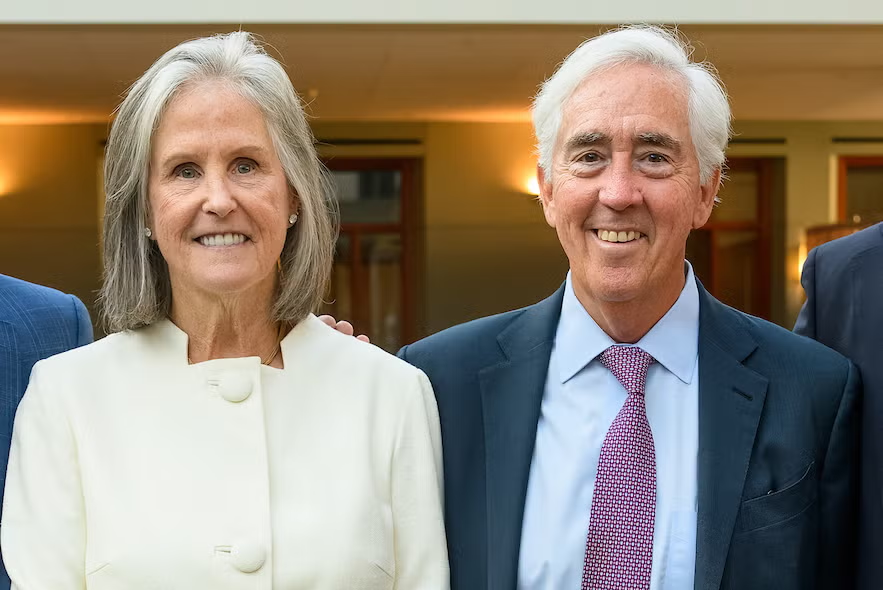
The Steers’ contribution includes funding for full-tuition scholarships (the aforementioned “Steers Scholars”) intended to attract high-caliber candidates from a wider set of backgrounds and geographies.
Bob Steers brings tremendous industry credibility in real assets investing through his leadership at Cohen & Steers, where the firm has spent decades allocating capital across real estate, infrastructure, and natural resource equities. His long-term involvement in Georgetown’s program signals an effort to align academic training with how institutional investors increasingly structure portfolios and evaluate risk across asset categories.
On the academic side, Matt Cypher has played a central role in shaping the program’s direction and translating market shifts into curriculum design. Under his leadership, the program has leaned into applied learning and live underwriting work to reflect how investment decisions are made in real-world environments.
Together, Steers and Cypher represent complementary forces: one rooted in capital markets and institutional investing, the other in academic architecture and practitioner-informed education. Their involvement signals a longer-term institutional commitment to aligning education with how real assets careers are actually evolving.
The result: an academic platform shaped by both investor perspective and pedagogical intent.
As the definition of real assets expands, so too have the career paths available to graduates of Georgetown’s GRA program. Alumni move into roles across real estate, infrastructure, energy, and public-private investment platforms, where underwriting is shaped as much by regulation, long-duration contracts, and public policy as by market fundamentals.
Career support plays a central role in this process. Students receive individualized coaching, structured recruiting guidance, and direct exposure to employers through industry partnerships and practitioner-led coursework. This emphasis on tailored positions reflects the reality that real assets careers are increasingly diverse, spanning investment, development, advisory, operations, and policy-linked roles that don't fit neatly into traditional recruiting pipelines.
At Georgetown’s program, an emphasis on experiential learning also plays a direct role in students’ job readiness. Through live underwriting work and applied investment projects, students graduate with direct experience analyzing real deals, preparing investment memos, and presenting to decision-makers in formats that mirror institutional investment processes.
Employers hiring from the program frequently cite the value of hybrid training. Graduates are viewed as capable of speaking both the language of real estate and the frameworks of infrastructure, energy, and public-private finance—an increasingly relevant skillset. And when it comes to securing high quality employment, this cross-disciplinary fluency differentiates candidates from their peers trained exclusively in property-centric programs.
More broadly, student outcomes offer early evidence of growing demand for cross-asset professionals. As institutional investors expand allocations to infrastructure, energy, logistics, and digital real assets, the need for talent that can evaluate interconnected systems—rather than isolated buildings—appears to be rising in parallel.
As capital continues to flow beyond traditional property and into infrastructure, energy, and policy-linked real assets, the implications for talent development are becoming clearer. Programs that train students to operate across asset types, capital structures, and regulatory environments are better aligned with how the market actually works. Georgetown’s GRA program reflects that shift, not as a rebrand of real estate education, but as a response to where real assets careers are headed.
Have a potential candidate for Georgetown’s GRA program & Steers Scholarships? Share a candidate’s email here and we’ll send along materials.
We’re hosting a 60-minute live interview with Bob Steers & Matt Cypher next Thursday, February 5th at 3pm EST. Register here.

EG is applying the American real estate private equity playbook to Australia, starting with medical office


A new approach replaces manual real estate workflows with AI-driven systems built around the operator’s own data

By combining computer vision with agentic AI, one platform is taking on the operational work buried in every property manager’s to-do list.
Covering the future of real estate and the people creating it