

Deep Dive: CERES & Culinary-Centric Residential Communities
How CERES is bringing the European “gourmet cluster” model to U.S. residential development, with food and culinary culture at the center of daily life

Don’t miss Thesis Driven’s Spotlight interview with the CERES team next Wednesday, April 29, 3:00 PM - 4:00 PM EDT. Register here
A generation ago, the most desirable address in American residential real estate was behind a gate, overlooking a fairway. Discovery Land Company built a business around that idea, proving that lifestyle brands could command $50 million home prices, and that the right amenity, in the right setting, could define a new category of residential development.
Then Serenbe, a pioneering development on 1,700 acres in Chattahoochee Hills, Georgia, rewrote the formula. It demonstrated that people would pay meaningful premiums to live alongside organic fields and nature trails over manicured greens. Wellness-oriented residential development in the United States has since grown into a $180 billion market, expanding at nearly 18 percent a year, as buyers pay 10 to 25 percent premiums for communities built around how they want to live.
Both models, though, have limits. Discovery Land's ultra-luxury formula serves a vanishingly small slice of the market. And most wellness communities have followed the same playbook of fitness centers, spa services, and nature trails, while largely ignoring the one thing people most organize their daily lives around: food.
A new model is now taking shape around exactly that insight, one that treats food not as a side amenity but as the foundation of an entire community. Instead of a farmers market on Saturdays or a farm-to-table restaurant tucked near the clubhouse, think edible landscaping woven into the streetscape, chef incubators in place of clubhouses, cookery schools, and a curated ecosystem of restaurants, bars, and artisan food businesses threaded through the neighborhood fabric.
CERES Chattahoochee Hills, developed by Dominique Love, Ellen Buckley, and their partners at TNG Communities, is the first purpose-built expression of this vision. I had the pleasure of attending CERES' groundbreaking last weekend and came away impressed—not just by the turnout of more than 200 people standing outside on a warm spring day, but by the genuine enthusiasm of buyers who actually want to live in a community like this.
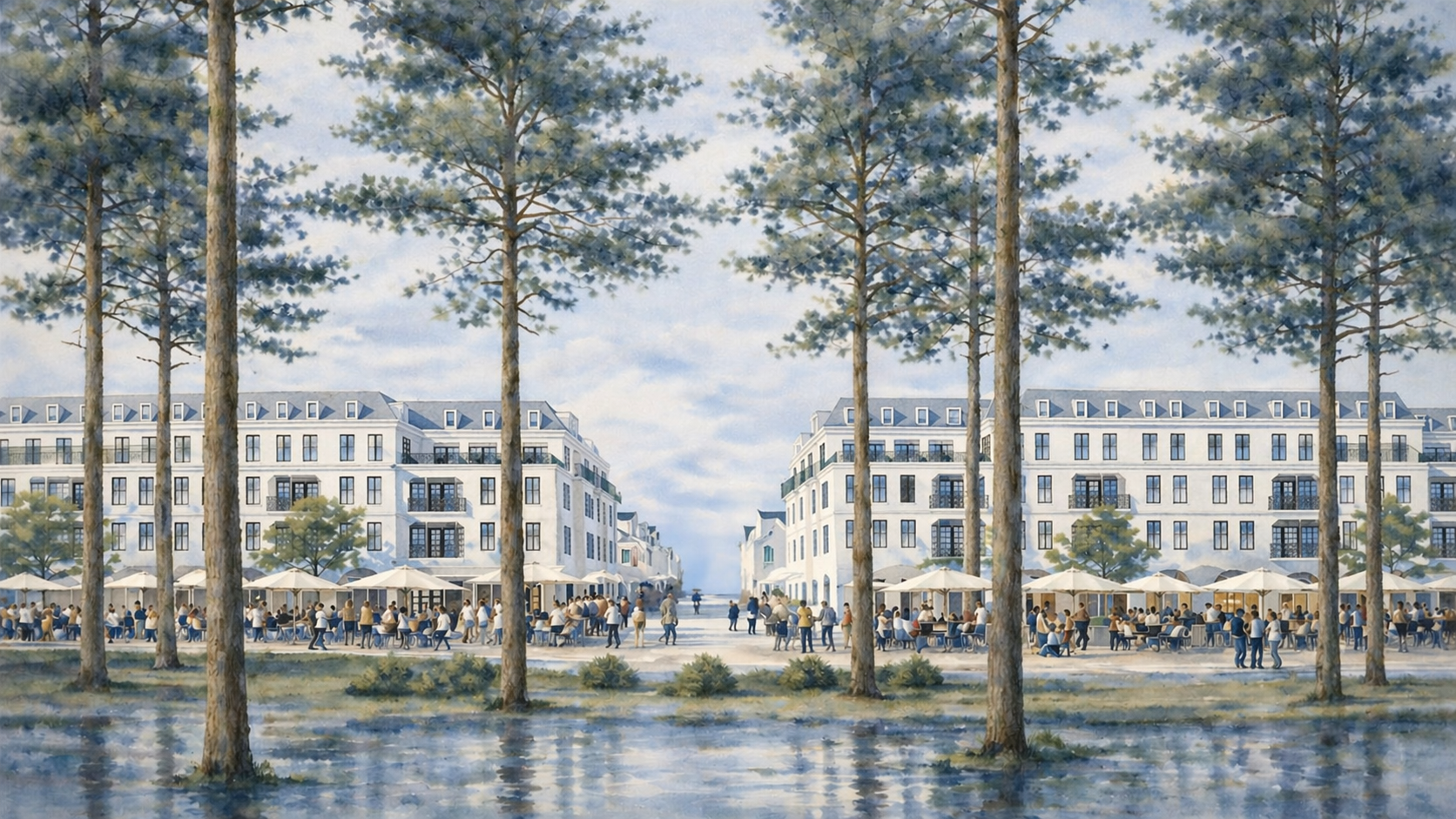
Situated adjacent to Serenbe and just 30 minutes southwest of Atlanta's Hartsfield-Jackson International Airport, CERES is a culinary-centric residential community where food is both the primary amenity and the economic engine. With horizontal construction launched in April 2026 and 10 percent of homesites already reserved with deposits, the project is an early real-world test of whether the European "gourmet cluster" concept can be transplanted to the American Sunbelt.
In this deep dive, we explore:
- Why wellness real estate has become one of the fastest-growing segments in global property markets
- How European “gourmet clusters” offer a more scalable alternative to the traditional agrihood
- What the CERES platform looks like in practice, from chef incubator to edible landscaping to a truffle orchard
- How the team plans to replicate the model across ten Sunbelt communities
The Wellness Real Estate Boom
The numbers behind wellness real estate have become tough to ignore. According to the Global Wellness Institute, the sector surged from $225 billion in 2019 to $548 billion in 2024, a pace nearly four times that of conventional construction, and is projected to approach $912 billion by 2028. Buyers in wellness-oriented communities consistently pay 10 to 25 percent more than they would for a comparable conventional home. Remote work accelerated what was already a structural trend, freeing millions of households to choose where they live based on lifestyle rather than commute time, and communities organized around nature, walkability, and genuine social connection found themselves with waiting lists.
In recent decades, projects like Serenbe outside Atlanta and Agritopia in Arizona proved that a working farm could anchor a residential community more powerfully than a golf course, generating the kind of shared identity and social life that drives durable premium pricing. But operating a commercial farm requires specialized labor, significant acreage, and ongoing capital, and most developments that market themselves as agrihoods end up mainly with a decorative garden and a farmers market.
The piece missing from the wellness development landscape is a model built around the food experience itself—not growing it, but eating it, learning about it, and building businesses around it. "Among the 6 dimensions of wellness real estate as defined by the Global Wellness Institute, food is only a bullet point. As the one thing that every human being requires, it should be a standalone attribute,” says Dominique Love, CERES's founder and CEO of The Nourish Group. “It felt like the most obvious organizing principle that nobody was using."
From Agrihoods to Gourmet Clusters
Love's inspiration came from small towns across the United Kingdom. In places like Malton, Yorkshire, and Ludlow, Shropshire, declining rural communities revitalized by an unlikely catalyst: a critical mass of food and beverage businesses. Restaurants, distilleries, artisan producers, and cookery schools clustered in these towns until the towns themselves became destinations where people traveled to eat, lingered to explore, and eventually chose to live.
In Malton, which had been trending toward ghost-town status more than a decade ago, home values increased 49.3 percent over five years after the town rebranded around food, compared to a UK average of around 25 percent, according to HM Land Registry data. The urbanist William H. Whyte captured the dynamic decades earlier: "If you want to seed a place with activity, put out food. Food attracts people who attract more people." What the gourmet cluster model demonstrated was that food could function not just as an amenity but as economic infrastructure, a self-reinforcing cycle of residents, visitors, businesses, and rising property values.
The insight Love gleaned from studying the phenomenon of gourmet clusters in Europe and the UK reinforced Whyte’s philosophy: if you build it; they will come.
"Food is the foundation of what we're building at CERES, but it doesn't stop there," says Ellen Buckley, CERES’s managing partner and a veteran of over $16 billion in executed real estate projects.. "We want residents to feast their eyes on great design, find solace in acres of permanently conserved woods and green space, and above all, experience the kind of human connection that comes from sharing a meal or working in a garden together.
“Food is the starting point. Everything else follows from it."
The evolutionary arc tells the story clearly:
- Ornamental landscaping gave way to golf courses
- Golf gave way to fitness and wellness
- Wellness gave way to working farms
Each generation of amenity commanded higher premiums and deeper engagement than the last. The gourmet cluster represents the next turn of the wheel, and CERES is the first U.S. development designed explicitly around the concept.
The CERES Platform
Chattahoochee Hills sits directly in Atlanta's path of growth. As the metro's sprawl reaches its natural limits to the north and northeast, the gentle rolling hills along the I-85 corridor have become an obvious destination for buyers who want nature without sacrificing proximity to the city. Serenbe's appreciation through the post-pandemic years, alongside newer high-end developments like Sardis, has validated the submarket thesis before CERES has sold a single home.
Phase I, the Residential and Retail District, broke ground in April 2026. Phase II, the Hospitality District, launches in 2028. Ten percent of homesites have already been reserved with deposits in escrow.
What makes CERES unusual is how completely it integrates food production into the physical fabric of the community without requiring a large-scale farming operation. Working with landscape architects at TSW and agricultural consultants at Farmer D, the team wove food into every layer of the site.
The components:
- 90% of foundational landscaping is edible: retaining walls are living food walls; herb, vegetable, and medicinal gardens are in integrated into the central park and programmed into other areas throughout the community
- Orchards and a nuttery thread throughout the property
- A potager garden supplies the community's restaurants; restaurants lease their garden parcels from the HOA
- A vertical farm, structured as a joint venture with profits reinvested into the HOA, provides year-round production
- A five-acre truffle orchard, developed with the American Truffle Company, will be among the few of its kind in any American residential community
The centerpiece of the CERES model is the TNG Incubator, a facility that functions as a restaurant, a school, and a launchpad for emerging chefs.The venue features up to three emerging chef-driven concepts at any given time, rotating every 18 to 24 months as the chefs develop their businesses. Graduates launch their own restaurants within ten miles of CERES, seeding the surrounding area with food businesses and building the gourmet cluster from the ground up. The Nourish Group retains an equity stake in each graduate venture and holds site selection rights for the buildings that house them.
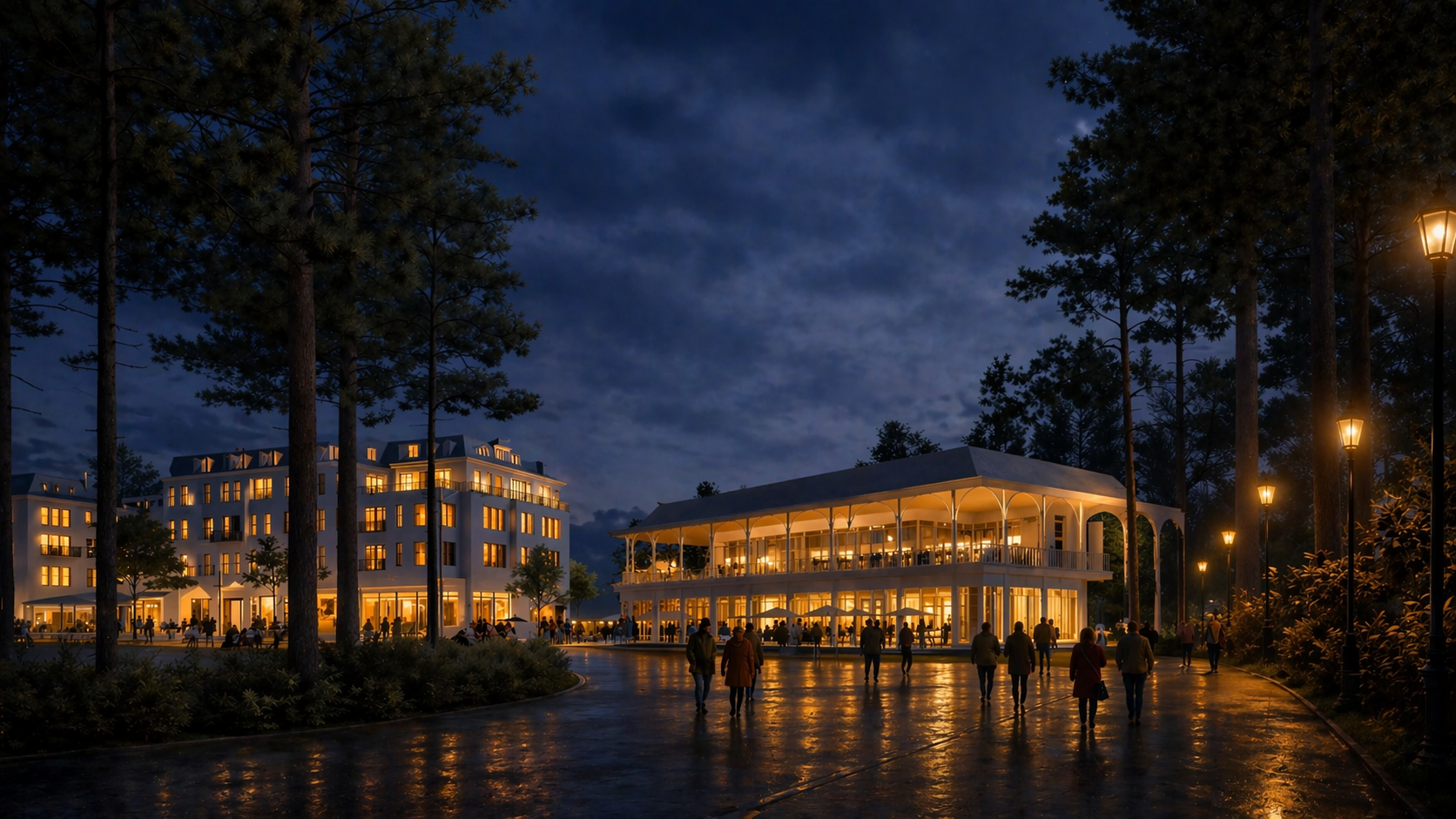
"The incubator is the engine for the gourmet cluster," Love explains. "We never have to recruit restaurants from the outside. We're building our own pipeline of operators, and every one of them has a vested interest in the area's success."
The broader culinary program also includes a cookery school inspired by Ireland's Ballymaloe, offering courses in Southern food and beverage traditions; a fine-dining concept; micro bar concepts ranging from a wine bar to a speakeasy to a non-alcoholic bar; a coffee shop; and a wine and bottle shop.
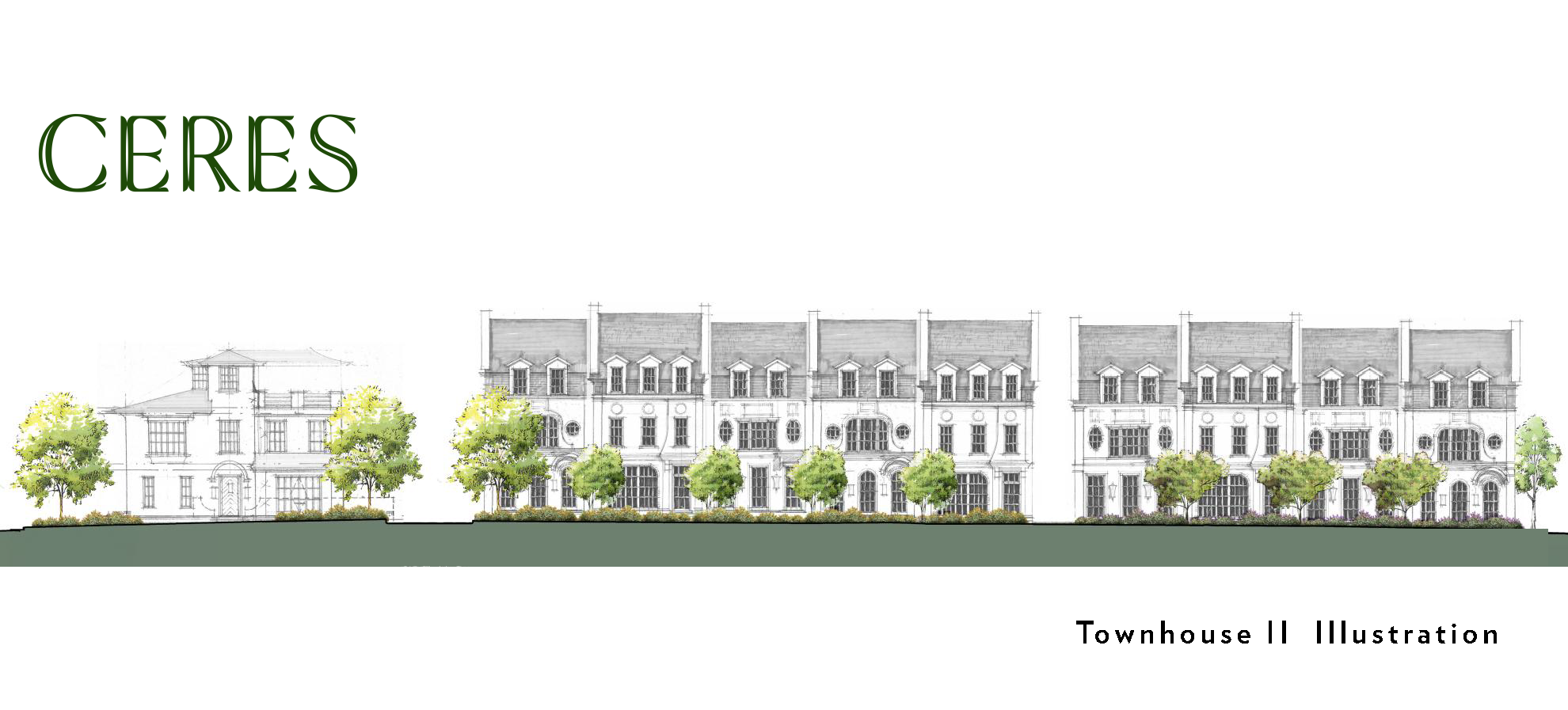
Residential options span eight home types, from Terrace Homes priced from $900,000 to Hill Homes at $3.5 million and above, with Tower Homes, Mews, Townhouses, Park and Forest Villas, and Pavillion Homes filling out the range. Mixed-use buildings include a market with artisan lofts, condominiums with penthouses, and the TNG Incubator building with co-working space above.
Scaling the Gourmet Cluster
TNG’s's ambition extends well beyond Chattahoochee Hills. The group's goal is to develop ten culinary-centric CERES communities across the Sunbelt, each featuring a TNG Incubator. The logic rests on the TNG Incubator as an exportable engine that will infuse the area with its own taste of place and vibrant, home-grown small businesses fueled by local farmers and artisans—the foundations of gourmet clusters, driving property values without requiring the developer to recruit or subsidize established restaurant operators.
Total project cost for Phase I infrastructure is approximately $102.5 million, with the full Phase I build-out, including residential, reaching approximately $188 million. The Nourish Group retains equity positions in incubator graduates' future ventures, creating long-term upside beyond the initial real estate transaction.
The broader question CERES raises is whether food can do for the next generation of residential communities what golf did for the last. Golf courses organized social life, created identity, and commanded premiums for decades before the model began to fatigue. Fitness amenities followed but never generated the same economic activity or community identity. The gourmet cluster model proposes something different: an amenity that creates businesses, draws visitors, and compounds with age rather than depreciating.
"The question people keep asking is whether this is replicable," Love says. "And the answer is that it has to be replicable, because the insight isn't specific to one site. Every growing community needs places to eat, entrepreneurs who want to cook, and residents who are tired of driving 30 minutes to a good restaurant. We're just the first ones building the infrastructure for it."
-Brad Hargreaves
Don’t miss Thesis Driven’s Spotlight interview with the CERES team next Wednesday, April 29, 3:00 PM - 4:00 PM EDT, where we'll explore how a culinary-centric design is redefining what a residential community can be. Register here

Read next


AI for Real Estate Acquisitions
We've been building AI acquisitions agents with real estate GPs. On August 13, we're opening the hood in a live 2-hour workshop

Investing in Australia
EG is applying the American real estate private equity playbook to Australia, starting with medical office