
When Will Spec Office Get Built Again?
Office demand is recovering, but speculative development in most markets remains stubbornly out of reach
Office demand is recovering, but speculative development in most markets remains stubbornly out of reach

New data from Tailorbird shows why two-thirds of real estate operators blow their capex budgets and where AI could actually help
EG is applying the American real estate private equity playbook to Australia, starting with medical office


EG is one of Australia’s largest independent investment and operating platforms. On August 12, EG partner Shay Ramalingam will join Thesis Driven for a live session exploring the opportunity in healthcare real estate in Australia. Register here.
For the past decade, American capital in search of stability abroad has landed largely in Europe or in emerging markets carrying a growth narrative. Australia got skipped. That is a strange outcome for one of roughly ten countries rated AAA by all three credit ratings agencies, a market that ran about thirty-four years without a recession, and one of the few developed economies still growing its population.
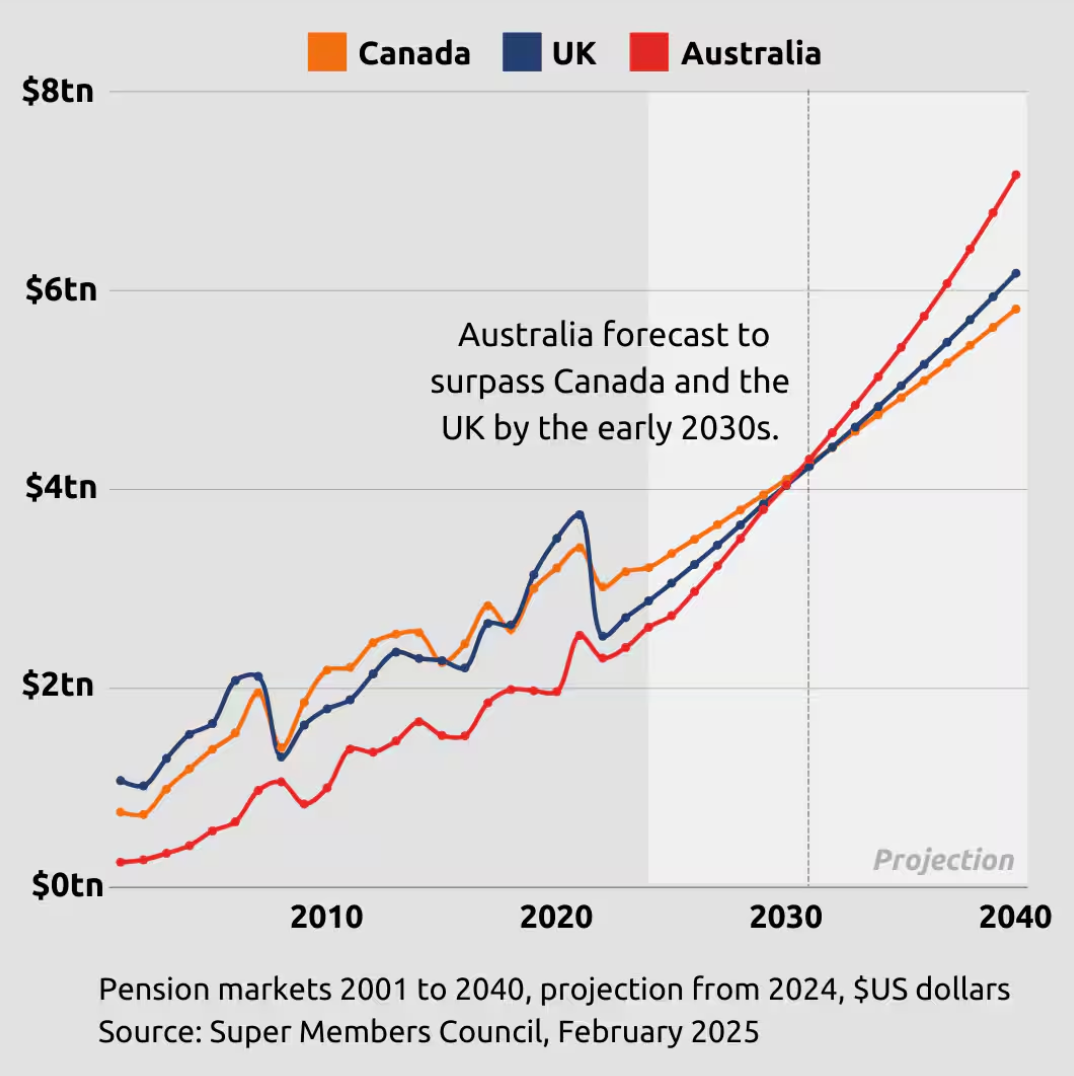
The stability case is only half the argument; the other half is who is waiting to buy. Australia requires workers to save for retirement, which has built a superannuation pool of A$4.4 trillion, in Australian dollars, headed toward A$8 trillion. What it buys is stabilized, income-producing portfolios. The result is a stable, growing country with a well-capitalized buyer waiting for whatever gets built.
EG, one of Australia's largest independent real estate platforms with about A$2 billion under management, is running a version of a strategy already proven in the US: find a boring asset class still owned by mom-and-pops, roll up the scattered pieces, professionalize the operations, and sell the assembled portfolio to an institution at a cap rate lower than it cost to assemble. That formula built fortunes in self-storage, manufactured housing, car washes, RV parks and vet clinics. EG is applying it to the medical office sector.
The setup fits the strategy. Roughly 92% of the country's A$150 billion of healthcare real estate lies outside dedicated fund managers, construction costs have risen more than 40% since 2020, stalling new supply, and the Commonwealth is injecting A$7.9 billion into Medicare on top of that shortage. EG built a dedicated healthcare team around the opportunity. Through the cycle, mainstream Australian cap rates run below local bond yields, so this cannot be sold as a yield trade; the edge is operational, and it comes from a document most landlords never open: the medical operator's own P&L.
In this letter we cover:
Australia's macroeconomic stability is well known. But its growth gets far less attention. Population continues to expand through immigration while the United States flattens and much of Europe and East Asia contracts, which means demand for the buildings underneath Australian businesses grows without requiring a cyclical recovery or a change in policy.
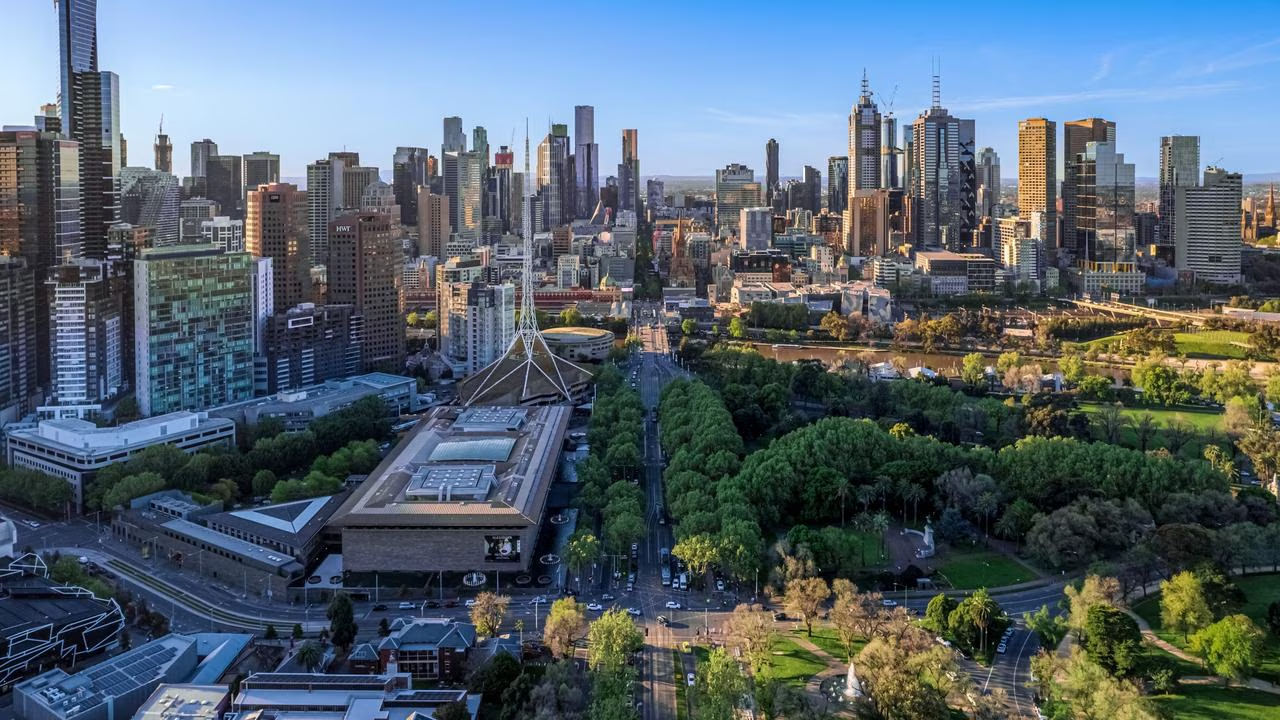
That appetite already has a paper trail. Brookfield and GIC took National Storage private for roughly A$4 billion, Aveo sold for A$3.85 billion in the seniors living sector, and childcare property saw a record A$1.44 billion change hands in 2025. Each deal created a stabilized, income-producing portfolio, i.e., the product a successful roll-up is built to produce.
What remains is a market with institutional-quality title, lease and legal infrastructure, documentation in English, and very little competition from American family offices. Foreign investment review and the Australian dollar entry point are both real considerations for an offshore buyer, and both belong in diligence rather than in the thesis.
The population of Australians aged 65 and over will grow roughly 25% by 2035, moving from about 4.5 million to 6.5 million, and the 75-plus cohort grows from 2.1 million to 3.2 million. Older populations consume primary care at multiples of younger ones, and they consume it close to home, in neighborhood medical centers rather than tertiary hospitals.
Government policy is pushing in the same direction, deliberately. The A$7.9 billion Medicare commitment in the 2025–26 fiscal-year budget is designed to shift volume into primary and secondary care, easing pressure on an overloaded tertiary system where bed blocking has throttled hospital throughput.
"The system cannot afford to keep treating primary care problems in hospital beds," says Brad Hazzard, EG's Senior Adviser and New South Wales Minister for Health and Medical Research between 2017 and 2023. "Every policy lever is now pointed at getting patients seen earlier and closer to home, and that requires buildings that operate as medical hubs with stronger diagnostics in the community."
A$150 billion of standing stock carries that demand, with another A$80 billion in the development pipeline. Primary care accounts for roughly A$22 billion across more than 8,000 facilities, compared with A$75 billion of annual industry revenue and operator margins of 20% to 30%. Average asset size is about A$10 million: small enough for a family office to underwrite directly, too small for the largest funds to pursue.
Ownership is the dislocation. Australian healthcare fund managers hold roughly A$20 billion between them, about 8% of the standing stock, and the largest primary care operator in the country controls less than 3% of the sites. Roughly A$450 million of primary, secondary and community health assets are being shopped quietly off-market by owners who need liquidity, after failed formal sale processes narrowed the gap between what sellers want and buyers will pay.
Private equity has arrived at the operator level, confirming that the demographic case is understood. KKR has invested in Family Doctor, and Genesis Capital in Ochre Health. Consolidation among operators strengthens the tenant covenant for whoever owns the buildings they occupy — whether or not the real estate has repriced—and channels demand toward higher quality locations, bifurcating rental growth to the benefit of landlords who know what they’re looking for.
A typical consult with an Australian GP bills about A$60; Medicare pays A$50 of that, and the patient covers the remaining A$10 out of pocket. A doctor sees roughly five consults an hour, which works out to about A$320 an hour in billings. A ten-room medical center, running 37.5 hours a week across 48 weeks a year at 90% utilization, generates close to A$5.2 million in annual billings. Landlords set rent against that number. Almost none of them actually check it.
"Most landlords underwrite the lease and stop there," says Shay Ramalingam, EG's Partner and Director of Healthcare. "We underwrite the practice. If a center has empty consult rooms, that is not a vacancy problem, it is a recruitment problem, and it is the single biggest driver of what that building is worth."
EG's analysis of one Victorian center shows the mechanism. Moving from 6.3 to 8.3 full-time-equivalent doctors lifts consult room utilization from 44% to 58%, gross revenue from A$3.95 million to A$5.13 million, and EBITDAR (earnings before interest, taxes, depreciation, amortization and rent) from A$0.88 million to A$1.23 million. Net rent rises 22%, from A$548 to A$670 per square meter. Rent as a share of EBITDAR falls from 53% to 45%, and rent cover improves from 1.9 times to 2.2 times. Both sides come out ahead. That almost never happens on the same lease.
Even after that improvement, the rent still falls below what a brand-new building would need to charge just to break even on construction. Replacement cost on the same center implies about A$757 per square meter, at a 5.75% yield on A$13.7 million of cost, versus A$548 passing and A$670 achievable after execution. The gap between what the building charges and what a new one would need to charge is the margin of safety, and it exists because nothing new is getting built.
The strategy has distinct steps: buy from capital-constrained owners, work with the sitting operator to improve the asset and the tenant mix, then help that operator grow by sourcing new sites. The third step turns a repositioning into a pipeline: a growing operator brings EG its next acquisition. Site selection depends on two things: demand for services in the catchment, and clinicians willing to work there. Since 2023, EG has reviewed A$3.3 billion of deals, bid on 18 of them worth A$249 million, and closed two.
Highlands Health Centre on the Gold Coast shows the finished product. EG paid A$7.5 million, about half of replacement cost, at an 8.2% initial yield. The catchment holds roughly 259,800 people, where the 65-plus cohort grows at 4.1%, well above the 2.6% average, and 41% of residents report a chronic health condition against a 27% benchmark. EG put a A$1.4 million rental guarantee into upgrades, converted half the net lettable area for a leading national radiology group, and modernized the consulting and theater space to attract clinicians.
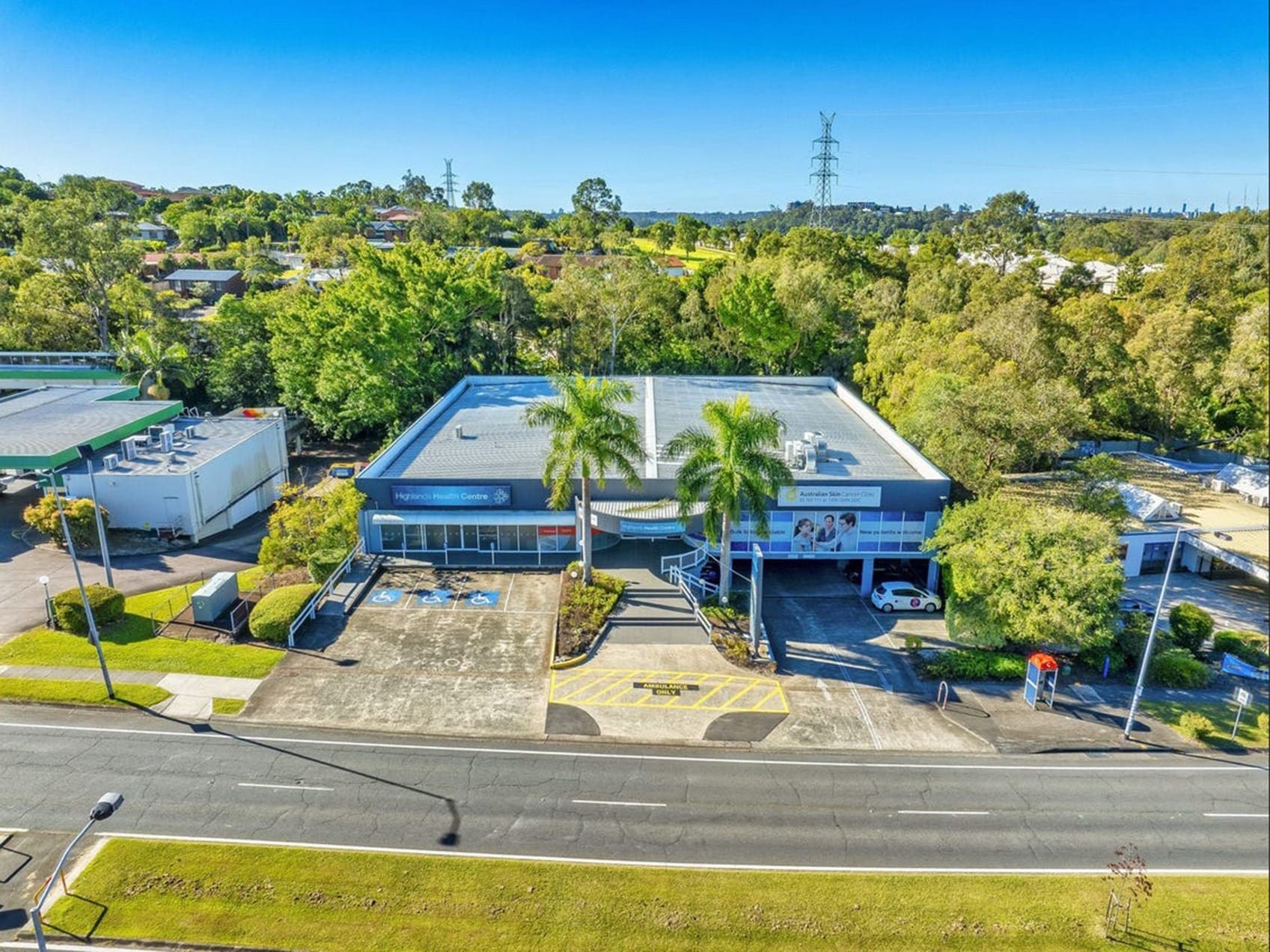
"Highlands was a single-tenant medical center with a year of term left, which is why we could buy it at that price," says Ramalingam. "It is now a multidisciplinary hub with radiology alongside primary care and five years of WALE [weighted average lease expiry]. Same building, different asset."
Occupancy held at 100% throughout. The property's equivalent yield tightened from 7.9% to roughly 5.9%. That falls within an indicative range of 5.75% to 6.0% based on informal feedback from an independent valuer; a formal appraisal has not yet been completed. Equity IRR moved from 14.5% to 25.2%.
EG has an established track record. The firm was founded in 2000, manages about A$2 billion for institutional and wholesale investors, and operates offices in Sydney and Manila. Healthcare is a dedicated vertical leveraging the existing platform.
Dr. Michael Easson, EG's Executive Chairman and co-founder, chairs the healthcare operating company. He is a former board member of Macquarie Infrastructure and the ING Real Estate Healthcare Fund, and a former chair of the Association of Superannuation Funds of Australia, the industry body for the capital pool most likely to buy these assets at scale. Hazzard covers policy and planning, having also held the Planning and Infrastructure and Family and Community Services portfolios in New South Wales and served as Attorney General.
Ramalingam leads the strategy from Sydney. He has built three healthcare teams, grew the A$3 billion Octopus Health Fund from inception, and led the turnaround of Aurora, a A$250 million UK care and education operating company. That operating-company background gives EG credibility when it discusses a medical practice's own economics with the people running it.
Jason Cheung handles investment management and capital transactions, with roughly A$500 million of healthcare assets transacted and another A$3 billion reviewed in due diligence. Edward Elkins, Clinical Assurance Adviser, brings a decade of healthcare experience including a Sydney quaternary hospital, the highest tier of specialized inpatient care, and a province-wide Canadian health program. Steve Rich leads capital markets.
The hardest part of any roll-up is the exit, and in Australia it is largely solved before the first asset is bought. Superannuation capital has to be deployed into Australian assets, and the healthcare fund managers positioned to hold this stock manage about A$20 billion against A$150 billion of existing real estate. The gap between what they manage and what exists can only close one way: fund managers buying more of it.
Aggregation is where the premium gets made. These assets are being sold one at a time by constrained owners, which is a good way to buy and a poor way to sell. Twenty repositioned medical centers with long WALEs across growth corridors is a different product from twenty individual buildings, and it prices accordingly.
"I spent years on the other side of this, at the fund and superannuation level," says Easson. "Institutions want term, covenant and diversified income, and they will pay for someone else to have done that work. Very few people in this market are doing it."
Run the Highlands math across twenty buildings instead of one, and the yield compression itself becomes the return.
Operator consolidation adds to the covenant without any effort from the landlord. KKR and Genesis Capital moving into Australian general practice signals a decade of roll-up ahead, and the tenant renewing a lease in 2032 is likely to be a larger and better-capitalized business than the one that signed it.
The window is defined by information rather than by rates. Buildings selling below replacement cost while nothing new gets built will not last. Mainstream Australian cap rates already trade below local bond yields; that is where healthcare pricing ends up once the asset class becomes institutional, and it is only a matter of time.
The advantage belongs to capital that moves while these assets are still being sold quietly, one at a time, by owners who need to sell.
Join us on August 12, when EG partner Shay Ramalingam will sit down with Thesis Driven for a live session exploring the opportunity in healthcare real estate in Australia. Register here.

Office demand is recovering, but speculative development in most markets remains stubbornly out of reach


We've been building AI acquisitions agents with real estate GPs. On August 13, we're opening the hood in a live 2-hour workshop
Covering the future of real estate and the people creating it