

Limestone Capital & Nature-Based Luxury
The emerging category in experiential hospitality

Thesis Driven is doing a live interview with the Limestone team next Wednesday, 9/23 at noon. Request to join. Have immediate thoughts or questions on Voaara? Join the conversation on today's Linkedin post.
For most of the last century, luxury hospitality was synonymous with the major corporate players: Four Seasons, Ritz-Carlton, St. Regis, and Waldorf Astoria. Over the past two decades, a new generation of place-driven luxury emerged in brands like Rosewood, Aman, Six Senses, and Auberge, redefining the category around authentic design and high-touch service. But as those brands have scaled, they too have moved toward corporate standardization.
Today, a new category has surfaced in the luxury space: truly remote hotels where the natural setting is the product. Operators like Habitas, Soneva, and Zannier have emerged as early brands, but none has built a multi-geography platform with institutional infrastructure.
Enter Swiss-based Limestone Capital and their new nature-based luxury brand, Voaara.
Over the past decade, Limestone has assembled a portfolio of 12 branded hospitality platforms across Europe and beyond: Aethos (seven properties live across Portugal, Sardinia, Mallorca, and London), Loisium wine retreats in Austria and France, plus Eterniti, a vacation rental operator managing 700 properties with more than €1.5 billion in assets.
Voaara, the firm's island luxury brand co-founded with Philippe Kjellgren, a luxury travel curator and founder of PK's List, was built at the outset to institutionalize nature-based luxury without the drift toward standardization or urban diversification that comes with scale.
The flagship project is Palm Island: a 135-acre private island in St. Vincent and the Grenadines with five beaches, a 28-key resort, 30 branded villas, and a $155.5 million development plan.
This letter covers:
- The nature-based luxury opportunity and why the Caribbean is ground zero
- How branded residence unlock scale
- Voaara Palm Island: the asset, the plan, and the economics
- What makes the Voaara brand different
- Limestone Capital: the platform behind the brand
- Scaling Voaara from one island to a global collection
The Nature-Based Luxury Opportunity
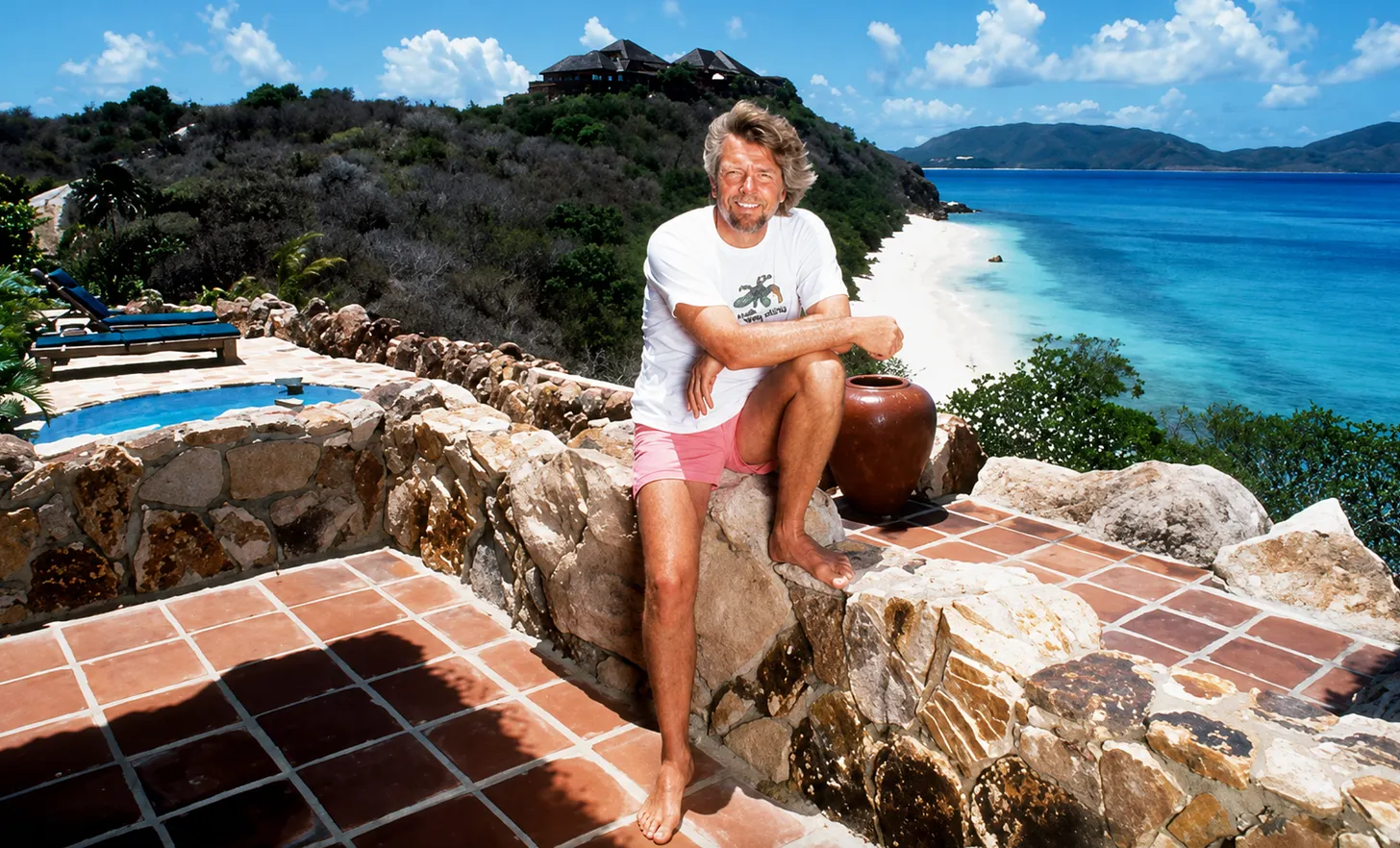
In 1979, Richard Branson paid $180,000 for Necker Island in the British Virgin Islands against a $6 million asking price. The discount reflected what he was actually buying: not an asset but an obligation, with a four-year government deadline to develop 74 acres of scrub with no fresh water, power, or docks. The initial build cost $10 million. Today, Necker rents for over $100,000 a night. That is the private island equation: the cost of the land is a rounding error, the operation is the asset, and the yield profile for operators who can execute is highly attractive.
The global private island resort market reached $7.6 billion in 2024 and is projected to double to over $15 billion by 2033. Top-tier resorts in the Grenadines, Turks and Caicos, and the wider Eastern Caribbean command nightly rates of $1,000 to $3,500. Private islands with adequate beaches, buildable terrain, and proximity to commercial airports are increasingly rare. Remote-work flexibility and a shift in high-net-worth spending toward experiences have accelerated demand since 2021, but new supply is not keeping pace. The operators who control active island sites have pricing power rooted in geography, not branding.
But building in these environments is structurally difficult. Every site requires desalination, power generation, and construction materials delivered by barge at multiples of mainland cost. Hurricane risk in the Caribbean demands self-insurance; banks do not lend against undeveloped islands. The category resists the standardization that lets hotel platforms scale: each property is defined by its site, which means each build is bespoke.
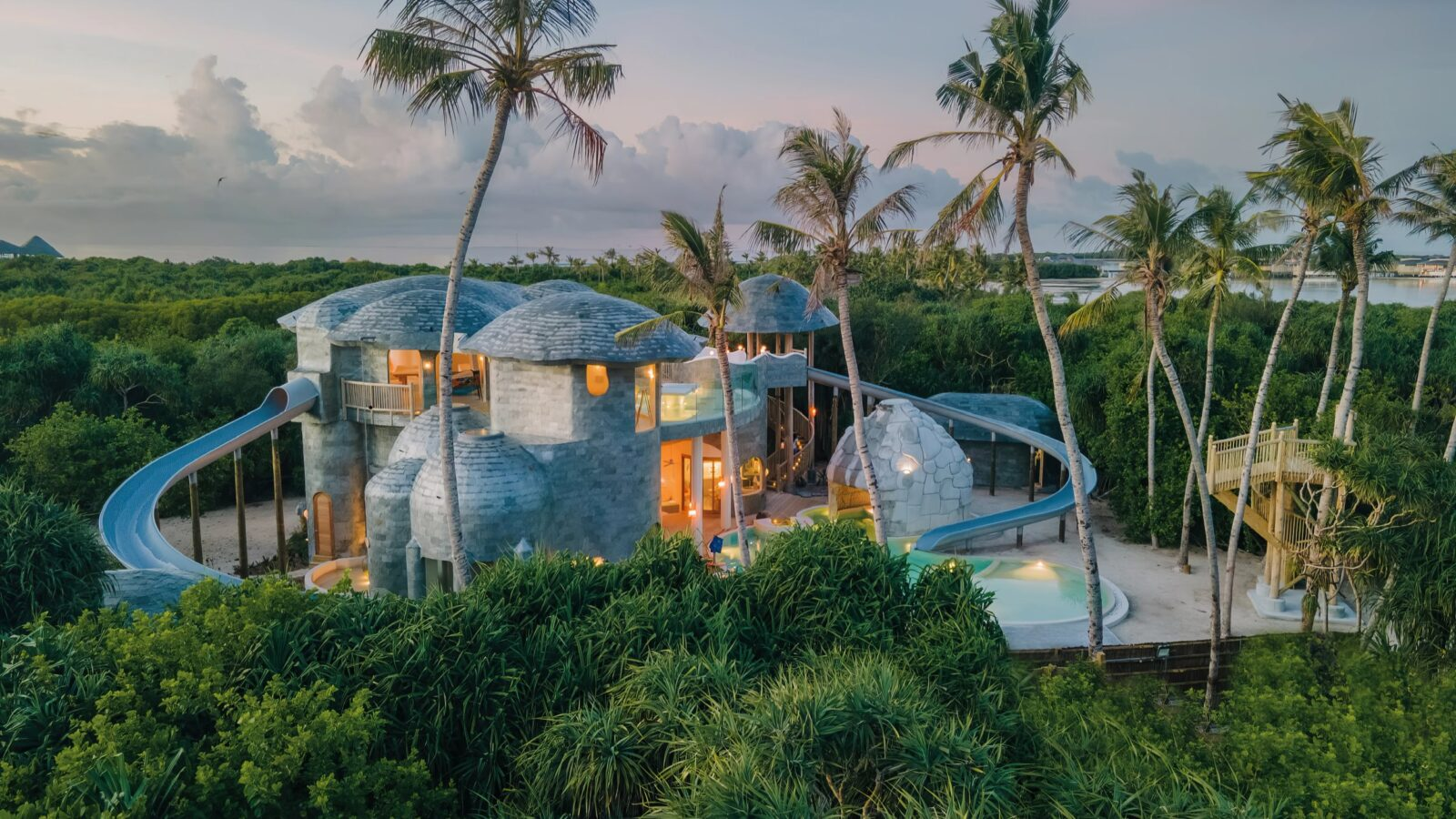
Soneva coined "barefoot luxury" in 1995 and still operates three properties after 30 years. That's the reality of the category, not a mark against its ambition.
How Branded Residences Unlock Scale
The financing model that finally unlocks this problem is branded residences.
Villa pre-sales generate capital early in the development cycle, reduce equity exposure, and solve the problem banks will not: funding development on a remote island before operating income exists.
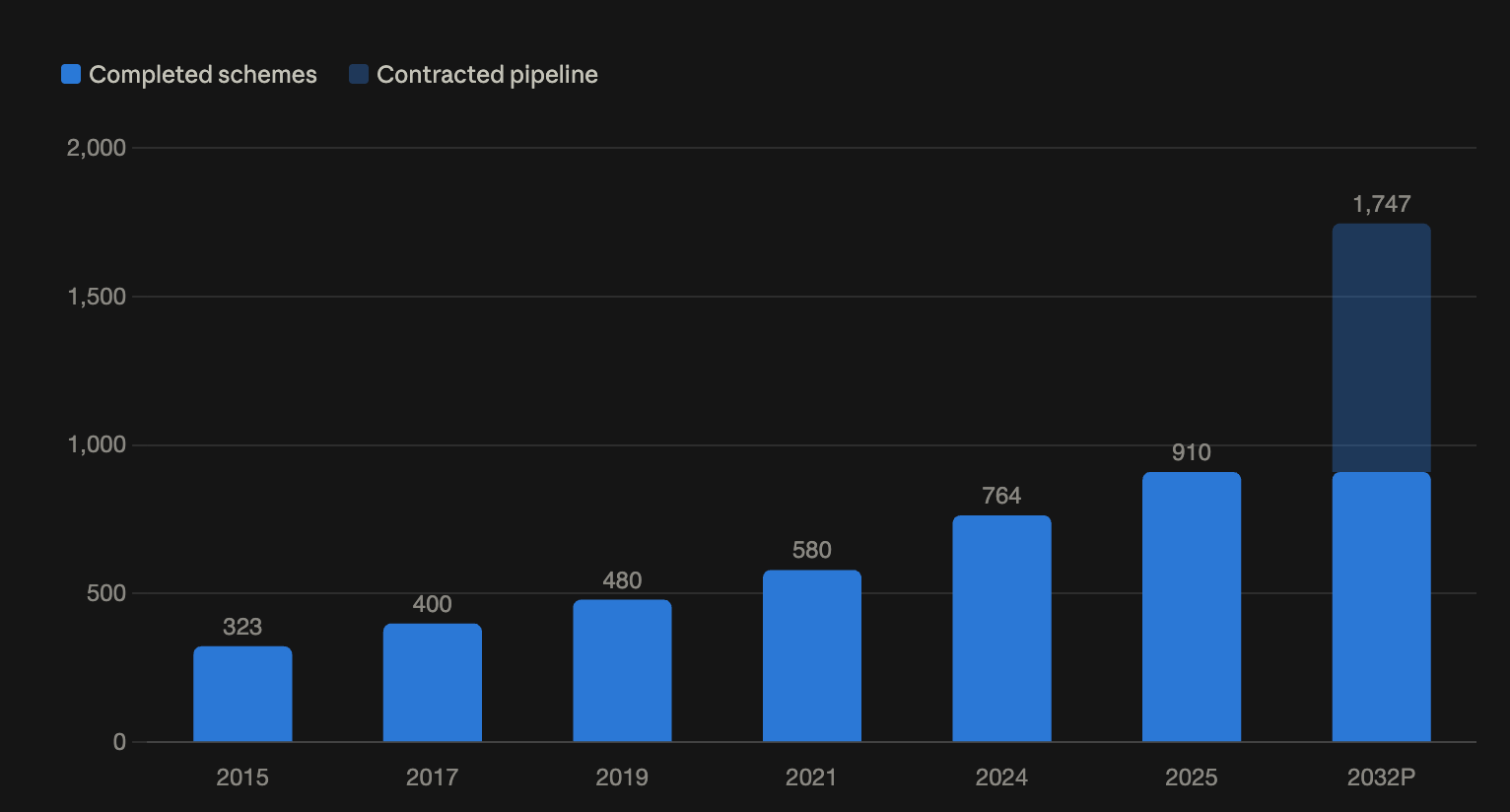
According to Savills, the number of branded residence schemes globally grew from 323 in 2015 to 910 in 2025, a compound annual growth rate of 10.9% that outpaces both the hospitality and real estate sectors. Another 837 projects are contracted for delivery by 2032, bringing the projected global total to 1,747. Branded residences now command a 33% price premium over non-branded product globally, and 36% in the Americas. In the Caribbean and Latin America, completed branded residence schemes are projected to grow 194% by 2032, the fastest regional expansion in the pipeline.
For remote island development specifically, branded residences are not an amenity play; they are the financial architecture behind it. Villa pre-sales fund construction before operating income exists, management fees create recurring revenue, and a community of owners generates repeat spending. The model is established at operators from Aman to Four Seasons; absorption data at comparable Caribbean projects has been strong.
Branded residences are the unlock that makes a multi-site, nature-based luxury platform possible where none has existed before. Voaara, the island luxury brand created by Limestone Capital, is built from inception around it.
"The operators who succeed in this space will be the ones who pair a real brand with institutional execution across acquisitions, financing, development and operations," says Benjamin Habbel, Limestone's founder and managing partner. "There are beautiful remote properties everywhere. Very few groups in the space have the infrastructure and business model to scale beyond one or two sites."
Voaara Palm Island: The Asset and the Plan
Palm Island is a 135-acre private island in St. Vincent and the Grenadines with five beaches and an 11-acre parcel on neighboring Union Island for the arrivals pavilion.
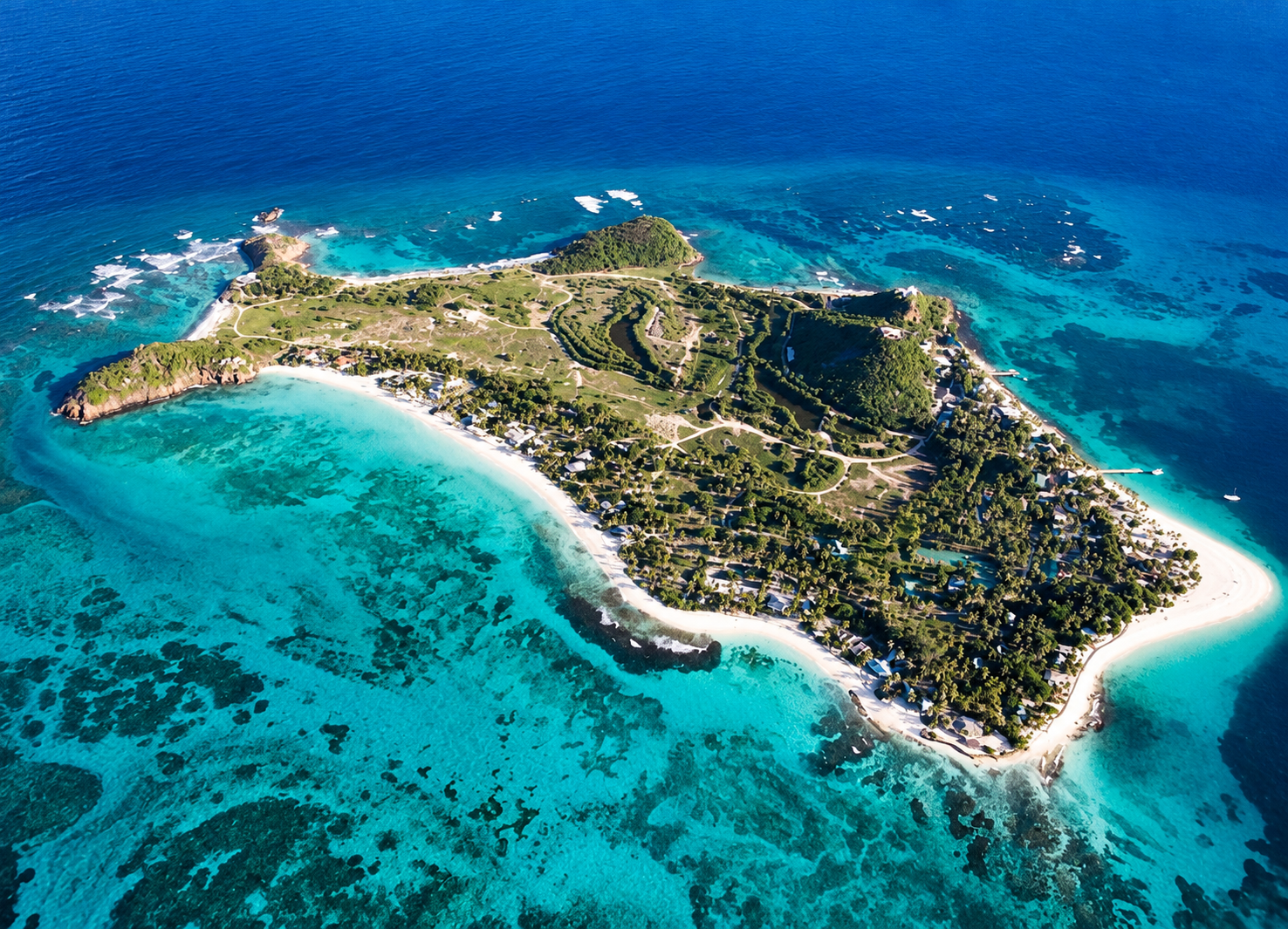
Limestone acquired the island in July 2025 for $22.4 million. The master plan, by architect Luis Mira, is complete, with permits secured and a service pier that has been rebuilt. The government of SVG has granted a 15-year tax holiday, duty-free import of construction materials, and a VAT waiver for the development period.
The development plan calls for a 28-key resort and 30 branded villas on a total budget of $155.5 million, with vertical construction beginning in the second half of 2026 and a target opening by the end of 2027. Villa pre-sales will launch in 2028, after the brand has established operating data and guest reviews, letting Limestone price residences at the top of the market rather than selling on spec.
Union Island's commercial airport connects to Barbados and St. Vincent, putting the resort within same-day travel of New York, Miami, Washington D.C., and Toronto. The 10-minute boat transfer is part of the Voaara arrival sequence and the 11-acre Union Island parcel serves as a welcome pavilion where the transition into the resort begins.
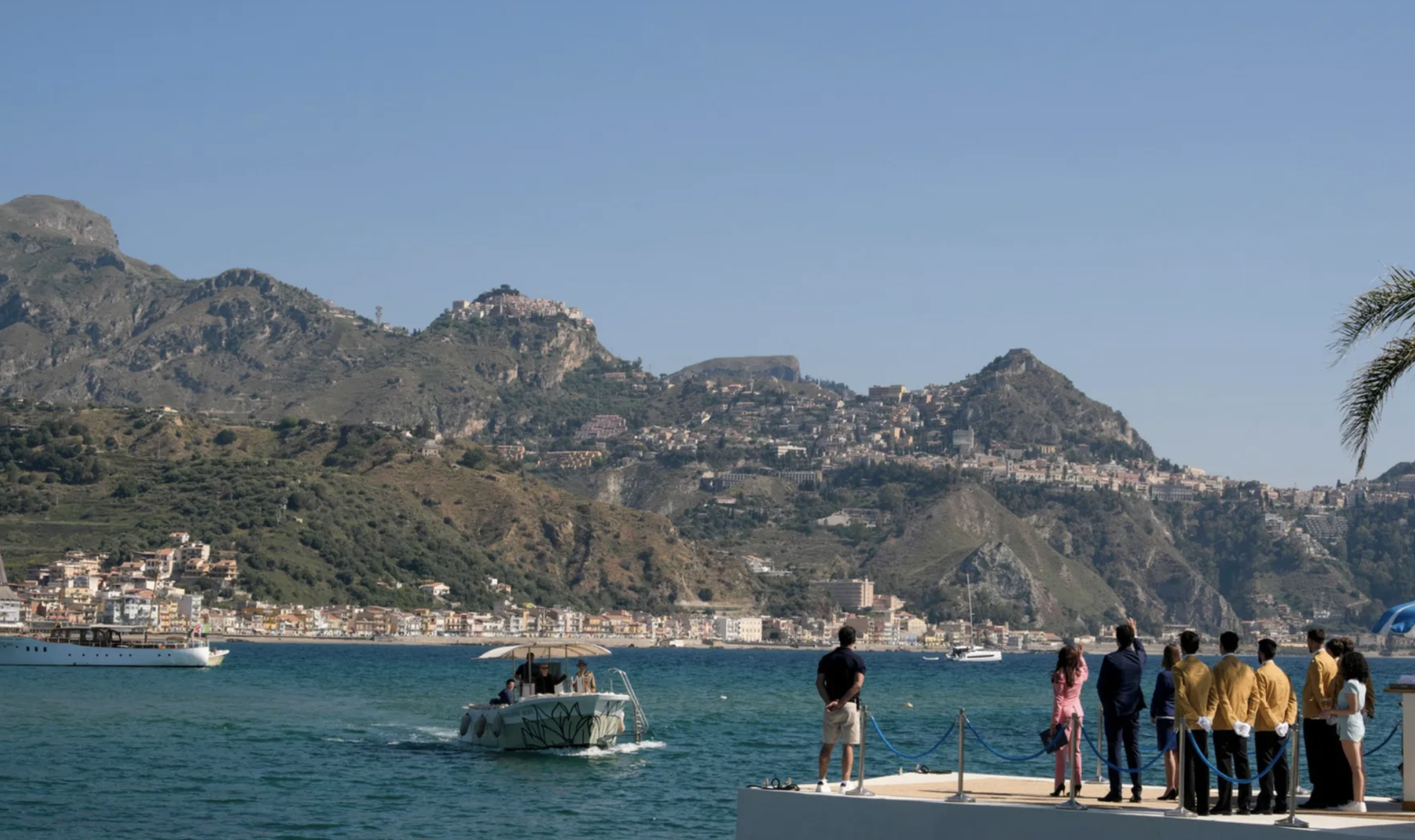
"We acquired an irreplaceable asset in a market where comparable resorts command $2,000-plus per night," says Habbel. "The island, the concessions, and the brand together create a project that would be nearly impossible to replicate."
The Voaara Brand: What Makes It Different
Voaara was co-founded by Philippe Kjellgren, creator of PK's List, and Limestone Capital. Kjellgren spent decades reviewing the world's finest hotels and kept arriving at the same conclusion: even the best properties treated their natural settings as the backdrop rather than organizing principle. The name derives from Malagasy, meaning "sacred nature." The tagline, "Where Luxury Meets the Wild," functions less as marketing than as a design brief.
Geographically, the brand targets projects where architecture can blend into the surrounding landscape, then builds a personalized hospitality program around nature-based experiences and menus tied to local ingredients and food traditions. Where Soneva built its identity around a single founder's vision in the Maldives, and Habitas scales through programmatic community events, Voaara's bet is that the branded-residence model lets nature-based luxury replicate across geographies without diluting the site-specificity that makes each property work.
"I spent years reviewing the best hotels in the world and kept feeling like something was missing," says Kjellgren. "The buildings were beautiful, but they could have been anywhere. Voaara starts with the land. The place tells the architecture what to be."
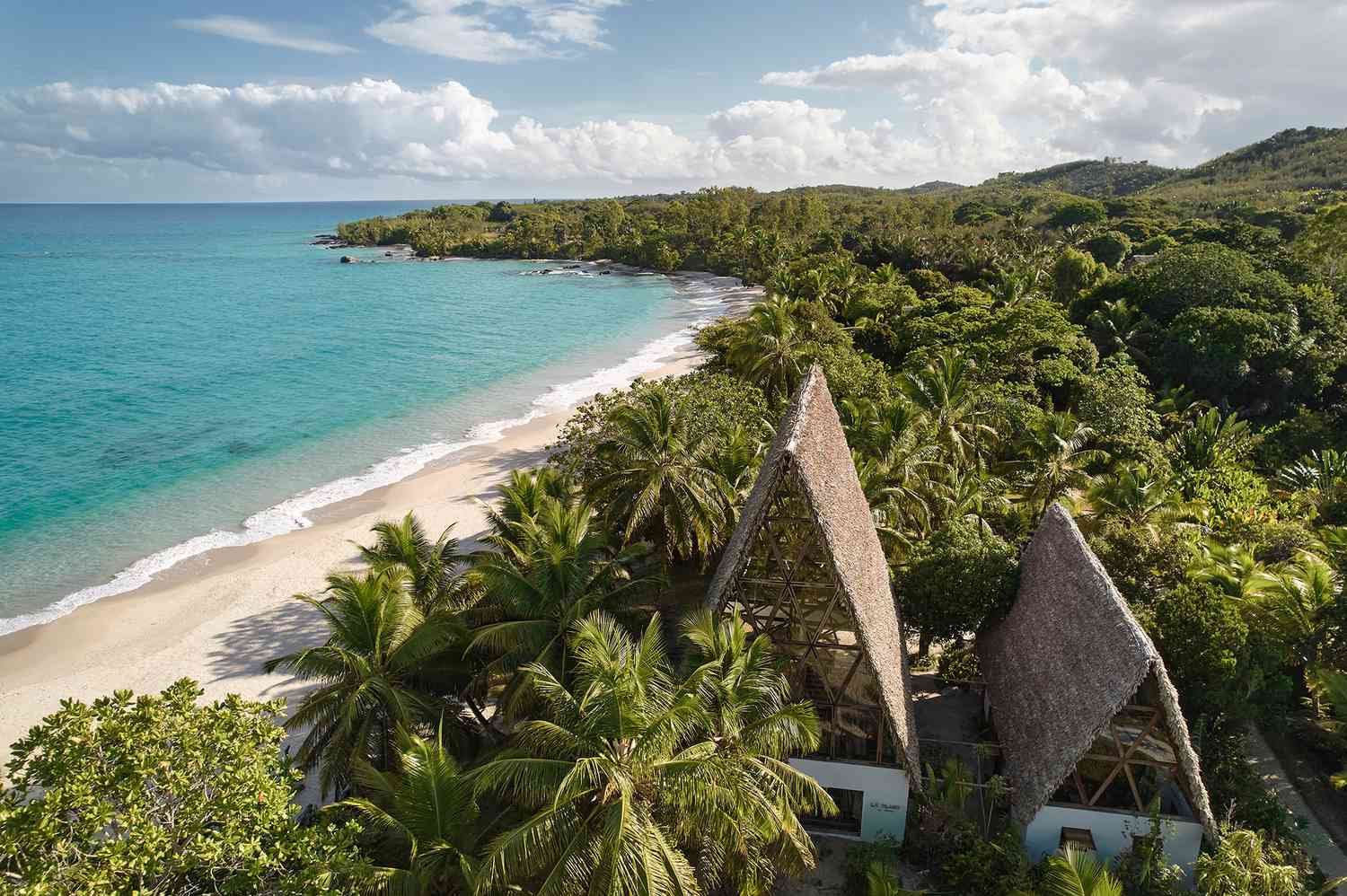
Voaara Madagascar was the proof of concept. It opened in October 2024 on Sainte-Marie Island: seven bungalows and one villa on 50 hectares of beachfront and jungle. Madagascar established the design vocabulary and debuted "La Plage by Sarrion" in a logistically demanding environment. Palm Island inherits everything learned there, in a market with direct flights from the eastern seaboard. The branded residence offering extends the brand into ownership: low-density villas managed by Voaara, with full resort access and a rental program.
Limestone Capital: The Platform Behind the Brand
Limestone Capital was founded in 2018 by Benjamin Habbel and Jeff Coe with a simple thesis: acquire distinctive hospitality assets and transform them into high-performance branded platforms.
The firm now manages more than €1 billion across four funds, with 25 professionals operating from five offices globally. Three funds are deployed in Europe. The fourth, Topaz, is a global opportunities vehicle and the fund behind Voaara Palm Island. Limestone's operating platforms, led by Aethos, Eterniti, and MYNE, collectively generate more than €300 million in revenue and continue to scale.
The 12-brand portfolio spans the hospitality spectrum. Aethos operates seven lifestyle hotels across Portugal, Sardinia, Mallorca, London, and northern Italy. Loisium operates wine-and-spa retreats in Austria. Eterniti manages 700 vacation rental properties across 20-plus destinations as a certified B-corp. Other brands cover co-ownership (MYNE), countryside retreats (Crafted), social hotels (Anagram), and health optimization (Ydun). The breadth is deliberate: each brand targets a distinct guest profile, while shared infrastructure lets the firm move fast when an opportunity surfaces.
"We are not a hotel company that raised a fund," says Habbel. "We are an investment firm that builds operating platforms. That distinction matters when scaling a new brand across multiple geographies."
The Bigger Opportunity: Scaling Voaara
Palm Island is the second Voaara property. The brand was designed to scale from inception: low-density footprint, environmentally integrated architecture, site-specific design, and the same framework applied to every location. Target regions include the Caribbean, Africa, Mexico, Costa Rica, El Salvador, and Asia. Four properties are in the pipeline beyond Madagascar.
At Palm Island, $49.5 million in residential development is funded through pre-sales. Future projects follow the same template: villa sales de-risk equity, and management fees create recurring revenue. Each new site deploys a proven financial architecture rather than requiring a fresh equity raise for the full development cost.
The development philosophy holds each property to a principle from the brand book: "We do not build everywhere. Only where the land allows something exceptional." Each site uses local materials, local food traditions, and architecture shaped by the landscape. A Voaara in Costa Rica will look nothing like a Voaara in the Grenadines. The consistency lives in the guest experience and operating model, not the physical expression.
The private island resort market is projected to double to $15 billion by 2033. The question is not whether nature-based luxury will attract institutional capital. It is whether anyone can scale it without losing what makes it work.

Read next


AI for Real Estate Acquisitions
We've been building AI acquisitions agents with real estate GPs. On August 13, we're opening the hood in a live 2-hour workshop

Investing in Australia
EG is applying the American real estate private equity playbook to Australia, starting with medical office

Who is Investing in Real Estate Tech? 2026 Edition
Our annual list of firms actively investing in real estate technology companies