
The Rise of Tour Intelligence
A new generation of companies is betting AI can make the human leasing agent better
A new generation of companies is betting AI can make the human leasing agent better

Tracking three months of notable land use and zoning decisions with Shovels

As real estate's insurance-cost crisis grows, captives gain popularity and embrace membership-club selectivity
Why the next generation of real estate fund managers will be built on video reels and newsletters


“I’m not that guy.”
This is the response I usually get when I ask sponsors about using social media to raise money for real estate deals.
And I get it. Historically, “that guy” has been a jester in an Armani suit, posting pictures in front of rented Lamborghinis and private jets shouting “10X your life,” with no institutional track record or credibility.
Trust me, I don’t want to be that guy either.
But if you look past the TikTok dances and lip-syncing videos, social media is:
And these audiences aren’t just teenagers or bored housewives. My parents’ generation of liquid, retired Baby Boomers spends hours every day on social media. As do exited tech founders, Bitcoin billionaires, fund managers, and first-gen family offices.
So, why aren’t more real estate sponsors using this free, trillion-dollar marketing engine to target and influence the hundreds of millions of global, accredited investors scrolling their feeds in the back of an Uber every day?
It’s not because of the SEC or FINRA: they’ve already put guard rails in place to use social media for capital raising.
It’s because most sponsors simply don’t understand how it all works. They’re afraid of it—afraid to be wrong, to screw it up, or to become a joke in the country club locker room or in networking groups.
This letter addresses the process and the opportunities for leveraging this type of media:
Parasocial relationships are how media figures have built trust with audiences ever since the advent of radio. The definition:
A parasocial relationship is a one-sided connection where a person feels they know and have a bond with a public figure (celebrity, influencer, fictional character) who is unaware of their existence, often stemming from media exposure like TV, social media, or podcasts.
People have built these one-way relationships around high-profile personalities for the last 80+ years, from FDR to Johnny Carson to Joe Rogan. After seeing their ups, downs, and most chaotic personal experiences, they believed they knew how Johnny or Joe would behave off-camera, “over a beer.”
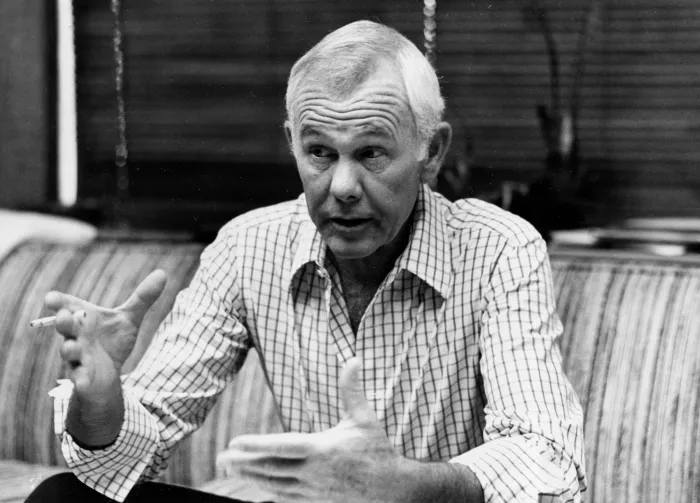
But they didn’t. It’s just a neuroscience trick. Our lizard brain processes a talking face on a screen the same way it processes a face across the table.
That’s why watching someone on Instagram repeatedly can feel more intimate than having lunch with them twice a year. By showing up in our feed, inbox, and headphones, the online character builds a psychological closeness—and oftentimes trust—that compounds every time we watch their videos or read their posts.
Today thanks to Instagram, Facebook, LinkedIn, X, YouTube, Substack, Twitch, and OnlyFans (kidding, but not really), we’re exposed to millions of potential parasocial relationships with people who aren’t presidents or late night TV hosts; they’re emerging chefs, Minecraft gamers, housewives with a penchant for arts & crafts, fintech entrepreneurs, adult film stars, Blackstone COOs. And, yes, real estate sponsors.

For aspiring creators, content production and distribution are now so cheap and accessible that large scale parasocial relationships can be built in a matter of months, not years.
And that’s the point of this letter. No matter who you are, if you’re willing to learn to create engaging content, you can find an audience you can influence—including accredited and/or institutional investors. You just need to know how to play the game.
But first, here’s an important question that often comes up:
“I get selling lip gloss and supplements, but who’s actually buying real estate securities off social media?”
A ton of people, actually—from doctors and dentists to large institutional LPs.
Billions of investment dollars are now sourced through marketing funnels that start with social media content. And it’s being led by two types of sponsors on opposite ends of the real estate spectrum: shady grifters on the far left, and executives of the largest PE funds on the far right. Only a few groups play in the white space in between.
I’m not going to call out these sketchy figures by name. But the tell-tale signs for spotting them include:

If more than two of these elements exist, buyer beware. But I don’t want to throw too much hate, because there is a ton we can learn from these characters.
First of all, the best ones are raising an eye-watering amount of money. Some have raised over a billion dollars of equity, often with no pedigree or real track record.
And while they may be terrible fund managers and operators, they are world-class content marketers—with the confidence (or narcissism) to use their name, image and likeness in the public domain.
So while I wouldn’t try to reverse engineer their investment strategy or underwriting models, it’s worth studying:
To be clear: This isn’t the right social strategy for every sponsor, especially for those looking to raise larger checks from more sophisticated investors, which requires a more nuanced approach. But it is a proven strategy.
Top executives of Wall Street’s largest private equity firms have recently joined the social media influencer ecosystem—perhaps none more so than Jon Gray, President and COO of Blackstone.
Gray has become known for his candid videos filmed in Central Park during morning runs, sharing his views on recent shifts in the capital markets, macro events and even celebrity gossip—all with a sunny and sometimes self-deprecating disposition.
I’ve watched many of these videos, and I now know (or, Blackstone has successfully planted in my brain) that Jon is exactly who I’d want running a massive pool of long-term capital: measured, self-aware, allergic to hype. Blackstone no longer feels like a faceless capital machine.
How can you not like this guy?
Howard Marks of Oaktree has also joined the party, turning his famous written memos into a media franchise and podcast. His Oaktree Memos, which have circulated around Wall Street since the 1990s, have been turned into a podcast, The Memo with Howard Marks, to give investors a front-row seat to how he thinks about cycles, risk, and when to step on the gas.
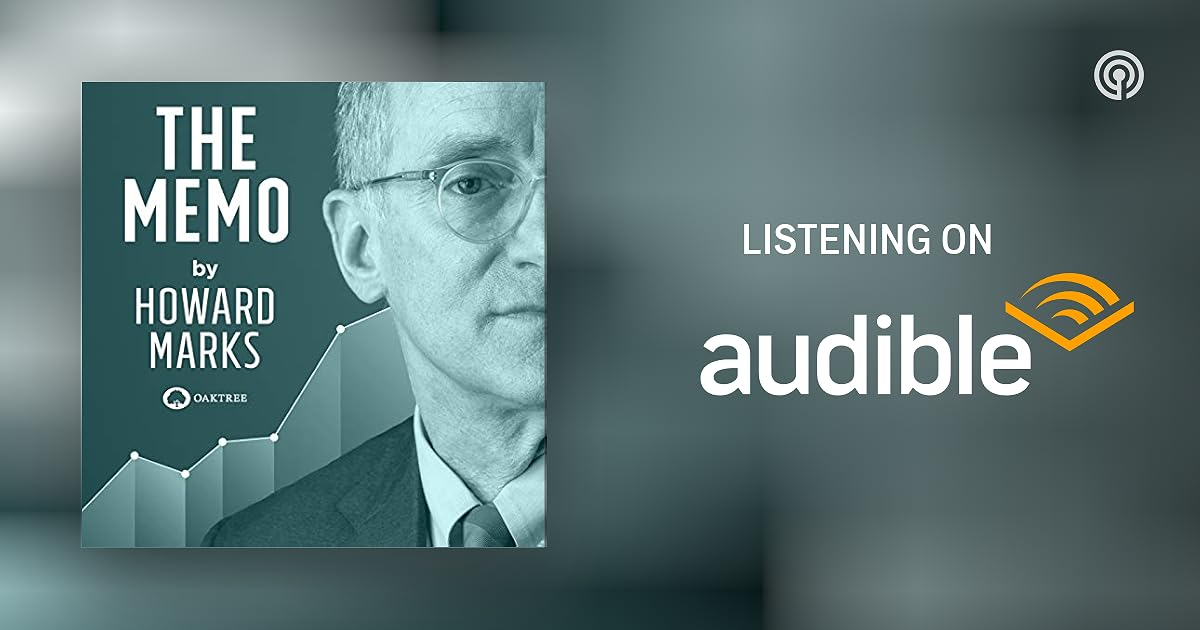
Yes, these firms have massive resources. But Gray and Marks are not parading their faces and voices around social media for fun or a charity campaign; they’re doing it because Blackstone and Oaktree have realized that social platforms are the highest-leverage trust-building machines ever built for capital markets.
By the end of 2026, we’ll likely see a Jon Gray or Howard Marks character—an honest, approachable, relatable, “man or woman of the people”—emerge on social media from just about every large asset manager.
This is where opportunity lies. Thousands of real sponsors—neither grifters nor mega-firms—want broader reach but hesitate to make the uncomfortable shift from traditional networking to media-led capital formation. So they stay put.
Origin Investments is a real estate operator and fund manager dominating in this white space—leveraging best practices borrowed from those aforementioned grifters to build a private investor audience and convert them to investors, but with an institutional / wholesome / respectable brand image. Their founders have successfully raised $2 billion+ from over 4,000 LPs via a series of educational Youtube videos on multifamily real estate investing and related social media distribution campaigns.
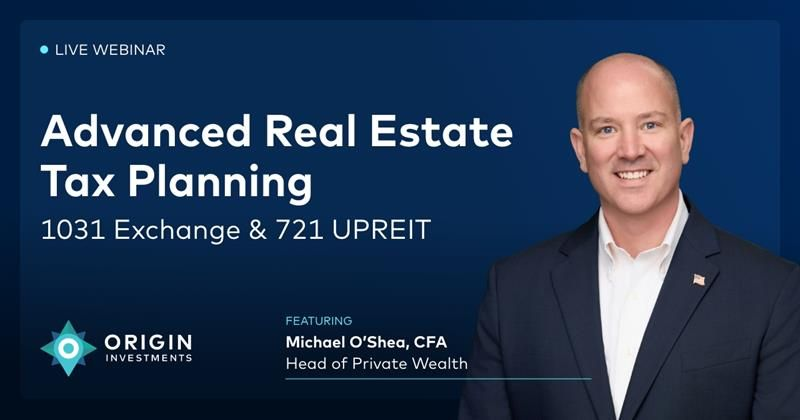
Their strategy is simple. They use founder-forward YouTube videos to educate investors on the benefits of multifamily real estate investing, which are distributed on LinkedIn. They deploy an educational website that captures emails and other investor data through multiple touch points (newsletter sign up, guide downloads, investor profile forms), and use paid ads on different media platforms, including Hulu, Sirius, and Google. Attention to detail matters: they make sure all content is professionally designed and edited, and that messaging is consistent across channels.
This all requires a meaningful investment in time, content, and distribution (probably in the territory of $250K in production costs plus paid ad spend). And it means building a sales and IR team to manage those 4,000 LPs.
But the ROI is a no-brainer if they’re raising +$200mm per year.
Disclaimer: we’re not experts on raising money through social media, but we’ve studied and gotten our hands dirty on enough of these initiatives to understand the formulas.
1. Be willing to put a name, image and likeness—and even a little bit of personality—into the public domain
This is the hardest leap for most sponsors.
Often, sponsors try to cop out and shelter behind their corporate logo. “Can’t this just be done from the company LinkedIn account?” No—people follow founder-led brands, not companies. There has to be a willingness to become the brand and have a voice, even if your buddies laugh and kids cringe.
If this reputational fear can be overcome, then the highest hurdle to success has already been cleared.
2. Pick the target audience, and then the theme
Work up a specific prototypical investor target in great detail, e.g., Mary, a 40 year old exited tech founder (recently sold her healthcare software company to private equity; lives in TriBeCa with husband and three young kids; still active in NYC tech founder social scene; figuring out what to start next).
Then just write to Mary. Write about the best real estate asset classes for tech entrepreneurs, why real estate is better than 529 plans to save for kids’ college education, why real estate needs more women investors, and so on. It can take a while to find this voice, so the key is committing to the process until it clicks.
Pro tip: hire a LinkedIn copywriter to flesh this out and execute. Writing in social media lingo is not the same as writing investment memos.
3. Pump out coherent, consistent content on a few platforms
Trust is not built in a single viral video. It is built through repetition. People need multiple meaningful exposures to a person before they feel psychologically familiar. So from the audience’s lens, that might look like:
Something should be posted every day and it usually takes months before seeing real ROI. But once the machine starts working, the audience and level of influence compounds every hour of every day, until it’s turned off.
LinkedIn is especially good right now because it’s so empty and boring. So there’s plenty of opportunity to stand out from the droves of “humbled and excited to announce…” posts.
Pro tip: all content should educate, not sell. No one responds to selling or bragging. People want value; value = trust and trust = checks.
4. Capture emails
A social media audience is worthless if emails can’t be captured. Algorithms change, and suddenly the voice is gone. There needs to be a process for converting followers into email addresses that are actually owned.
The best ways to do this are newsletters, podcasts, and guides. The newsletter is ideal because it creates another channel for repetitive weekly or monthly touch points, while guides are typically a one-time hit (though they can be very effective if they go viral). Podcasts and/or webinar series can work, but the bar—and the expense—to doing these well is much higher.
Sponsor websites are also a massive wasted opportunity. Most say exactly the same thing (“we’re problem solvers; our investment approach is differentiated; we aim to deliver above-market risk-adjusted returns”). A website should speak to the investor and offer a library of valuable content in exchange for an email address.
5. The rest is on the sales team, and beyond our pay grade
Steps 1–4 are designed to build an audience and capture email addresses, while building familiarity and trust with the sponsor and the strategy along the way.
How thousands of warm email addresses ultimately turn into phone calls and checks is a separate question. But by that point, much of the hard work has already been done. Just make sure the list maps to a clear investor-type framework. The same playbook hits differently for HNWIs, family offices, and PERE.
I’m biased, but I expect social media and parasocial relationships to become a primary investor marketing strategy for all real estate sponsors in the next couple of years, especially given the dwindling efficacy of cold email campaigns.
I also expect LinkedIn to become more educational and entertaining—and thus stickier—as more creator-professionals lean into building brands and audiences.
For the medium and longer term?
The opportunities to leverage AI tools and influence these online audiences are constrained only by platform investment, which doesn’t seem to be stopping anytime soon.
So sponsors who build trusted, founder-led brands and “characters” today will have immense leverage, having grown an audience before the rest of the market piles in and dilutes everyone’s efforts.
I also expect sponsors who have built founder-led brands to benefit uniquely from the fast-approaching rise of AI avatars—trained on their voice, thinking, track record, and strategy—that can answer investor questions at 2 a.m. from halfway around the world. Their parasocial relationships never go dark.
It sounds absurd. Yet it feels inevitable.

The carry trade is dead, and capital is moving to whoever can manufacture cash flow. Takeaways from a day with more than 250 investors and operators in emerging real estate.


A workshop for GPs to build brands that attract today's investors, taught by No Walls Studio

World Tree Technologies is using a quick-growing hardwood to compress decades-long timber cycles into an investable real estate timeframe
Covering the future of real estate and the people creating it