
Los Angeles, 2036
A city built around cars and entertainment could be remade over the next decade by forces now transforming both
A city built around cars and entertainment could be remade over the next decade by forces now transforming both

In struggling urban markets, the path to preserving affordable apartments may begin with creating more expensive ones
Office demand is recovering, but speculative development in most markets remains stubbornly out of reach

Flexible, Robotic Housing for the Tech Workforce


Flexible, Robotic Housing for the Tech Workforce
Don’t miss Thesis Driven’s Spotlight interview with the REthink team next Wednesday, July 1st from 12:00 PM-1:00 PM EDT. Register here.
Culver City, on the West Side of Los Angeles, is one of the densest concentrations of tech and entertainment employment in the country. Amazon Studios, Sony Pictures, Apple TV, HBO Max, and TikTok collectively lease millions of square feet within a few blocks of each other, and Apple is expanding with a 536,000-square-foot campus under development that will bring 3,000 additional employees to the area.
But the housing stock has not kept pace. The project-based creatives, relocating executives, and traveling production staff that fuel these companies need something the market doesn’t offer: furnished, flexible-term apartments they can move into for a three-month shoot or a nine-month assignment without signing a twelve-month lease or settling for a hotel room.
Land is scarce in Culver City and construction costs rank among the highest in the country. Those two facts make the per-door math on conventionally sized units nearly impossible to pencil.
REthink Development, founded by developers Steve Edwards and Greg Reitz, has taken an innovative approach to this problem: build smaller units, integrate Ori’s robotic architectural systems that allow a 350-square-foot studio to function like a space nearly twice its size, furnish every unit, and offer flexible lease terms that attract premium rents.
The economics work differently than conventional development.
Smaller units with Ori systems cost materially less to build than conventional apartments but generate rents equal to or higher than much larger apartments, because they function as larger spaces. As a result, rents per square foot are significantly higher. REthink demonstrated this at AVE Santa Clara, where furnished and flexible units reached 98 percent occupancy in six months at 1.7 times the rents of unfurnished comparables in the same building.
REthink is now focused on boutique projects that family offices and private wealth investors can own and control directly. These projects carry the tax advantages of new construction: bonus depreciation via cost segregation on both the building and the furnished elements, generating a return profile that institutional-scale capital cannot replicate.
In this letter, we cover:
The housing market has not kept up with how many Americans work. Traditional multifamily serves renters who sign twelve-month leases; hotels serve travelers staying one to seven nights. The workers who fall between those two products, needing furnished housing for three to nine months at a time, have almost nothing purpose-built for them.
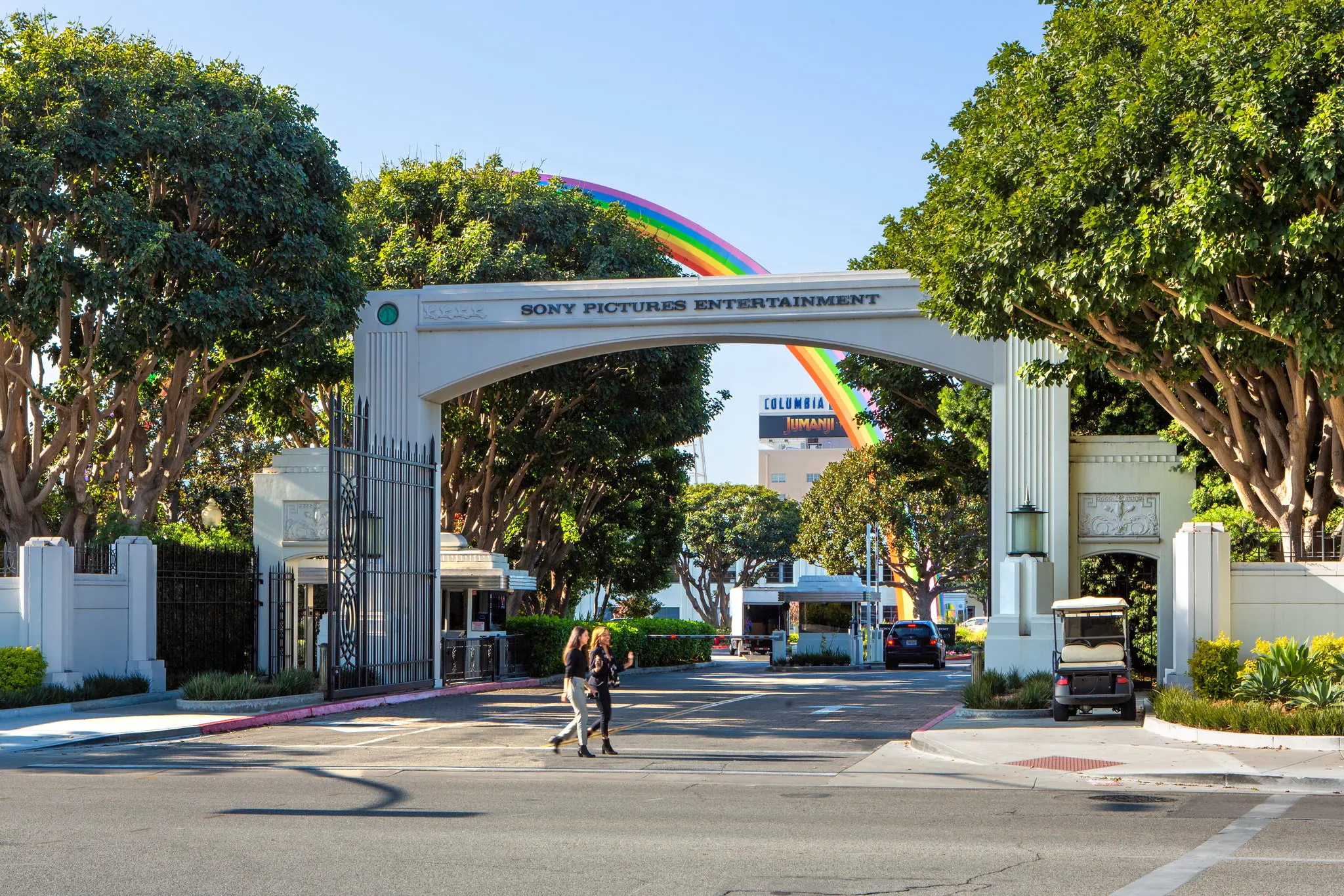
Culver City is among the clearest examples of the problem. The area functions as an independently governed municipality with its own police, fire, and school system, operating more like a small city embedded in the metro than a typical Los Angeles neighborhood. That independence matters for housing: the city controls its own approvals, its own zoning, and its own pace of development.
Land is scarce, entitlements move slowly, and construction costs rank among the highest in the country, all of which combine to suppress new supply. The result: market asking rents for unfurnished one-bedrooms sit at $3,865 per month, with furnished comparables running 1.3 to 1.6 times higher.
"We kept hearing the same thing from employers in Culver City," says Steve Edwards, co-founder of REthink Development. "Their best people were turning down assignments or doubling up in hotels because there was nowhere to live for four months. The product did not exist."
The market for flexible housing in America is large and deeply bifurcated.
At the low end, extended-stay hotels like Extended Stay America and WoodSpring Suites serve budget-conscious business travelers and, increasingly, individuals in housing transitions, often at rates below $80 per night. These products are utilitarian: small rooms and minimal amenities.
At the high end, corporate housing providers like Blueground, Landing, and Synergy Global Housing target executive relocations and insurance-funded temporary housing at rates that can exceed $200 a night.
Both ends of the market are well served, but the middle is not. Workers who need furnished housing for three to twelve months fall between both categories. Extended-stay hotels lack the full kitchens, laundry, and square footage these renters need to live comfortably. Corporate housing runs too expensive for most of the demand pool. Flex-living operators have begun to professionalize the space, but they are layering hospitality operations onto existing apartment buildings rather than building the real estate around the use case from the ground up.
"Most operators in this space take a 600-square-foot apartment, put furniture in it, and call it flexible housing," says Greg Reitz, co-founder of REthink Development. "That does not change the economics. The rents are higher but so are the costs per unit. What changes the economics is rethinking the unit itself."
REthink builds smaller units from the ground up, integrates robotic furniture to make them function larger than their square footage, and structures the furnished-and-flexible operating model into the building's design and underwriting from day one.
Ori’s robotic architectural systems are what make unit economics work.
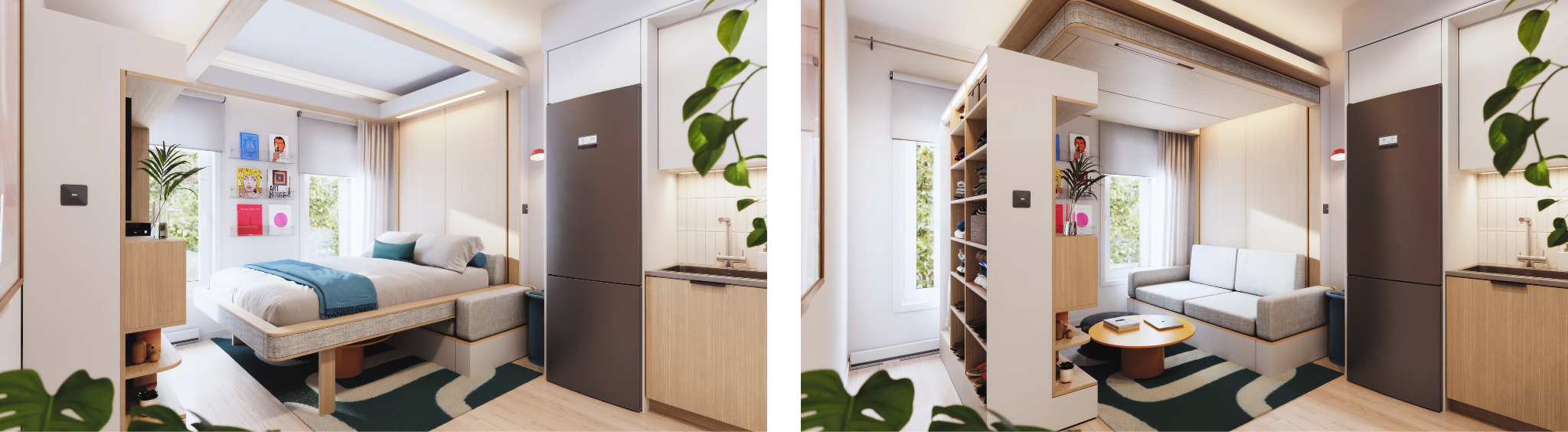
Ori's motorized bed lifts into the ceiling without requiring bedding to be removed, revealing a couch and coffee table underneath. Their motorized closets integrate desks and shelving that reconfigure on command. The result is a material shift in how small units perform. A 350-square-foot studio with Ori lives like a junior one-bedroom; a 450-square-foot one-bedroom accommodates a home office without sacrificing living space. Smaller footprints cost less to build, and the Ori integration raises both livability and rent per square foot, so units that cost less to build generate more revenue per square foot than larger conventional apartments nearby.
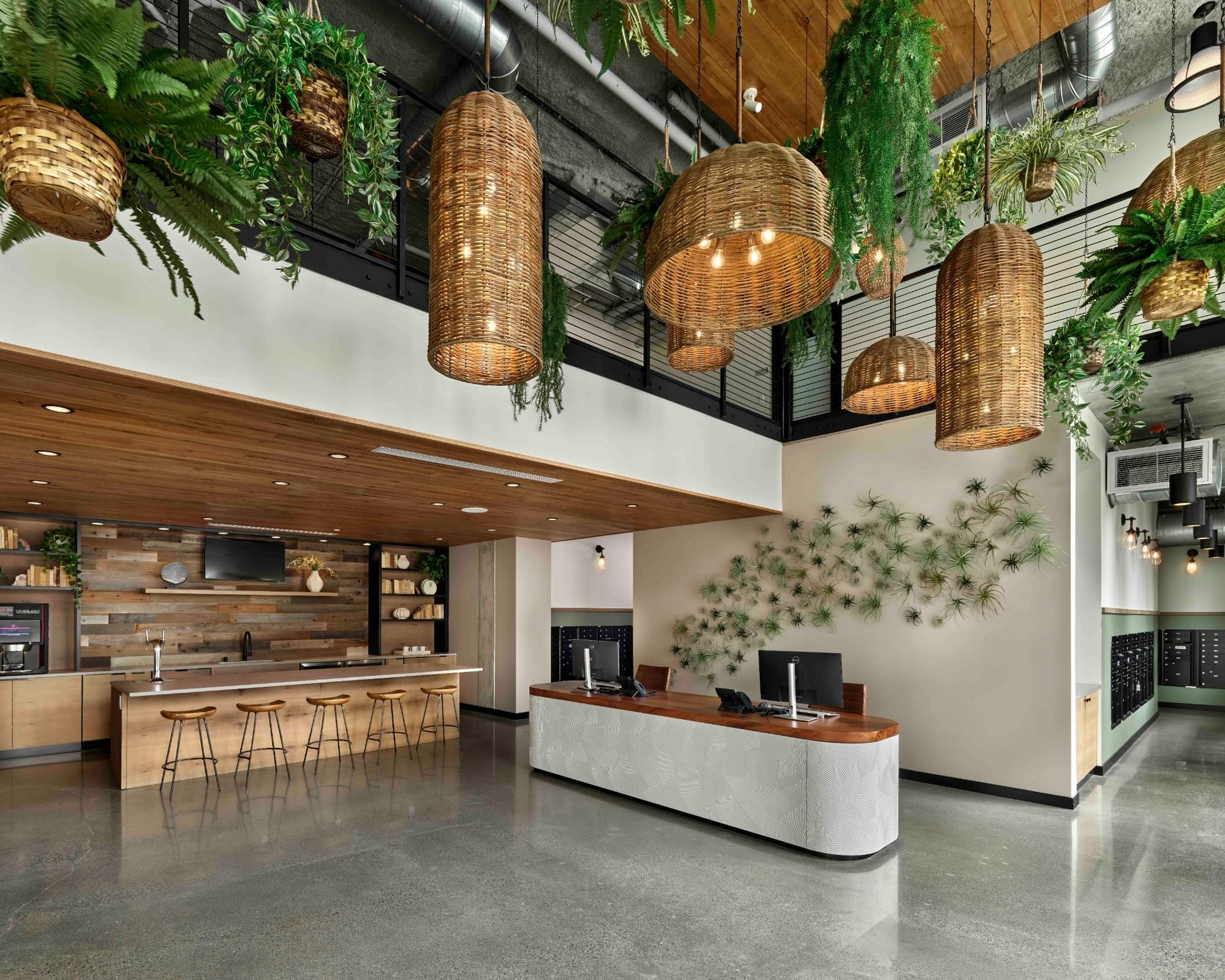
The results at AVE Santa Clara went beyond the headline occupancy numbers. The 311-unit project, 111 furnished and flexible and 200 standard luxury, with 15,000 square feet of retail and an 18,000-square-foot food and beverage area, leased up 50 percent faster than the industry average, generating $2 million in additional revenue above pro forma. By the six-month mark, rents had increased five percent, putting the project 15 percent above pro forma overall.
"Santa Clara taught us that the demand for this product is real," says Edwards. "One hundred eleven furnished units leased at 1.7 times the rent of unfurnished units in the same building, in six months." The numbers make the case on their own.
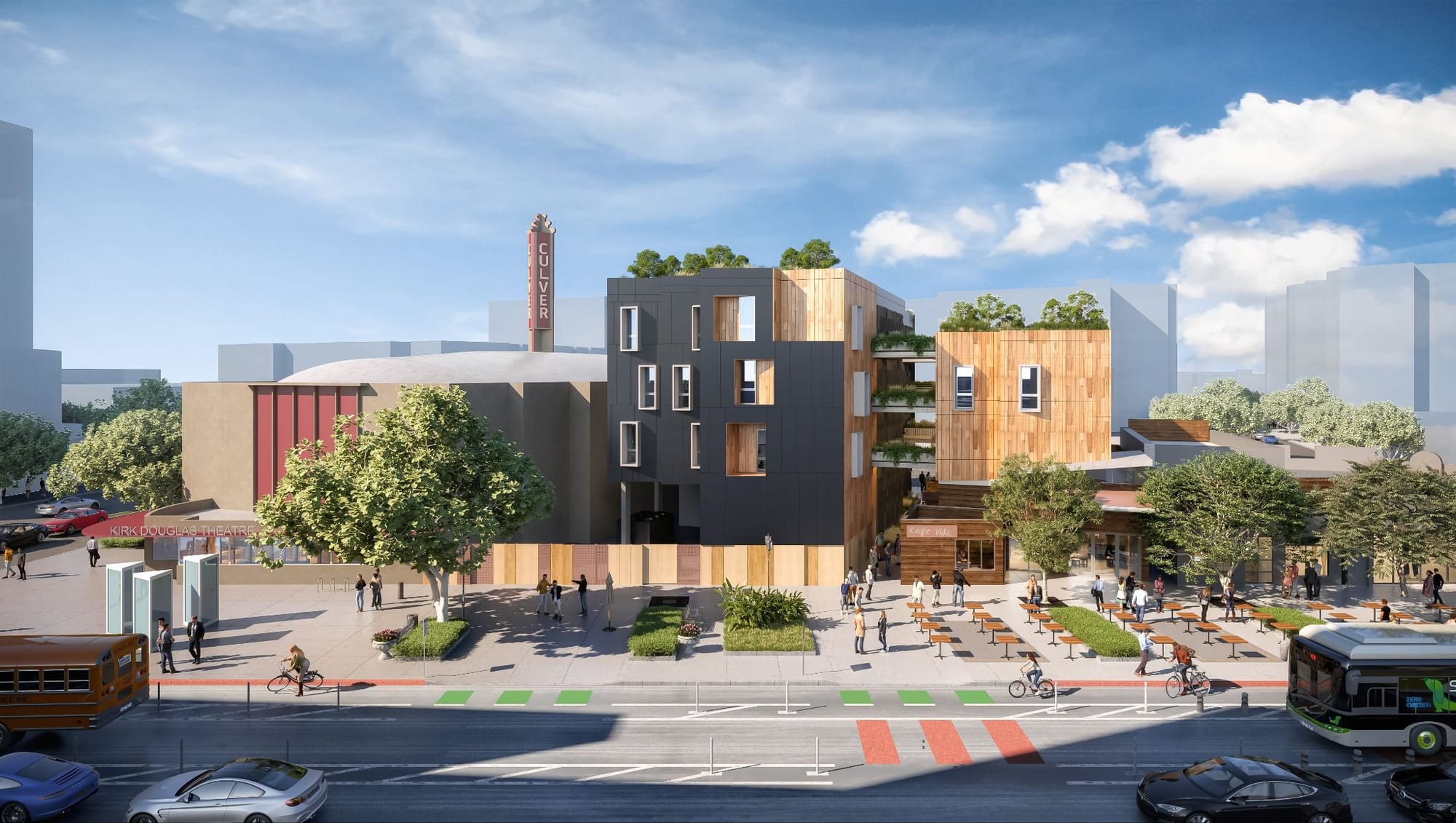
Stage Right Residences applies the same model in a market with even sharper demand. The project sits on two parcels: one purchased from the City through a competitive RFP, and a second parcel comprising two existing restaurants that generate cash flow and remain open during construction, with the structures pre-engineered for residential development above. The unit mix is 28 market-rate furnished units, eight studios at 350 square feet and twenty one-bedrooms at 500 square feet, and six affordable unfurnished studios at 125 percent of area median income. Every market-rate unit comes equipped with Ori robotic furniture and is fully furnished.
The development carries several de-risking features: permits are in hand, a guaranteed maximum price construction contract is in place, the building sits on grade with a 16-month build timeline, and the existing in-place retail will generate $293,000 in year-one NOI to service construction debt during the build.
Edwards brings 20 years in development and more than $1 billion in completed and ongoing projects, having started in software and technology at a Redpoint Ventures-funded start-up. Reitz brings 20 years, oversight of 330-plus units, and $200 million in projects, along with LEED AP certification and a background in sustainable design. Both principals are based in Culver City and Santa Barbara.
The deeper competitive advantage is the relationship both principals have built with local governments over two decades.
At the Clara District in Santa Clara, Edwards met with City Planning biweekly for three years, working through street alignments, park placements, and retail zoning together. That collaboration unlocked density above 200 units per acre, an outcome unlikely through a conventional entitlement process. Reitz led the first major mixed-use development in Santa Barbara in 40 years, securing new zoning for micro-units in one of the most restrictive regulatory environments in California. Before REthink, he served as Green Building Advisor for the City of Santa Monica, helping the city go from zero LEED-certified buildings to the most per capita in the country.
"Every municipality has housing problems it cannot solve on its own," says Reitz. "When a developer shows up and says, 'I want to solve your problem, not mine,' the conversation changes completely. The zoning and density outcomes that follow are not available through conventional channels."
In Culver City, REthink has operated for more than 20 years, developing credibility at City Hall and in the business community. Stage Right's first parcel was acquired from the City through a competitive RFP, a transaction that reflects the institutional trust the firm has built over decades. The model has carried to Santa Clara, Santa Barbara, San Juan Capistrano, where REthink delivered the first major multifamily project since the 1980s, and Bend, Oregon. The municipalities are different, but the pattern is consistent: solve the city's problem, and the zoning and design possibilities follow.
The mid-term stay market is growing around consistent, long-term demand drivers. Project-based employment is expanding across technology, entertainment, healthcare, and consulting; corporate relocations increasingly involve trial periods of three to six months before permanent moves. Travel nursing surged after the pandemic and remains elevated, and remote and hybrid work have created a growing population that splits time across cities and needs a furnished home base for months at a stretch.
"The mid-term stay market is where multifamily was 30 years ago," says Edwards. "Everyone knows people need it. The developers who figure out the unit economics and the operating systems will have a significant head start."
REthink's current pipeline extends well beyond Stage Right. Santa Clara Parkside, 301 units, started construction in January 2026. The Abbot Kinney project in Venice will deliver an 82-room boutique hotel with furnished apartments and flexible-stay rooms. An Orange County project will deliver more than 200 units with a portion furnished and flexible, and a Bend, Oregon project adds 111 units with 50 percent furnished and flexible.
The model works in any market with a meaningful concentration of project-based employers or healthcare institutions that can support it, and the investment structure works at the same scale.
Stage Right is a $24 million project with a $7 million LP equity check, sized for family offices who want direct control and meaningful governance rather than a minority position in a blind pool. The $20 to $40 million development range, where a significant share of America's housing gets built, sits below the threshold for institutional allocators and above the reach of most syndication platforms.
The developers who pair purpose-built flexible housing with the right capital structure will have a repeatable formula for a market that is growing faster than most other pockets of the real estate industry.
Don’t miss Thesis Driven’s Spotlight interview with the REthink team next Wednesday, July 1, 12:00 PM - 1:00 PM EDT. Register here.

The carry trade is dead, and capital is moving to whoever can manufacture cash flow. Takeaways from a day with more than 250 investors and operators in emerging real estate.


Private wealth has passed the institutional market, and most sponsors have no idea how to reach it. A workshop on raising from family offices and RIAs.

As AI eliminates administrative burden and capital consolidates around scaled platforms, operational performance is becoming a primary driver of returns


A quarterly read on early-stage feasibility activity with our friends at TestFit
Covering the future of real estate and the people creating it