
New Workshop: Doing Conferences the Right Way
A 90-minute tactical workshop for real estate professionals and vendors who want to get the most out of conferences
A 90-minute tactical workshop for real estate professionals and vendors who want to get the most out of conferences

After years of false starts and regulatory confusion, a few serious projects are pointing toward what this technology can actually deliver for real estate

The big AI backlash, continuing headwinds for multifamily, a return to the office, and the capital flows investors can’t ignore

As regular Thesis Driven readers know, we love to look out to the future. But end-of-year predictions are always hard for us, as they apply a specific constraint: lots of interesting things are out on the horizon, but what needles will actually move in the next 12 months?
But constraints can be good things.
In this case, it forces us to think practically not just about technology, policy, and the capital markets, but also about human nature. Sure, something might be inevitable, but how might our resistance to change—via policy, behavior, or mere sluggishness—restrain it?
Last year, we posed “themes we’re watching” in lieu of our usual predictions. A cop-out, but one I’ll forgive: December 2024 felt like a particularly high-volatility moment.
But this year we’re back to our normal annual predictions, and I’m joined by Thesis Driven’s Paul Stanton and Editorial Director Jim Kaminsky in making them.
This one seems like less of a prediction than an inevitability, but I believe AI and data center development will be the defining issue of the 2026 election cycle.
We’re already seeing it from both ends of the political spectrum. Earlier this month, Bernie Sanders proposed a moratorium on all new data center development. Lest you believe the anti–AI agenda is solely coming from the left, Republican Sen. Josh Hawley has been one of the leading public anti–AI (and anti-data center) voices in Washington. And the emergent “woke right” is just as negative on technology as the far left, if not more so.

In the words of 8VC partner Sebastian Caliri:
Folks in tech do not appreciate that the entire country is polarized against tech. Bernie wants a data center ban, and Bannon seems close to calling a Butlerian jihad.
The only thing AI seems to offer most Americans is job loss and more billions for billionaires.
I wish I disagreed, but I think Caliri is on point here. Without a better narrative around the benefits of AI—and technology writ large—technology companies will soon find themselves on the receiving end of a lot of hamfisted legislation.
It’s hard for me to find a bullish angle on U.S. multifamily right now, particularly in the Sun Belt.
Let’s start with the short-term problems. Many markets have seen historic volumes of new apartment deliveries over the past 24 months, driving rents down as cities struggle to absorb all that new inventory. Austin, for instance, is experiencing rent declines of more than 20%. While it may be an outlier, it’s not alone in the red: dozens of Sun Belt cities are experiencing rent declines.

And it’s not like new supply is falling off any time soon. While new deliveries will decelerate into 2027, it will take some time for the backlog of projects under development—and in interminable lease-up periods—to clear.
But it’s not all sunshine and rainbows after that. The U.S. is already facing significant demographic challenges as declining birth rates collide with rapidly decreasing—and now possibly negative—international net migration. Starting later this decade, each successive cohort of college graduates will be smaller than the last, offering a dwindling pool of potential multifamily tenants.
In many markets, there simply won’t be enough humans to fill all the units.
For more than two decades, U.S. multifamily has been seen as a safe, defensive play by institutional investors, pushing cap rates down as large investors sought to reallocate into apartment assets. If institutions begin to reckon with multifamily’s macro headwinds and pause rebalancing, sponsors are in for a world of pain.

On the flip side, I believe the narrative around office will turn increasingly positive in 2026.
Office buildings that are (a) well-located and (b) properly amenitized have been leasing well for the better part of 24 months. But we’re now beginning to see demand cascade down to slightly less appealing buildings. In New York, for instance, leasing velocity hit a 23-year high in Q3 2025, pushing demand beyond trophy assets like One Vanderbilt and Hudson Yards.
While a handful of tech-forward companies emerged from the pandemic as genuinely remote-first, the majority of companies muddled back into some form of hybrid. And while Fridays in the office may be dead forever, it’s proven tough for most organizations to manage fully remote employees within a hybrid framework.
As regular Thesis Driven readers know, I’ve been beating the autonomous vehicle drum for over two years. Since then, the data around AV safety and reliability has gotten far stronger—robots are at least an order of magnitude safer than human drivers—and it’s now hard to see them as anything less than inevitable. Even if cities launch misguided attempts to limit them, the “why can’t we have this here?” consumer pressure will be too strong to keep top-down prohibitions in place for long. We’ve reached an inflection point.
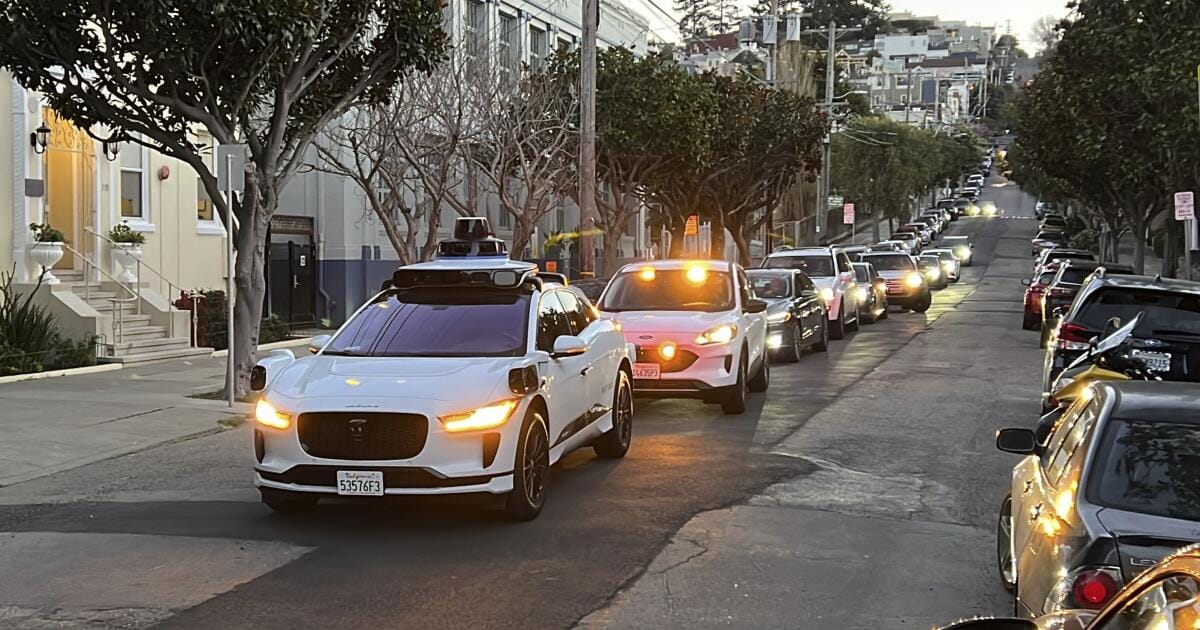
The impact on real estate will be felt across categories:
While not all of this will materialize overnight, the impact on real estate investing will track to the perceived inevitability of the change, not the change itself.
I’m seeing three seemingly unrelated things drive the emergence of new merchant banking models in real estate:
So there are a lot of PERE execs—with institutional track records—who (i) aren’t getting rich in their current roles; (ii) can’t go off on their own and raise a fund right now; and (iii) don’t want to go work for Blackstone.
Meanwhile, there is a glut of new operating companies and entrepreneurs whose platforms have massive growth potential but need both seed capital and track record to scale.
So PERE execs will leave (are leaving, I’m already seeing this happen) to start merchant banks to partner with and advise these new operating platforms, providing their own catalytic capital to seed the team and bringing in their own networks of LPs (who trust them) to scale it. In return they take % ownership in the operating platforms and GP economics.
For years, institutional LP capital has marched steadily up-market chasing scale, liquidity, and brand name managers (e.g., Blackstone, Brookfield, Carlyle, etc.).
By 2026, I think the limits of bigness will be increasingly apparent. The largest real estate asset managers are now so capital-heavy that they’re structurally constrained: forced into mega-deals, crowded asset classes, and strategies where capturing beta dominates and true differentiation is elusive. Scale, which has historically been an advantage, becomes a governor.
I don’t think the response will be a wholesale retreat from institutions, but rather a recalibration.
We expect institutional LPs to re-engage with the middle market in a more deliberate way. Not through blind commitments, but via targeted exposure to best-in-class operators: niche specialists, vertically integrated platforms, and managers with real operating edge but without the burden of deploying tens of billions.
Importantly, this capital won’t just be chasing higher returns. It will be chasing access to talent, innovation, and parts of the market that have remained structurally inefficient because they were too small, too operationally complex, or too bespoke for mega-funds.
The irony: institutions went big to reduce risk, and are now coming back down-market to find it properly priced again.
The word “sponsor” has historically implied episodic activity: raise capital, do a deal, return capital, repeat. That framing made sense when real estate investing was primarily about financial engineering and asset selection.
It makes far less sense in a world where alpha increasingly comes from operations.
By 2026, I think the most sophisticated real estate operators will stop being thought of—and thinking of themselves—as sponsors at all. They will be platforms. And platforms are underwritten differently.
Rather than being evaluated solely on IRRs and realized multiples, these businesses will increasingly be assessed through a private equity lens: EBITDA generation, revenue streams, margin stability, customer (tenant) retention, technology leverage, scalability of systems, and durability of management teams. Deal performance will still matter, but as proof points—not as the whole story.
The consequences? Platform economics reward longer-term thinking, reinvestment, and organizational maturity. They also open the door to entirely different capital partners, exit paths, and valuation frameworks that look a lot more like growth equity than traditional real estate promote structures.

When ultra-exclusive resort towns like Jackson Hole and Aspen run out of space and affordability, demand moves down the road

The below-the-surface assessments of a handful of powerful firms influence borrowing costs, capital flows, which deals get financed—and which don't

A visual look at the forces reshaping prices, migration, affordability, and growth across American housing

Millennials are buying “second” homes faster than primary homes. What do they want and how is the market evolving to serve them?
Covering the future of real estate and the people creating it