
Deep Dive: Real Property Captive
As real estate's insurance-cost crisis grows, captives gain popularity and embrace membership-club selectivity
As real estate's insurance-cost crisis grows, captives gain popularity and embrace membership-club selectivity

Eight lessons on why AI pays off for some firms and not others
A quarterly look at feasibility study activity with our friends at TestFit
Tracking three months of notable land use and zoning decisions with Shovels Decisions


This is the latest installment of our quarterly feature capturing the most notable, impactful, and unique local land use decisions made over the past 90 days. Between April and June 2026, Shovels Decisions tracked 62,522 of them across 49 states and 829 cities, from curb cuts to capital budgets. Together, they offer a lens into where urban America is heading, and where it's not.
The overwhelming majority were routine approvals and permits. A handful weren't:
Data centers and office buildings are where those decisions concentrated. The 87 data center moratoria enacted this quarter were technically zoning actions, but the fights behind them were mostly about water and power. In office, a handful of cities used zoning while most bought distressed buildings directly or took them into receivership.
We'll take a closer look at both of these trends below, then round out the quarter with a set of shorter items worth watching.
National opposition to data centers is accelerating. Last year there were fewer than 20 data center moratoria nationwide. In Q2 of 2026 alone there were 87.
But it’s important to note that a moratorium is not a ban; it’s a pause on accepting or approving applications, usually one year long, adopted so a municipality can write a permanent ordinance without a live application forcing its hand. 87 moratoria in one quarter means 87 zoning codes being rewritten by Q2 of next year. Those codes, not the pauses, are what will move site selection. Almost none of these are fights about land use in the traditional sense of setbacks or use tables; they're fights about nuisances, water, and energy. Cities have fifty years of experience handling zoning issues. They have almost none handling water and energy demands at this scale.
Drafting a data center ordinance from scratch is hard. Most municipalities have never permitted this use before; nobody on staff has modeled its load profile, and there's no library of precedent to draw from, so zoning attorneys are billing by the hour against model ordinances that barely exist yet. A year isn't much time to get this right.
That escalation continued into Q3. On July 14, New York's Governor Kathy Hochul signed Executive Order No. 62, halting environmental permitting for any new data center expected to draw 50 megawatts or more, the first statewide moratorium of its kind. By 2026 standards, 50 megawatts could be considered a mid-scale campus or a small-scale hyperscale facility.
Elsewhere, states are pricing data centers rather than blocking them outright. Virginia layered on a $0.011/kWh consumption tax capped at $600 million a year, kept the sales tax exemption intact, and applied the tax to self-generated electricity as well as utility-supplied power. New Jersey's A796/S731 goes after the balance sheet instead: any facility requesting 50MW or more has to guarantee it will pay for at least 85% of the requested service for ten years. Neither state touched zoning.
Those costs push developers toward self-supply, and self-supply is where the rules get uneven. Birmingham, AL's new ordinance limits on-site generation to solar or fuel cells, effectively banning gas turbines. New Hampshire went the other way, easing self-supplied power through its off-grid electricity provider law in 2025, then killed multiple data center bills anyway. Whether a project can bring its own power generation has become a site selection variable, and it now varies by state line.
If power is scarce, a developer can generate their own or buy it from somewhere else. Water doesn't offer that same flexibility. When data center demand arrived in Ypsilanti, MI, the city's water utility responded on its own, declaring a moratorium on new service requests.
Cheyenne, WY shows what happens when something goes wrong. Earlier in 2026, during construction of the $800 million data center Meta commissioned there, a dangerous bacteria, Cupriavidus gilardii, got into the reclaimed water system used for irrigation. When the city barred further wastewater discharge, it wasn't Meta or Fortis Construction, the actual contractor, who got barred. It was Goat Systems LLC, a shell company Fortis had created just to hold the permit.
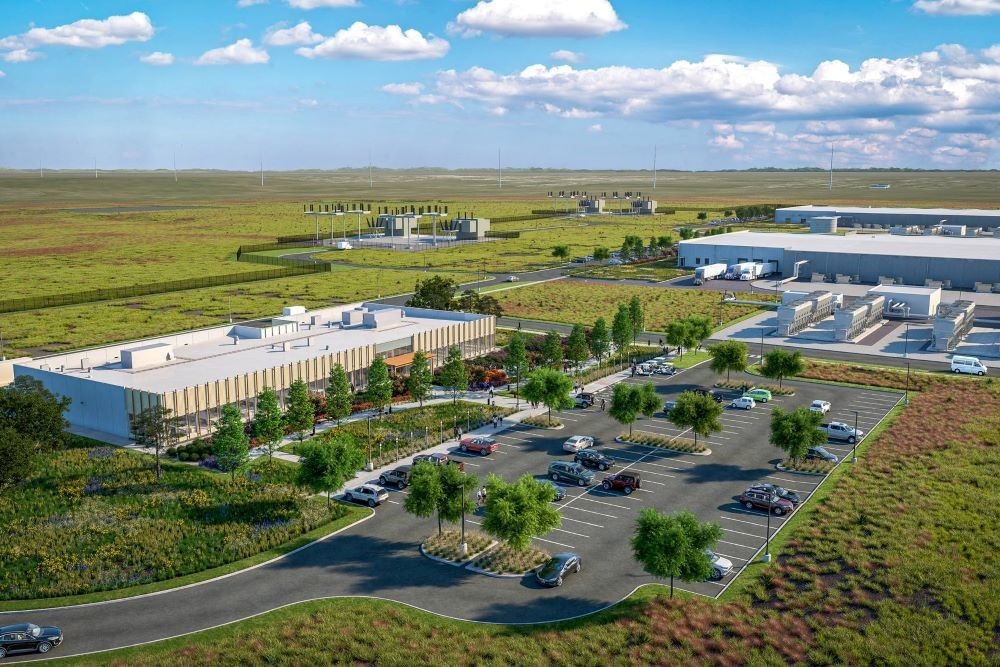
Diligence on a data center site isn't just about power and water supply. For smaller municipalities especially, it's also a question of whether they have the regulatory staff, standards, and enforcement capacity to oversee a project the size of a multi-billion dollar data center.
The moratoria will keep accelerating through the back half of 2026 and into 2027. Demand for data centers hasn't slowed, opposition to them hasn't let up, and most municipalities are still a year or more away from finishing an ordinance for a use they've never permitted before.

Municipalities didn't choose how hard to intervene in office real estate last quarter; the property did. Where a site worked economically, the city stayed a permitting authority and stepped back. Where it didn't, the city put its own capital at risk, buying, financing, or taking over the building directly, well beyond what zoning alone would call for.
In April, Milford, CT’s Planning & Zoning Board approved the demolition of a distressed 1980s office park on Wheelers Farms Road, 6-1, for 364 apartments. Continental Properties is building it on a three-year schedule with private capital. The city’s contribution was a site plan approval and an affordability plan condition.
That is what office land conversions look like when they pencil.
In the same quarter, Los Angeles, CA bought a 35-story Class A tower at 865 S Figueroa for $110 million, and San Francisco, CA expanded a lease at 1455 Market by 502,082 square feet. Denver, CO spent $4.525 million off a voter bond for 91,470 square feet at 251 E 12th. The vacant former Federal Reserve Bank at 925 Grand in Kansas City, MO went into receivership. Charlotte, NC agreed to pay Sumitomo Mitsui and Capital Group a combined $1.89 million to put offices inside its city limits, and Jacksonville, FL waived portions of its own Public Investment Policy to keep Winn-Dixie’s headquarters in town.
We tracked ten distinct instruments across one asset class in the quarter: cash grants, tax abatements, REV grants, zoning overlays, special use permits, NEZ designations, acquisitions, lease absorptions, receiverships, and a council suspending its own rules. No single tool works on its own. Cities have become the buyer of last resort in office. They step in once a building has stopped mattering to the market, but still matters to the city.
Some office land conversions pencil without much intervention at all. What's working is the land, not the office buildings sitting on it. Most deals filed as "conversions" are actually demolitions: there are twice as many rebuilds as pure conversions.
Three deals this quarter got filed as office park conversions, and they are the only ones in the data where private capital showed up on its own.
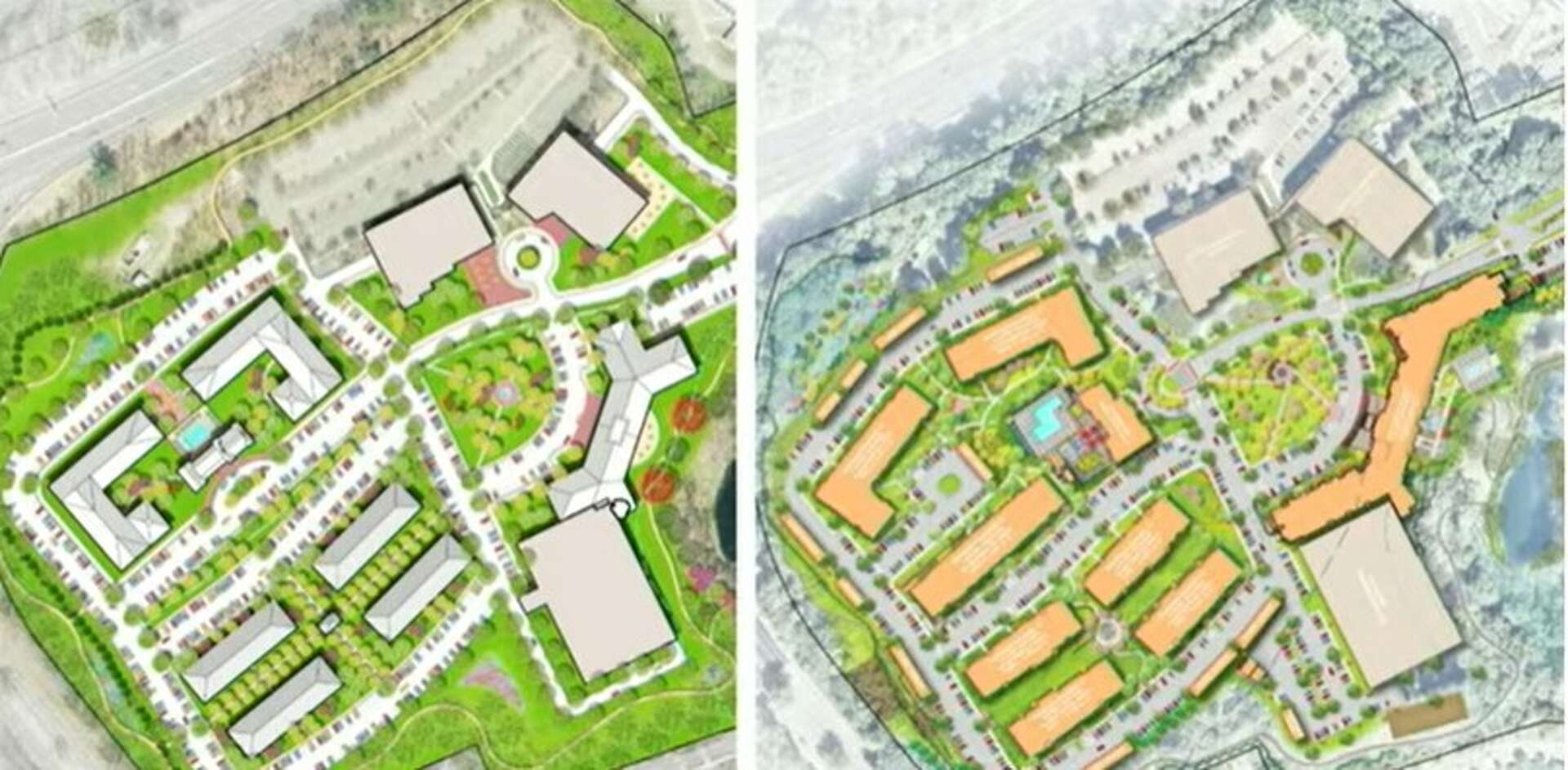
Huntington, NY’s Town Board approved a special use permit MTCO-25-1 on April 14 for Melville Crossing, 9.77 acres at 75 Maxess Road, roughly 260 apartments from The Briad Group. It’s the first project under the Melville Town Center Overlay District, a framework the town wrote for the express purpose of turning Long Island’s primary employment hub into live-work-play. The permit was conditioned on financial impact agreements with local school districts to offset the density.
On May 19, Chamblee, GA approved a special use permit and development-of-community-impact designation for 10.96 acres in the Century Center office park. The approval clears the way for Centennial American Properties to build 418 units and 15,000 square feet of ground-floor commercial space. The developer needed the permit specifically to exceed the area's Village Residential height limits of 75 feet and six stories. The existing office buildings will reportedly be "integrated or replaced," though the record doesn't specify which.
All of these conversions, including the Milford deal discussed earlier, sit on nine to eleven acres of flat suburban land, where demolition is often the better option. In each case, the city granted an entitlement and stepped back. No incentives were needed, no tax abatements, nothing beyond the permit.
Downtown sites rarely have that option. When demolition doesn’t pencil on its own, cities reach for other tools instead: grants, abatements, acquisitions, receivership.
The least expensive tool isn't aimed at buildings at all; it’s aimed at jobs. Charlotte, NC paid Sumitomo Mitsui $852,036 over ten years for a second US headquarters, then Capital Group up to $1,038,565 against $90 million of capex. Dallas, TX designated 6.69 acres as Neighborhood Empowerment Zones 24 and 25 to land a Morgan Stanley regional office at 1445 Ross Ave, which achieved the same result through entitlement instead of cash.
Jacksonville, FL shows what the math looks like from a council seat when the tenant is already in the building. Winn-Dixie got a two-instrument package: a 20-year Recapture Enhanced Value grant capped at $5.5 million, plus a headquarters retention grant up to $6.5 million paid in equal $1.3 million installments over five years, against a renovation and expansion of the existing HQ and 14 store remodels. The council waived portions of its own Public Investment Policy to close it.
Paying the tenant to stay is one of the cheapest incentives in the data. The second cheapest seems to be becoming the tenant. San Francisco, CA expanded its own lease at 1455 Market by absorbing SFMTA, HR, the City Attorney, and Police Accountability into the building itself.
With acquisition, the city buys the building outright. Denver, CO bought a 91,470-square-foot office building off a voter bond specifically to convert it into affordable housing, a rare conversion path for a downtown building. It took a public buyer to make the purchase happen at all; the deal didn't make financial sense for a private buyer looking at the building alone. But it worked for the city because it was underwriting the rise in property values across the city.
Eleven municipalities in our data replanned their downtowns from scratch with new office use in mind. So far, these plans produced only one real downtown conversion. Louisville, KY's tower at 401 S 4th St became a 414-room JW Marriott.
Pittsburgh, PA is the one city targeting the math that makes conversions fail. Inside a designated "acutely deteriorated area," a building of at least 5,000 square feet with a history of office use qualifies for a six-year exemption on half of the assessed value increase from any improvements. That climbs to 20 years if the project delivers 10-20% affordable units at 50% AMI or 30-plus full-time jobs.
A developer who converts an office building typically pays for the renovation, then gets hit with a higher tax bill because the property is now worth more, and that's the exact math that kills conversion projects before they start. Pittsburgh’s abatement goes straight at that problem. Whether six years at 50% is deep enough to close the gap is a separate question, and Q3 will start to answer it.
Where cities converted or acquired buildings this quarter, none of them were trying to save the office. They were protecting jobs, land value, or their own budgets, and the office use itself is what got sacrificed to do it. Huntington wrote an overlay district to convert Long Island's primary employment hub into apartments. Pittsburgh's tax abatement is designed to move Class C buildings out of office use entirely. Denver bought an office building specifically to end its office use.
Where the site works economically, cities grant an entitlement and get out of the way. Where it doesn't, they might end up owning the building itself.
A $470 million silicon capacitor semiconductor plant is coming to Osceola County, FL, from ELSPES, Inc., a South Korean manufacturer. It's the second large Korean tech firm investing in the area, following a $53 million investment by SRS Mobility in a 110,000 sqft facility eight days before this decision. The county will donate up to 32.56 pad-ready acres in the NeoCity tech district. ELSPES has also committed to 600 employees at an average salary of $85,000, with the first 300 in place by 2030 and another 300 by 2037.

New Haven, CT, home to Yale, has an unusual property tax problem. Nearly 57% of the city's real estate is tax-exempt, and Yale and Yale New Haven Health together own 43.4% of that exempt land. Yale's own tax-exempt property is assessed at more than $4.5 billion. Its taxable local property, by comparison, is worth roughly $146.2 million.
Whenever Yale converts a property to academic use, that property becomes tax-exempt, and the city recovers only half its lost tax revenue through the state's PILOT program, payments in lieu of taxes. To help close that gap, Yale agreed to pay the city $232 million voluntarily through FY2033.

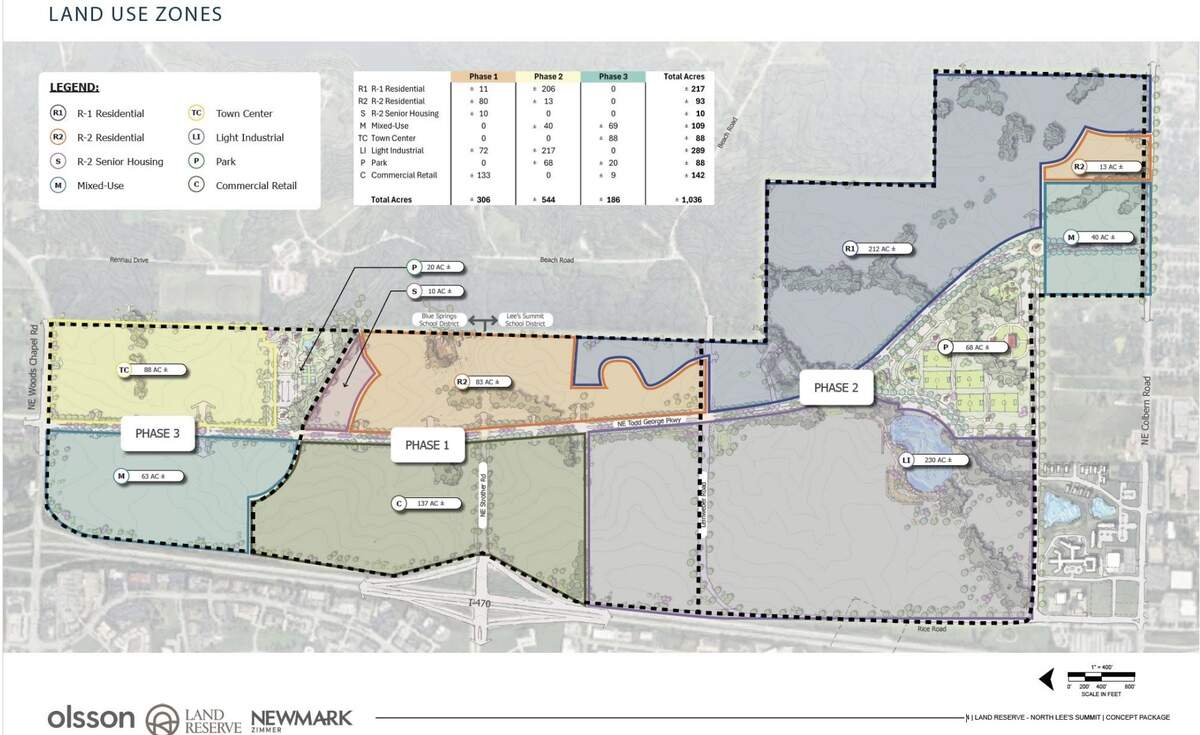
Arborside, a $1.5 billion development with 1,063 acres and roughly 3,700 planned units, is happening in three phases through 2047 in Lee's Summit, MO.The land is part of a larger nearly 4,000 acres vacant church-owned plot. Utah-based Suburban Land Reserve said it would buy portions of the new development over time and resell to third-party developers while city-owned portions would go to municipal and school district infrastructure.
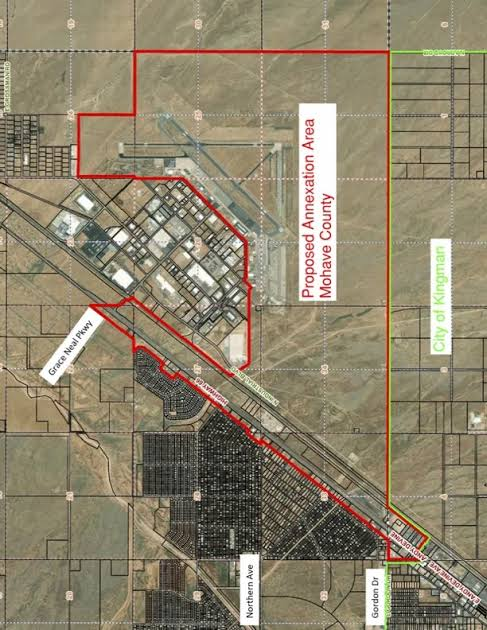
The largest annexation of the quarter is a proposed 4,238 acres in Kingman, AZ. Of that, 3,038 acres is Bureau of Land Management open space. The remaining 1,200 acres includes 30 acres of agricultural land with a single-family home, with the other 1,170 acres designated for future commercial and residential development.
The annexation functions like a free option on the BLM land. If BLM never releases the land, Kingman is left with empty desert inside its boundary and has lost little. If BLM does release it, Kingman is already the governing jurisdiction, with its own standards, utilities, and sales tax applying from day one.
Shovels Decisions uses AI to extract development actions from public agendas, staff reports, and meeting minutes, turning scattered municipal records into structured, searchable data.
The dataset makes it possible to see local development policy as a connected system: where cities are encouraging growth, where they are raising the cost of approval, and where the rules of development are being rewritten in real time.
If you want to track decisions like these in your own markets, create a free Shovels account or contact us for a custom solution.
Covering the future of real estate and the people creating it