
Deep Dive: Real Property Captive
As real estate's insurance-cost crisis grows, captives gain popularity and embrace membership-club selectivity
As real estate's insurance-cost crisis grows, captives gain popularity and embrace membership-club selectivity

Eight lessons on why AI pays off for some firms and not others
A quarterly look at feasibility study activity with our friends at TestFit

For most of the past decade, the prevailing view in retail real estate pointed to the same thesis: buy small-box strip centers tenanted with concepts that e-commerce cannot replicate, including restaurants, salons, medical clinics, and pet groomers.
Anchor tenants and big boxes were the assets to avoid. National retailers carried concentration risk, lease negotiations favored the tenant, and a single bankruptcy could crater a center's economics overnight. That thinking spawned Curbline, reshaped net lease capital, and pulled billions into neighborhood retail. Big-box and single-tenant deals price off tenant credit rather than the building, which is the defining feature of a triple net lease.
Brixton Capital moved in the opposite direction. The firm has spent the past several years acquiring grocery-anchored and nationally tenanted big-box retail, the category most of the industry abandoned.
The firm’s case: Anchor-tenant assets, it contends, are significantly mispriced. A decade of institutional capital chasing unanchored strip centers pushed anchored cap rates to levels that no longer reflect the quality or durability of the underlying tenants. Brixton invests in unanchored neighborhood strips as well, but the anchored segment is where it sees the sharpest dislocation.
The case against anchor tenants was built on a retail landscape that no longer exists. The weakest national retailers are gone: Bed Bath & Beyond, Pier 1, Tuesday Morning, Toys "R" Us, Circuit City, and Sports Authority, all of which collapsed under the weight of e-commerce competition and structural mismanagement.
The survivors have stronger balance sheets, deeper omnichannel capabilities, and more durable competitive advantages than at any point in the past two decades. They have reinvented their stores as service platforms and fulfillment infrastructure, generating multiple revenue streams that make relocation costly and displacement unlikely.
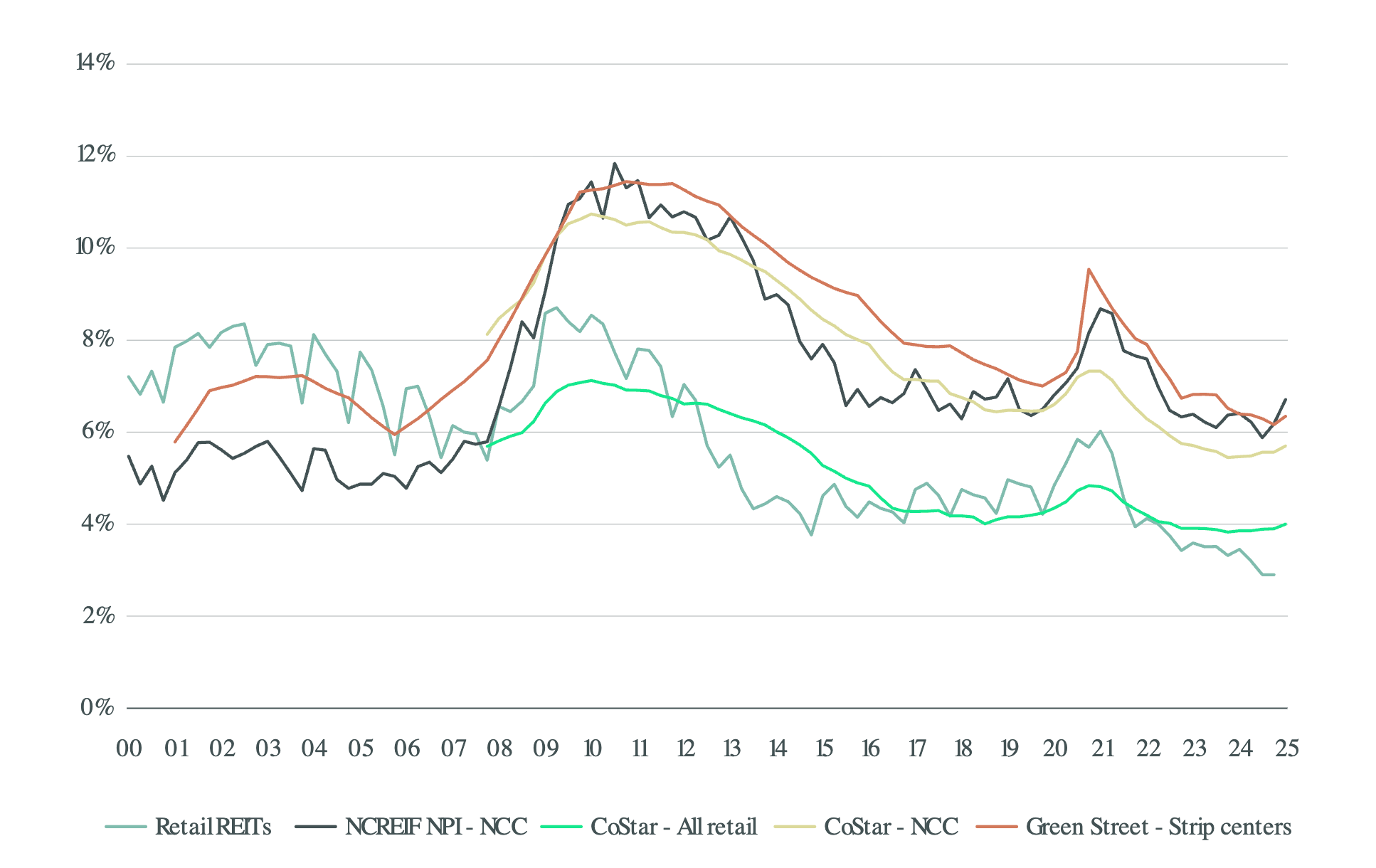
Cap rates on anchored retail have widened to 6.5 to 7.5 percent while unanchored small-box product has compressed toward 5 to 6 percent. Green Street's May 2026 sector update notes power center values rose roughly 4 percent, the strongest appreciation among strip center formats, suggesting the repricing has started but is far from complete. The retailers left standing after a decade of failures have earned that spread compression, and then some.
In this letter, we cover the Brixton Capital thesis, the evidence, and what it means for investors evaluating the category.
We’ll cover:
Brixton Capital was founded by Marc Brutten and is based in San Diego, with a portfolio concentrated across the western U.S. and Sun Belt. The firm targets grocery-anchored and nationally tenanted centers in infill locations with strong population density, highway access, and co-tenancy that supports inline leasing.
"The consensus trade for the last decade has been to avoid anchor tenants," says Rob Taylor, Brixton's President and CIO. "Capital poured into unanchored strip centers because investors associated national retailers with e-commerce vulnerability. What that trade missed is that the tenants everybody was afraid of are gone. The ones that survived are fundamentally different businesses than they were in 2015."
The national anchors that institutional capital spent a decade avoiding have become fundamentally different businesses. Best Buy runs Geek Squad installations, in-home tech support, Best Buy Health for seniors, and store-within-a-store partnerships with IKEA. Petco has converted veterinary hospitals, grooming clinics, dog training, and wellness memberships into a healthcare business that happens to sell pet supplies. Ulta's full-service salons and influencer activations create a competitive position that online retail cannot match.
When a single box houses a Geek Squad bay, an IKEA display, and a healthcare division, the relocation friction is substantially higher than that of a traditional retail tenant.
Grocery anchors have undergone an even more consequential shift. Kroger, Publix, and Albertsons operate in a $1 trillion annual market where 70 percent of online orders ship from the store, with billions invested in back-of-house staging, sortation, and curbside infrastructure. The more significant change is on the income statement. Retail media, pioneered by Amazon and Walmart over the past five years, has turned grocery chains into advertising platforms. Of Kroger's roughly $5 billion in earnings last year, approximately $1.5 billion came from retail media alone. That revenue stream makes grocery tenants far more creditworthy than the thin-margin operators the market still prices them as.
The private label movement is adding to the effect. Store brand sales hit a record $282.8 billion in 2025, representing 23.5 percent of total grocery volume. Warren Buffett cited Berkshire's ill-fated Kraft Heinz investment as partly a consequence of private label demand destruction from brands like Whole Foods' 365 line and Costco's Kirkland. A grocer earning significant margin from retail media and private label is a stronger tenant than the grocery-as-loss-leader model the market has historically assumed.
"The market prices grocery tenants on historical margins," says Grant Brutten, Brixton's Head of Capital Markets. "It has not caught up to the fact that retail media and private label have fundamentally changed the economics. A Kroger generating $1.5 billion in advertising revenue is a different credit than a Kroger that was not."
The transformation inside these stores is visible; the more consequential change is behind them. Target fulfills 97 percent of digital orders from stores. Dick's Sporting Goods runs at 90 percent. Walmart, Home Depot, and Lowe's each ship roughly half of digital volume from physical locations. Store-based fulfillment grew 35 percent or more annually from 2020 to 2025. Retailers have invested billions in staging zones, curbside lanes, loading docks, and real-time inventory systems connecting online demand to local stock.
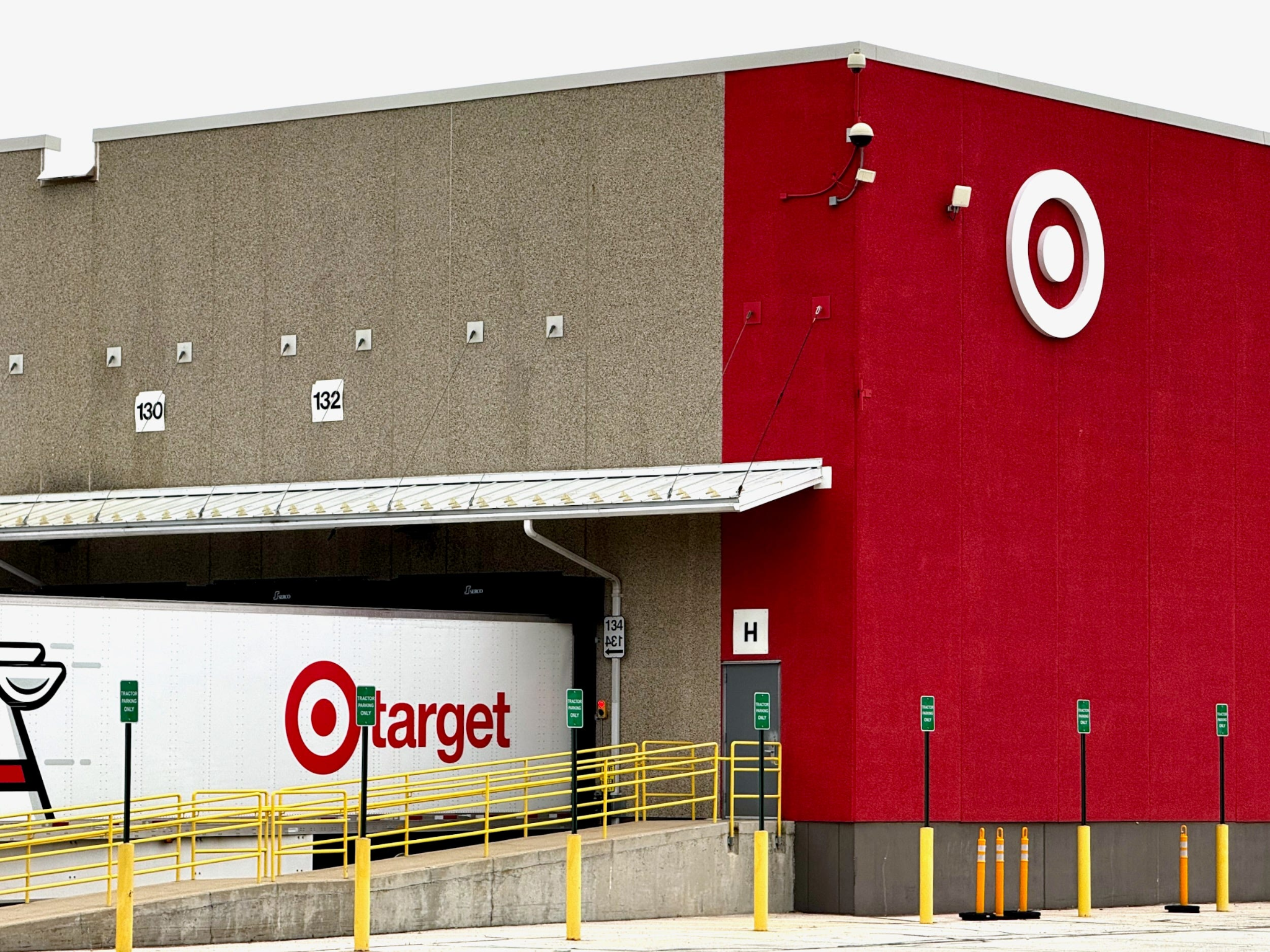
This creates two distinct advantages for landlords. The first is lease security: a retailer cannot close a store that fulfills half its digital orders without dismantling its own logistics network, making the anchor structurally dependent on the physical location. The second is center-wide revenue lift: roughly 85 percent of buy-online-pick-up-in-store (BOPIS) shoppers make unplanned purchases during their pickup visit, meaning fulfillment traffic benefits every inline tenant in the center, not just the anchor.
Green Street's April 2026 sector report describes anchor demand as "markedly robust, with retailers competing for space with an intensity not seen in decades." Re-leasing spreads on anchor space are running at roughly 19 percent for top-performing REITs, and landlords are gaining the leverage to strip renewal options that historically allowed tenants to control space for decades. These buildings increasingly function as logistics infrastructure; the market prices them as retail.
New multi-tenant retail deliveries have dropped 76 percent since 2018. Total retail space under construction sits near multi-decade lows, in the low-60 million square foot range according to CoStar's June 2026 report, a level reached only a handful of times in the past two decades. Construction costs and zoning constraints make new grocery-anchored development nearly impossible in most infill markets, and the supply that does get built is largely confined to pre-leased pads and build-to-suit projects.
National retail vacancy stands at 4.4 percent, within 20 basis points of the all-time low, and leasing volume is estimated to exceed 54 million square feet in Q1 2026, the strongest pace since early 2024. Strip center foot traffic leads all retail formats, up 5 percent versus 2019, and NOI for brick-and-mortar retail increased at a 7.2 percent seasonally adjusted annual rate over the past year.
"Occupancy across our grocery-anchored portfolio is running at 96.5 percent, and the weighted average lease term on our grocery anchors is 6.4 years," says Taylor. "The centers we own are not competing against new supply. They are benefiting from its absence."
The Bed Bath & Beyond backfill data makes the supply argument concrete. Green Street found that roughly 80 percent of Bed Bath & Beyond locations were re-leased within a year at approximately 40 percent re-leasing spreads. Off-price retailers took a third of the spaces. Green Street projects mall retail revenue per available foot to grow at a mid-2 percent CAGR over five years, above historical trends.
The pricing dislocation extends beyond anchored retail in isolation. Relative to other commercial real estate, anchored retail cap rates have diverged well beyond what the underlying fundamentals justify. Consider a recent Brixton acquisition: a 100,000-square-foot fitness-anchored retail center at a 7 percent cap rate. Apartments in the same market trade at 5 percent. The retail asset generates higher current yield, benefits from the same supply constraints, and carries an anchor with service-based revenue streams resistant to e-commerce.
Institutional capital is beginning to notice. In February 2025, Blackstone paid $4 billion to take Retail Opportunity Investments Corp (ROIC) private, acquiring 93 grocery-anchored centers on the West Coast at 97.1 percent occupancy, at a 34 percent premium to market. The deal received investment-grade ratings from all three agencies. Yet the broader market still trades these assets at 6.00 to 7.25 percent cap rates, a significant spread to industrial and logistics even though the buildings increasingly function as logistics infrastructure.
"The investor math is straightforward," says Brutten. "Buy at retail cap rates, benefit from durable NOI driven by tenants that are stronger than they have ever been, and capture additional upside as the market reprices. Blackstone moved first. The rest of institutional capital is still catching up."
Brixton projects 25 to 50 basis points of cap rate compression as more institutional capital follows Blackstone's lead. Green Street's May 2026 update notes that ascribed cap rates have already moved lower, implying roughly 2 percent value appreciation across formats and 4 percent for power centers. The capital is arriving, but the repricing is in its early stages.
Brixton's underwriting prioritizes four criteria: omnichannel-enabled anchors that have invested in fulfillment infrastructure, infill locations with population density and freeway access, back-of-house configurations suited to ship-from-store operations, and co-tenancy where anchor traffic supports inline leasing.
The portfolio's re-tenanting history shows the thesis in action. A Joan's Fabric location was replaced by a grocery tenant, upgrading the anchor from a declining specialty retailer to a fulfillment-enabled traffic driver. A Bed Bath & Beyond box was backfilled with HomeGoods at positive re-leasing spreads. A former Walmart was converted to Ace Pickleball, repositioning obsolete big-box space into an experiential concept resistant to e-commerce.
The pace of change inside these centers is accelerating. Walmart is scaling drone delivery to more than 270 stores via Wing and Alphabet. Kroger and Ocado are deploying automated micro-fulfillment systems inside stores. New landlord revenue streams, rooftop leases, staging areas, and last-mile logistics partnerships, are emerging in real time.
The tenants that survived the e-commerce era are operationally stronger, more capital-committed to their locations, and more embedded in American retail logistics than the market reflects. For Brixton, that gap is the trade, and the window to buy at these cap rates is closing.


Office demand is recovering, but speculative development in most markets remains stubbornly out of reach


EG is applying the American real estate private equity playbook to Australia, starting with medical office
Covering the future of real estate and the people creating it