
The Rise of Tour Intelligence
A new generation of companies is betting AI can make the human leasing agent better
A new generation of companies is betting AI can make the human leasing agent better

Tracking three months of notable land use and zoning decisions with Shovels

As real estate's insurance-cost crisis grows, captives gain popularity and embrace membership-club selectivity
Alpaca Real Estate is building private equity with AI at the core. How the platform works and what it signals for the asset class.


Don’t miss Thesis Driven’s Buy Box deep dive on Alpaca Real Estate next Wednesday, January 14th. Register here (for accredited & institutional investors only).
Alpaca Real Estate represents one of the first private equity real estate firms built with a native AI-enabled operating model.
Over the past 36 months, private equity real estate has become a game of scale as “mega managers” like Blackstone, Ares, and Blue Owl have corralled a wildly disproportionate share of institutional capital (in 2025, the ten largest funds raised 46% of all capital, totaling $118 billion).
The result: a hollowing out of the lower and middle-market, where smaller fund managers are starved of fresh capital, forced into defensive asset management or acquisition by scaled platforms seeking talent and pipelines. Meanwhile, the playbook that used to work for the middle market”—build strong relationships with good operators in a handful of high conviction markets”is no longer enough to compete for the limited amount of LP dollars.
But amidst the distress, these dynamics have opened a different kind of opportunity, where a new class of AI-enabled, pedigreed fund managers—built by teams with prior institutional underwriting and operating experience—is emerging in firms like Alpaca Real Estate (ARE).
Unencumbered by slow committees, legacy systems, or troubled assets, these fund managers are able to build investment platforms from the ground up around AI-enabled workflows, and then use these platforms to uncover alpha in niche strategies and fragmented ownership pockets.
Founded in 2023 by Managing Partners Daniel Carr and Peter Weiss, ARE has built a centralized data infrastructure that allows the team to evaluate hundreds of residential and industrial opportunities side by side, surface relative value quickly, and focus underwriting resources on a narrow set of high-conviction deals—enabling them to move with a level of consistency and speed that even the largest managers struggle to replicate.
In this letter, we’ll dive into:
When investing in markets defined by fragmented ownership and uneven data quality (i.e., where exciting yield opportunities exist), process–not scale—is the primary advantage.
And process is what ARE has built from the ground-up over the past 3 years.
Unlike larger platforms attempting to retrofit AI onto entrenched systems, ARE’s technology stack was built in parallel with its investment process.
At the core is a centralized data lake designed to compare information across hundreds of evaluated transactions. Rather than underwriting opportunities in isolation, the system is built to surface relative value across asset types, markets, capital structures, and vintages, allowing the team to identify mispricing and risk asymmetries that are difficult to detect through conventional underwriting.
Several principles shape how the platform operates in practice:
“The goal isn’t to look at more deals for the sake of volume,” says Peter Weiss, one of the firm’s co-founders and managing partners. “The goal is to drive conviction by understanding what metrics stand out when you compare everything side by side in our internal templates.”
In practice, the operating system functions as a filter rather than a mandate. Once high-potential assets are identified, humans take over, managing pipeline opportunities and running traditional due diligence like any other investment firm, but with more context—and speed.
Weiss continued: “The architecture is designed to be modular and iterative as our data sets evolve, which will allow us to scale in the future as well as layer agentic AI on top of our robust data sets. Further, we are able to provide transparency to our LPs and own all of our data without the issues of overhead or inertia that typically comes with growth.”
For its next stage of growth, Alpaca is building AI agents to help further accelerate underwriting, research pulls and due diligence assistance, incrementally decreasing the need for rote human analysis (and overhead).
Rather than competing in crowded core strategies, ARE has deliberately focused on asset classes and submarkets characterized by fragmented ownership, uneven data, and operational complexity–conditions where scale alone offers little advantage.
In industrial, ARE focuses on infill assets typically ranging from 100,000 to 400,000 square feet. These properties sit below the size threshold favored by large institutions, yet benefit from strong demand drivers and constrained supply. Vacancy, tenant rollover, and embedded mark-to-market opportunities often vary materially at these micro-market levels–making them difficult to underwrite at scale and well suited to a data-driven, comparative approach.
In residential, ARE has pursued a mix of forward-purchase build-to-rent (BTR) strategies and structured distressed multifamily recapitalizations. In each case, the emphasis is on situations where capital structure, timing, or execution risk—instead of macro fundamentals—drive pricing.
“What unites these segments is not asset type, but structure,” says Co-Founder and Managing Partner Daniel Carr. “Each of our strategies sits at the intersection of fragmented ownership and inconsistent data. We’re looking for markets where underwriting outcomes depend more on asset-level details than broad market forecasts.”
Their AI infrastructure then allows the team to evaluate opportunities across markets and strategies using consistent assumptions, while still underwriting at the micro level.
Geographically, ARE has focused on Tier 1 markets from Texas to the East Coast. Importantly, these are secondary or tertiary locations and are supported by diverse demand drivers. “During times of dislocation we seek to establish positions in high quality assets in institutional locations. Our underwriting emphasizes submarket-level dynamics–tenant profiles, supply pipelines, and rent dispersion—rather than top-down allocation by geography alone,” says Carr.
This narrow, deliberate focus also serves as a form of risk management. By avoiding asset classes and deal sizes that attract the largest pools of capital, ARE is reducing exposure to compressed returns driven by competition rather than fundamentals.
Rather than competing in intermediated processes, ARE focuses on identifying situations where fragmentation and complexity limit the buyer universe, and where AI-enabled underwriting helps quickly determine whether risk can be mitigated through structure rather than optimism.
In practice, this sourcing orientation leads ARE to work primarily with local and regional operators who control proprietary or lightly intermediated deal flow. These relationships are less about capital partnerships in the abstract and more about execution access, i.e., situations where ARE’s underwriting speed and structuring flexibility can unlock transactions that are difficult to finance conventionally.
Recent examples include:
Across these transactions, ARE deploys capital through a range of structures—including direct acquisitions, joint ventures, preferred equity, recapitalizations, and forward-purchase agreements—selected based on where downside risk is best absorbed and incentives are most aligned.
For operators considering ARE as a capital partner, the firm’s sourcing and underwriting lens can be summarized as follows:
Access & Execution
Asset & Market Characteristics
Risk & Structure
Selectivity
Instead of spending months diligencing an investment opportunity, ARE’s technology stack allows operators to say no quickly–saving both parties time and resources when considering a partnership.
ARE was launched in September 2023 by Daniel Carr and Peter Weiss, each bringing more than a decade of real estate private equity experience and a history of working together, co-founding the industry forum Real Estate Private Equity Network (REPEN) to exchange market insights and mentorship earlier in their careers.
Carr spent a decade at Ares Management, where he was involved in more than $7 billion of transactions across core, value-add, and opportunistic strategies. Earlier, he worked at J.P. Morgan’s Real Estate and Lodging Investment Banking group, where he and Weiss first worked together.
After J.P. Morgan and before joining forces with Carr, Weiss spent more than a decade inside institutional investment platforms at Prospect Ridge and AllianceBernstein, where he deployed and realized over $3 billion and oversaw acquisitions, asset management, and portfolio decisions through multiple market cycles.
When Carr and Weiss launched ARE, they did so alongside Alpaca VC, a leading venture capital platform focused on innovation across the built environment. Through this affiliation, founders Carr and Weiss partnered with Ryan Freedman (Co-Founder and Executive Chairman) and Daniel Fetner (Co-Founder and Partner), who bring a technology and venture investing lens directly into the firm’s governance and strategy.
This combination of private real estate experience and venture tech sensibility is rare in the industry. ARE was assembled early, allowing the team to build infrastructure and secure early institutional backing—including a seed investment from GCM Grosvenor—ahead of capital market retrenchment.
That timing, coupled with a clean slate unencumbered by troubled assets or entrenched systems, enabled a foundational integration of AI and data from day one rather than as a retrofit—a structural distinction the team views as essential to competing with larger incumbents.
The three recently completed deals below executed by ARE represent relative value outperformance via data lake screening analysis in target market.
Townhome Forward Purchase - Dallas, Texas (April 2024)
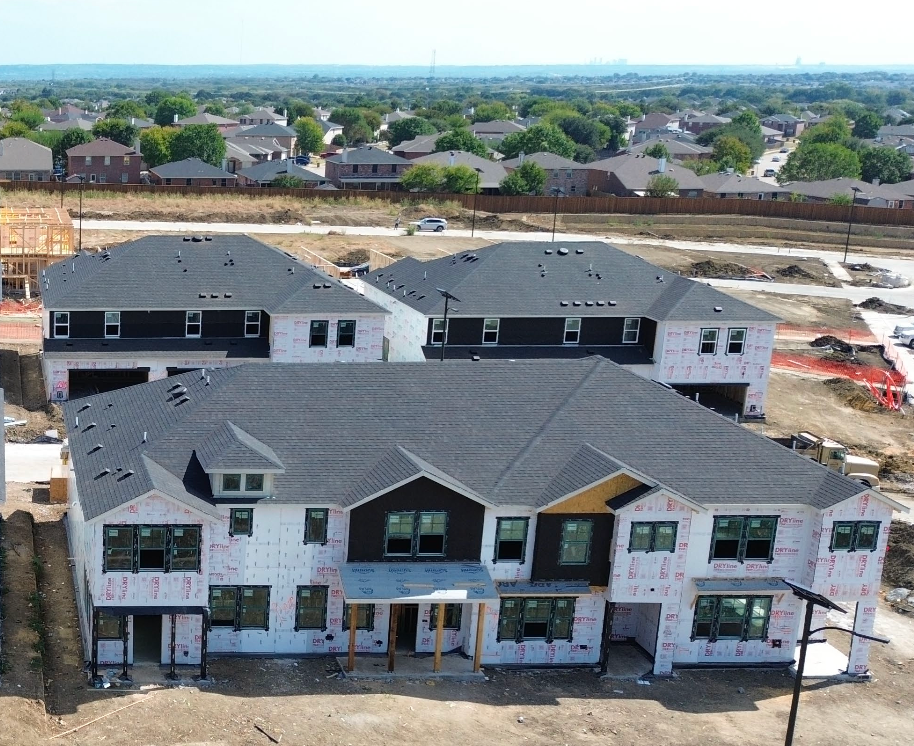
ARE’s Dallas investment illustrates how the firm applies its framework to residential development while limiting construction risk. The deal involved a 148-unit townhome forward purchase in a highly desirable Dallas submarket, located within a strong school district and close to major employment centers.
ARE closed on the land and simultaneously executed a forward purchase agreement with the homebuilder, shifting both vertical construction risk and initial financing requirements off ARE’s balance sheet. Horizontal development was fully completed at closing, including utilities, roads, sidewalks, drainage, and perimeter fencing, with vertical construction already underway. First home deliveries are expected in Q1 2026.
Total project costs are approximately $48 million (roughly $325,000 per unit), equating to an untrended 7.0% yield on cost. ARE has optionality to execute a second 65-home phase of development with limited incremental equity.
Distressed Trophy New York City Recapitalization (October 2024)

ARE’s New York multifamily investment illustrates how the firm approaches complexity on the residential side—not through renovation risk, but through capital structure. This was a preferred equity recapitalization of a 30-story, Class A multifamily tower in Brooklyn, adjacent to Barclays Center. The property was 97% leased and benefited from a 35-year, 100% property tax abatement, positioning it firmly as a stabilized, high-quality asset.
The opportunity stemmed from industry-wide deleveraging and a reset in capital markets rather than operating distress. ARE’s position was structured as “last dollars in, first dollars out,” senior to common equity, providing downside protection while retaining upside participation.
Since closing, the asset has further stabilized through the lease-up of commercial space, adding roughly $2.0 million of incremental NOI through executed leases with Maimonides Health, Chick-fil-A, and Hounds Town.
Nashville Infill Industrial Acquisition (September 2025)
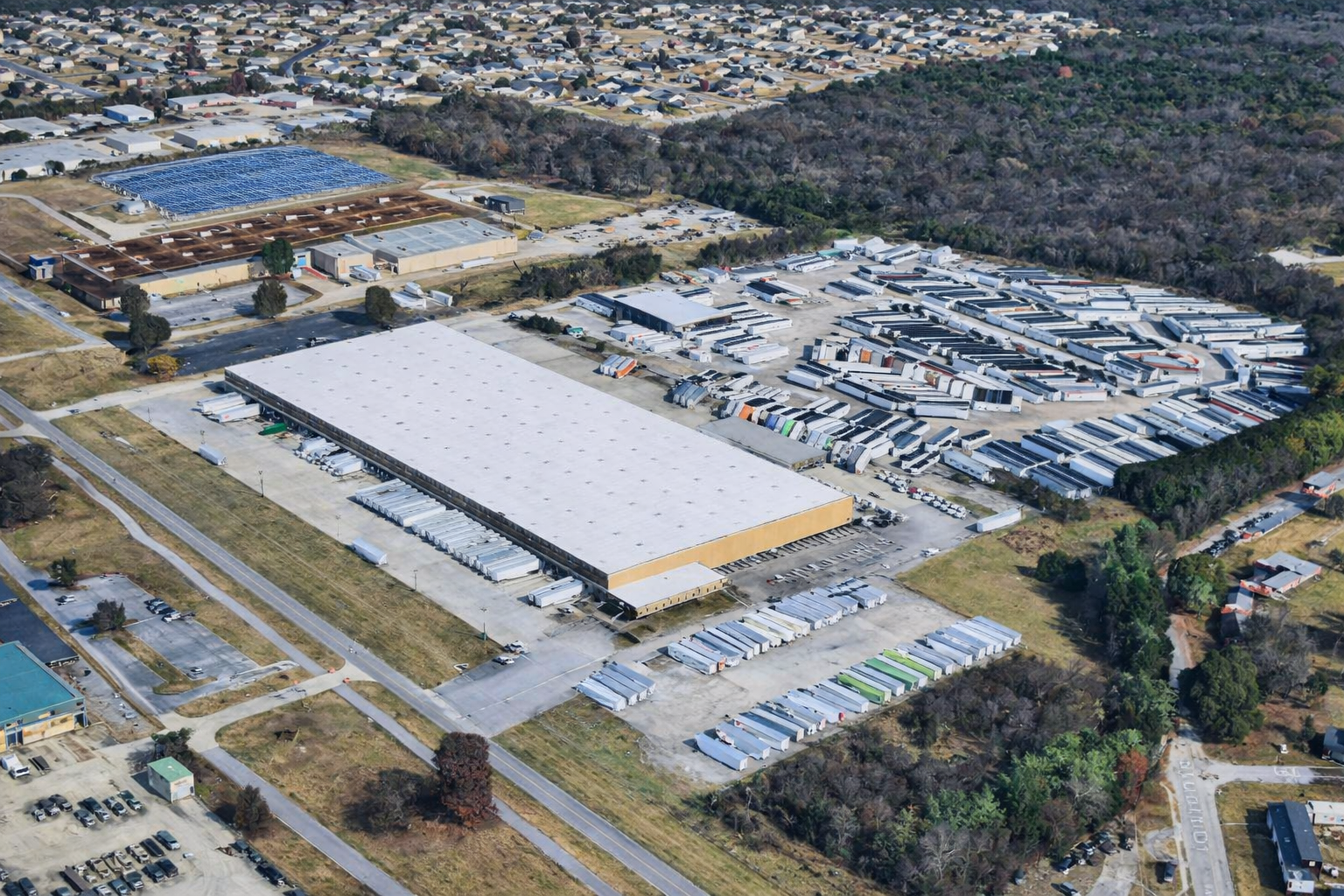
Note: ARE has acquired three off market industrial properties including another asset in Nashville and one in Atlanta
Their recent Weakley Lane acquisition is illustrative of ARE’s infill industrial thesis. The property consists of a 245,000 square foot, 100% leased industrial facility located in one of Nashville’s most supply-constrained submarkets, where vacancy sits near 3%. In addition to the warehouse, the site includes 17 acres of leased industrial outdoor storage (IOS), creating embedded optionality beyond the in-place cash flow.
The asset was acquired off-market where AI-enabled underwriting focused on tenant-level economics rather than market averages, identifying that existing tenants were paying rents more than 50% below market, with two of the three tenants expressing interest in expanding at the property. During diligence, a major nearby employer—Nissan—announced plans to increase production to more than 600,000 vehicles annually at its facility two miles from the site, reinforcing long-term demand fundamentals.
So what’s next for the platform?
“The evolution of the platform is moving from tools to agents,” said Weiss. “Instead of analysts chasing data, we’re deploying AI agents that gather research, update models, and surface diligence risks automatically. That changes how fast–and how confidently—we can move in competitive, off-market situations.”
We’re excited to dig deeper with the founding team on Wednesday, January 14th at 3pm EST to discuss the evolution of ARE’s AI strategy, how they partner with operators, and where they see opportunities today.
Register here (for accredited & institutional investors only).

Eight lessons on why AI pays off for some firms and not others

Office demand is recovering, but speculative development in most markets remains stubbornly out of reach


Covering the future of real estate and the people creating it