
Can AI Solve Capex Overruns?
New data from Tailorbird shows why two-thirds of real estate operators blow their capex budgets and where AI could actually help
New data from Tailorbird shows why two-thirds of real estate operators blow their capex budgets and where AI could actually help

How a computer vision startup became America’s largest parking operator and a test case for a new model of venture-backed growth
A look at the creation of a families-only Dallas country club


Editor's note: About a year ago, we published a Thesis Driven letter on the developers of Stonethrow, exploring the conversion of a mid-century office building into a families-only country club in Dallas: From Ugly Office to Family Paradise.
Nick Clark and Dawson Williams are two of our favorite outside-the-box real estate developers. And now that the project is breaking ground, we decided to host them for a 60-minute live interview next Thursday, January 29th at 3pm EST. Register here.
This letter revisits Stonethrow’s strategy and opportunity, and dives deeper into the project’s progress and the team behind this office-to-country-club conversion.
Kids first, for parents.
That is not the typical mantra of country clubs. Unless you’re a country club that wants to break all the rules like Stonethrow, an inclusive, families-only country club opening next year in East Dallas, founded by Nick Clark and Dawson Williams.
After launching and scaling Common Desk—the “Southern hospitality” coworking brand—to 13 cities before exiting to WeWork, Clark and Williams turned their attention to a new hospitality niche: country clubs.
But instead of building another exclusive club for Dallas’s well-heeled alpha males, they focused on the least-represented members of traditional country club society: children. In fact, they designed the experience around them. Their thinking was simple: create a place that kids will want to return to over and over—and parents will benefit as a result. Stonethrow will have resort-style pools, an ice house-style restaurant and bar, high-quality childcare, indoor and outdoor play, and adults-only spaces.
And they’re doing it through the redevelopment of a 50,000-square foot, distressed suburban office building.
Recently, the Stonethrow team hosted a “Kid Consultants Night,” inviting 24 kids, ages nine to 13, to weigh in on the club’s design and programming. They asked questions like:
Here’s a clip:
Nick Clark at Kid Consultants Night. So far, Clark and Williams have spent 347 hours interviewing over 800 families to inform Stonethrow's design & programming.
Few real estate developers invest this much time thinking about user experience—let alone invite the end users into the design process itself. This letter breaks down why that approach matters, and how it translates into a compelling operating model.
We’ll look at:
Within the City of Dallas, every legacy country club is full. Waitlists stretch years into the future, and new supply is effectively impossible.
Thanks to land scarcity, zoning constraints, and neighborhood resistance, the clubs families rely on today were almost all built decades ago, many in the first half of the 20th century. They’ve been renovated repeatedly, but always within infrastructure designed around golf, tennis, and the social agendas of its adult members. The renovations didn’t extend into the underlying logic of who these clubs are built for.
For families, the traditional entry point has been the “social” membership: no golf, limited sports, but access to pools, dining, childcare, and programming. Over the past several years, even that rung has moved out of reach. According to data compiled by the Stonethrow team, entry-level social memberships at Dallas-area clubs now look roughly like this:
At those levels, households likely need to earn $250,000–$300,000+ (for the first four; not the bottom two) to justify membership costs. That leaves the vast majority of Dallas families—particularly those with young children—on the outside.
At the same time, the internal dynamics of these clubs haven’t evolved much. Decision-making power tends to sit with older members who value golf and legacy traditions, even as the most frequent users of the facilities are parents navigating weekends, school schedules, and childcare logistics.
The result creates an imbalance.
Families are drawn to what country clubs offer—safety, community, childcare, all-day destinations—but increasingly shut out by price, waitlists, and outdated design. In a city as large and family-heavy as Dallas, that gap has only grown more visible.
Stonethrow’s goal isn’t to outdo existing clubs on prestige or sports offerings, but to design a place families actually want to spend long stretches of time, every week, without friction.
Which explains the ordering principle Clark and Williams used in designing their model: kids first, for parents. “If children feel welcomed, stimulated, and safe enough to roam, then parents can relax,” said Williams. “And when parents relax, they stay longer, spend money, and it becomes part of their weekly routine. That bodes pretty well for our model.”
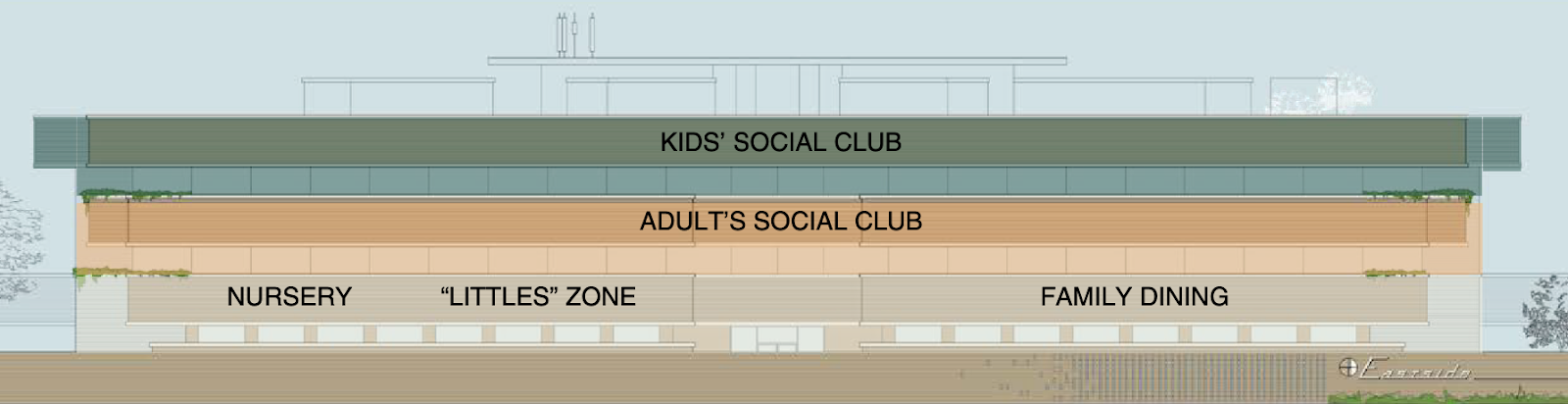
That thinking pushed the team toward unusually large and differentiated kids’ spaces, both indoors and out, and toward programming that runs year-round rather than seasonally. Indoor areas are divided by age group, with dedicated nursery space, a “littles” zone, and a full floor for older kids.
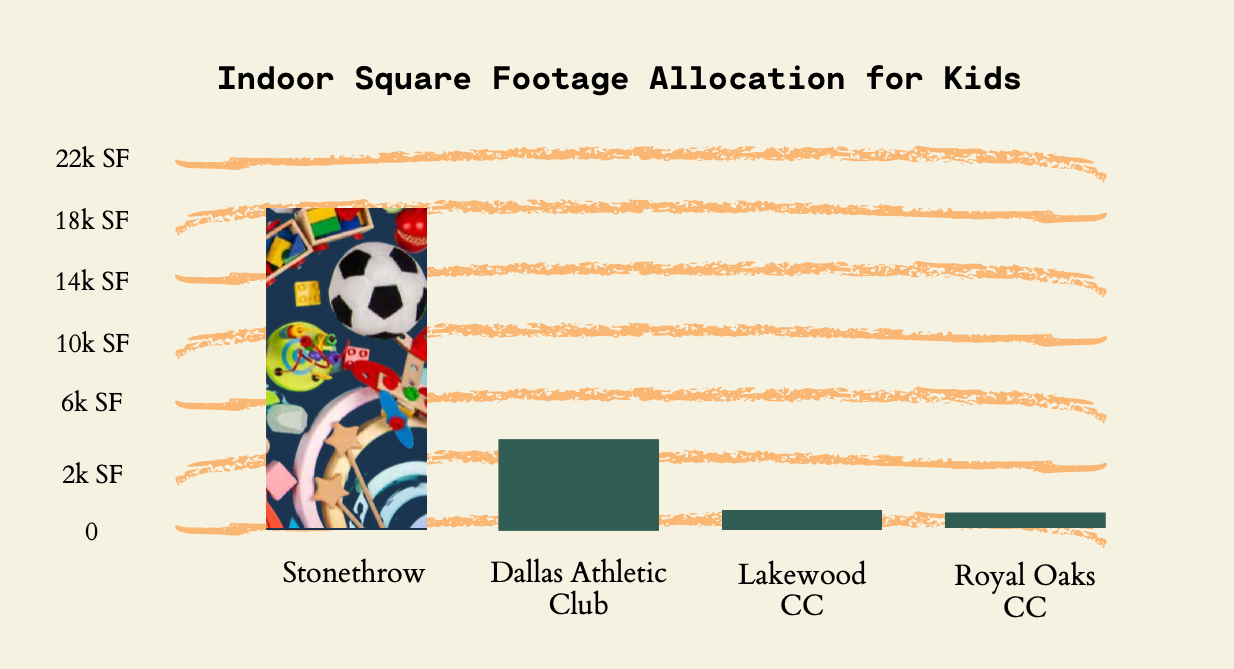
Outdoors, the pool is designed to look more like something you’d find at a resort (i.e., not a lap pool), paired with play fields, scoreboards, and shaded areas for all-day use. Adults-only spaces still exist, but they’re layered on top of a family-centric core rather than treated as the main attraction.
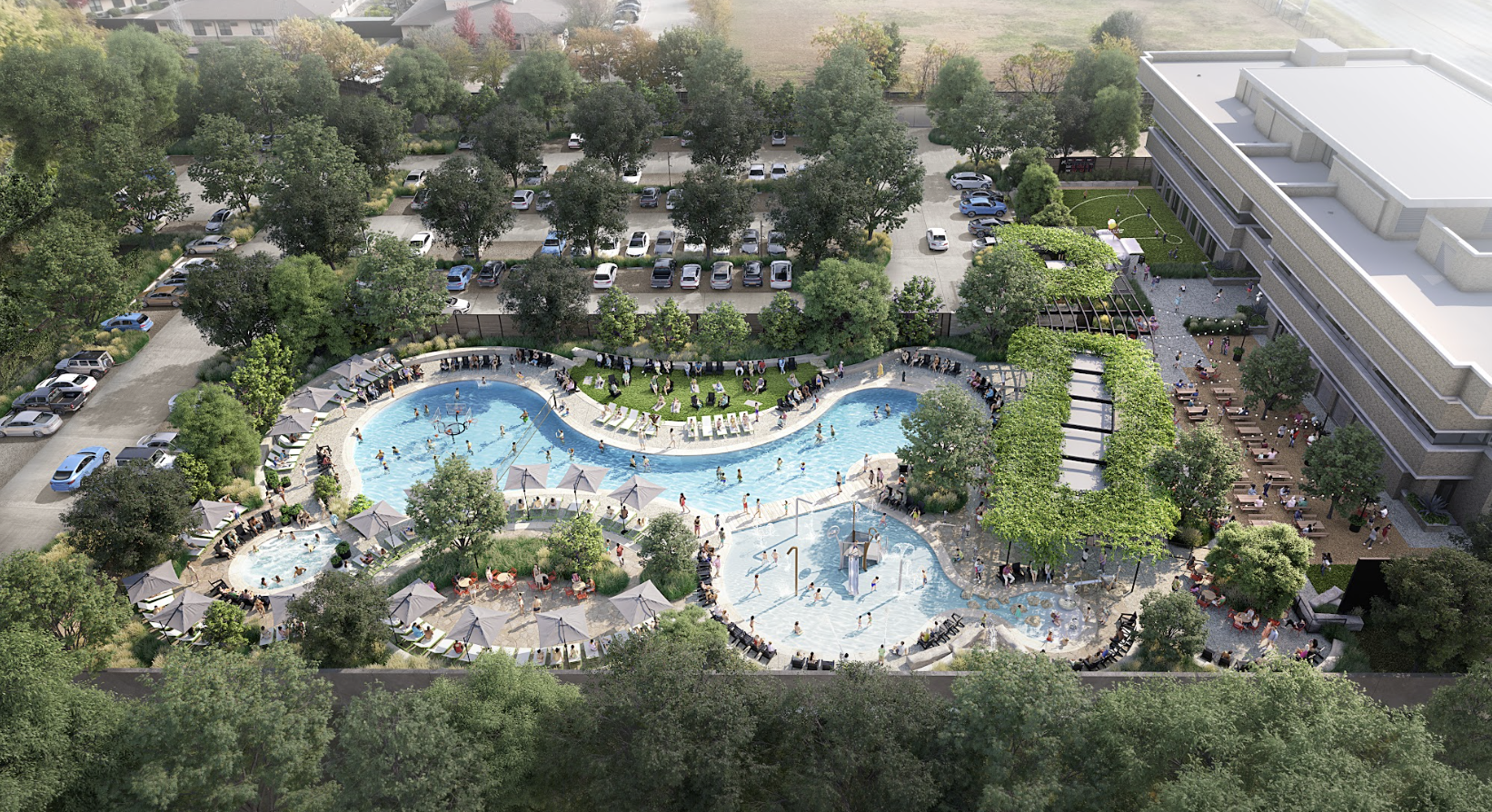
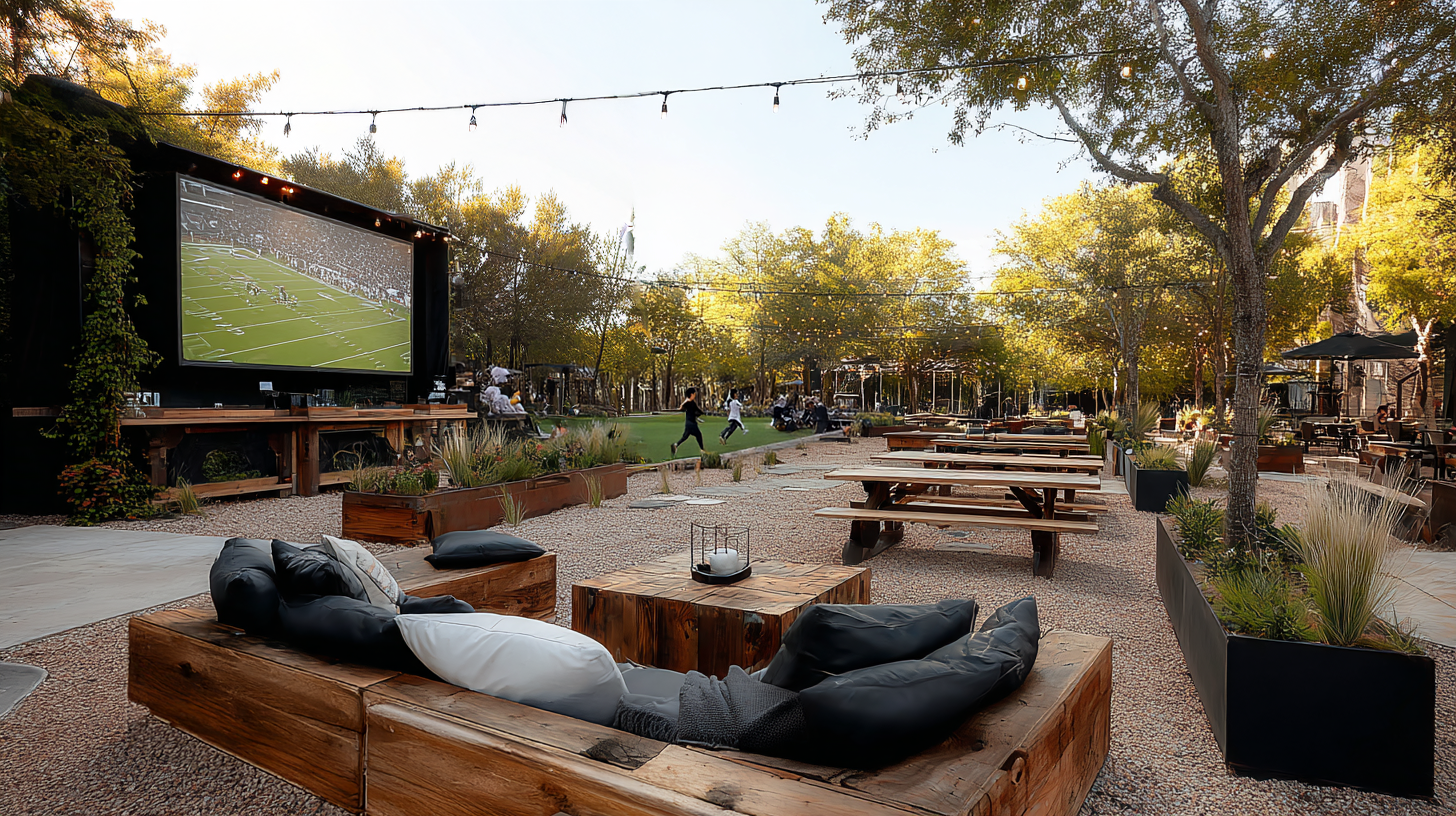
The economics then follow the design, ultimately projected (somewhat conservatively) to generate a 21% unlevered yield.
Revenue
Stonethrow is underwriting roughly 1,600 memberships at stabilization, with initiation fees around $8,000 and monthly dues in the low-$400s. To date, 625 families have signed and paid as members (33% of total memberships) before they’ve even broken ground.
The model then assumes programming revenue at ~$500k annually, and for food-and-beverage to operate at breakeven, despite bringing in a bona fide operator in Old School Eats, the team behind Stix Ice House.
At stabilization, and without any F&B profit, they expect to generate about $21 million in revenue.
Operating Expenses
On the cost side, staffing and childcare are treated as essential infrastructure with a $1.1mm annual budget allocated to kids’ programming alone. In total, the operating expenses, COGS and management fee are budgeted at $13mm, generating an NOI of about $8mm.
Unlevered Yield
Divide that by total project costs of $37mm, and you have an unlevered yield of +21%, a virtually unheard of number in the value-add real estate world.
In that sense, Stonethrow looks less like a traditional country club and more like an operating platform for family engagement—built to compound through community rather than exclusivity.
The attractive unlevered yield starts with the basis.
The Stonethrow asset—a 50,000-square-foot suburban office building on 3.6 acres—was acquired by Clark and Williams for roughly $2 million (about $12 per square foot).
In Dallas, that price is closer to distressed land than a fully built asset in a family-dense neighborhood. As Dallas land broker Scott Lake said: “I think it's really hard to find dirt at this value in Dallas that is not in a bad part of town. It would be hard to mess this deal up even on a speculative land play.”
Rather than pursue raw land or underwrite ground-up development risk, the team focused on a building that had lost its purpose—but not its location. The site sits near schools and established neighborhoods, yet had become functionally obsolete as office space. “We weren’t looking for the perfect building,” said Clark. “We were looking for the right bones, in the right neighborhood, at a price that gave us room to be thoughtful.”
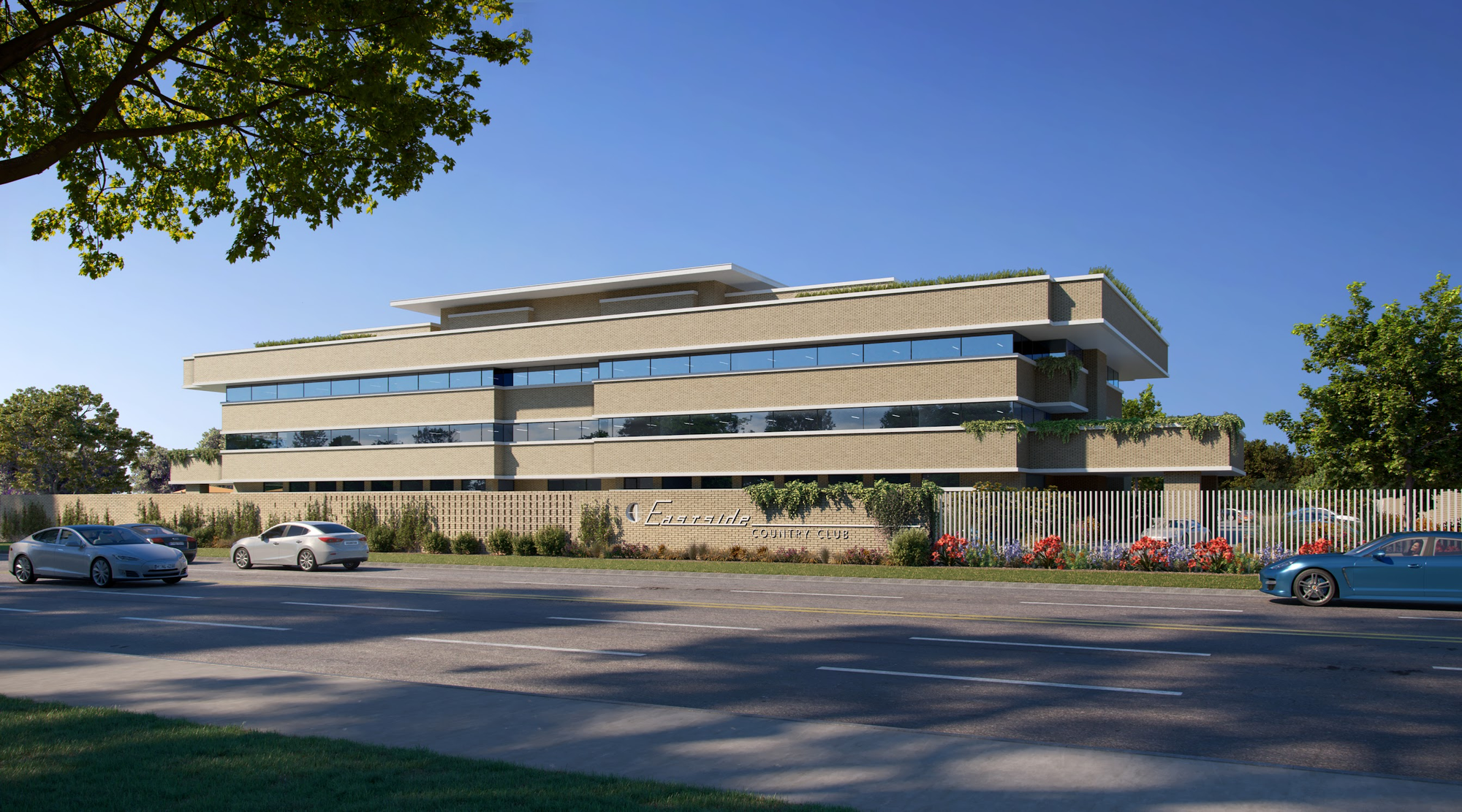
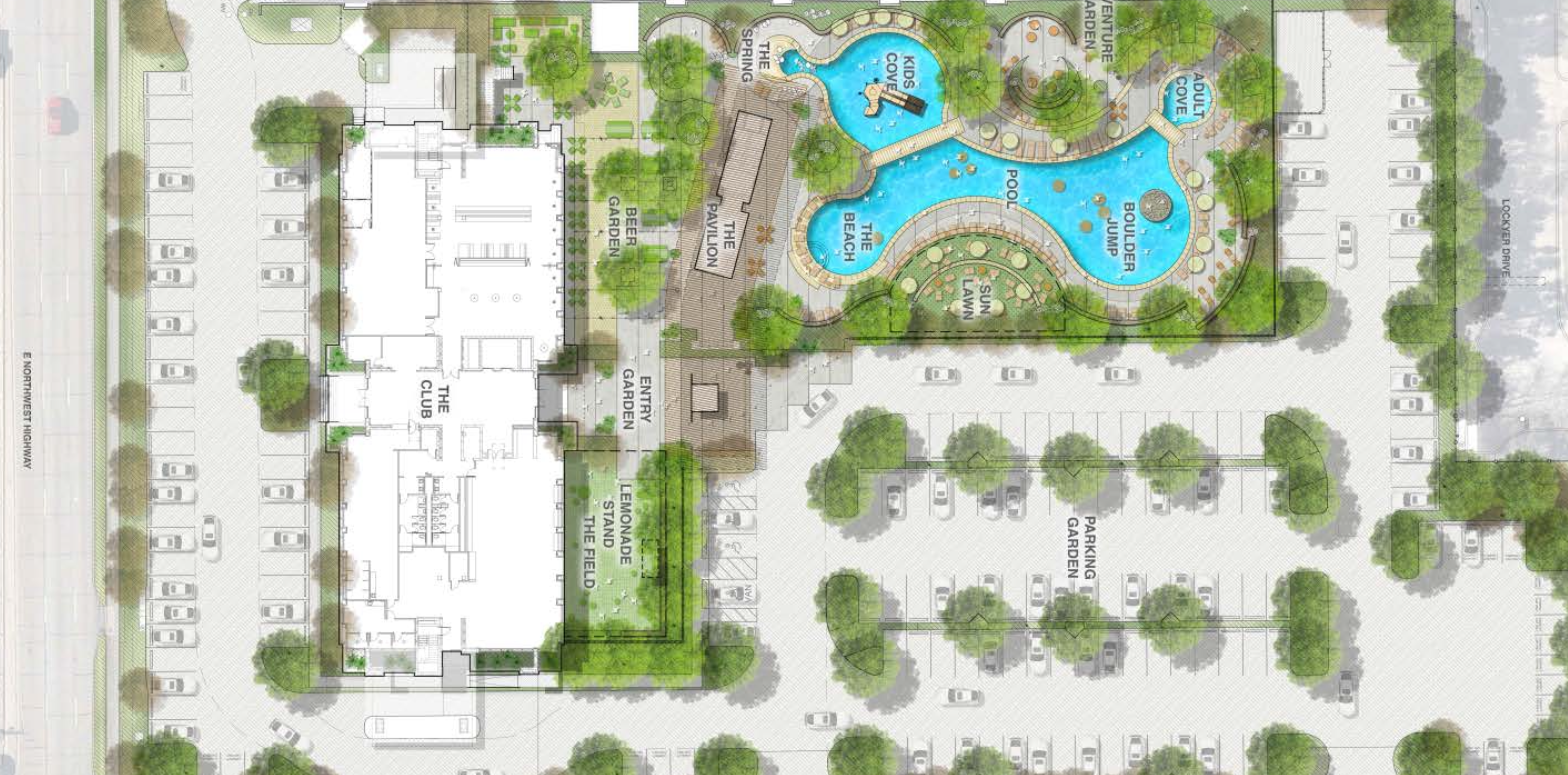
Plus, adaptive reuse unlocked advantages that new development rarely enjoys, making zoning more navigable, shortening timelines, and lowering neighborhood resistance.
Inside the building, the design logic inverted traditional office planning. Instead of leasing efficiency, the new layout prioritizes experience, safety, and flow. Sightlines allow parents to relax while kids move freely. “Once you stop thinking like an office developer, everything changes,” Clark explained. “You’re designing for how families move through a space over an entire day—not how efficiently you can lease square footage.”
To date, the team has raised approximately $13.6 million of equity across multiple rounds, with early rounds fully subscribed and the final round now underway. On the debt side, Stonethrow closed a $24.1 million senior loan with First United Bank, a regional lender with experience in the private club sector, underwritten at roughly 50% loan-to-cost.
Crucially, the deal was underwritten not as a restaurant or speculative leisure concept, but as a recurring-revenue operating business anchored by real estate. Membership dues and initiation fees created predictability, while hundreds of signed, paying members provided lenders with validation well ahead of opening.
Project timeline
Stonethrow has now cleared the hurdles investors care most about: a low basis, zoning certainty, debt in place, and hundreds of paying members validating demand well ahead of opening.
Before turning their attention to country clubs, Clark and Wiliams built Common Desk, a boutique coworking brand that scaled to 13 cities across the South before being acquired by WeWork.

What made that outcome unusual wasn’t the growth itself, but the path they took to get there. Common Desk was bootstrapped from day one. No venture capital, nor a “growth-at-all-costs” mandate. At a time when nearly every coworking competitor was raising tens or hundreds of millions of dollars—or in WeWork’s case, billions—to pursue the same basic model, Clark and Williams focused on unit economics, culture, and operational discipline.
Their real skill set was never real estate in isolation, but building community.
Common Desk became known as the “Chick-fil-A of coworking,” because members and employees alike had a cult-like attraction to the brand. Employees stayed forever, members wore the gear all over Dallas and beyond (I still have a Common Desk hat from 2018), and every local brand wanted to partner with them.
And now, those same cultural signals are showing up in Stonethrow.
The depth of programming, the size of the childcare budget, the staffing ratios, and even the decision to invite kids into the design process all reflect an operator-led mindset. The team to date has spent 397 hours in conversations with more than 800 families, using those discussions to inform everything from space planning to food menus to how adults-only areas coexist with kids-first zones. That level of user-led design is rare in real estate—and almost unheard of in private clubs.
This is also why Stonethrow only works with founder-led execution. It requires founders who care deeply about culture and who understand that profitability follows when people feel a sense of belonging.
Stonethrow isn’t a one-off project. It’s a proof point.
For Clark and Williams, this first club serves as the operational and economic template for a broader platform: family-only private clubs in dense, urban-adjacent neighborhoods where traditional country clubs no longer serve the market. Dallas serves as a great starting point, but the same demographic dynamics—young families priced out of legacy clubs, limited new supply, obsolete suburban real estate—exist in dozens of U.S. metros.
The long-term vision is intentionally OpCo-led. The real estate obviously matters (especially if they can continue to find obsolete, distressed office buildings ripe for families-only country club conversions at $12/sf), but it’s the operating company—programming, staffing, brand, and community—that creates a defensible moat.
That structure allows the model to scale without losing what made it work: local texture, founder involvement, and an obsessive focus on the end user. It’s also why institutional capital comes after proof, not before it. This is a category that needs to be demonstrated, not theorized.
More broadly, Stonethrow hints at a new slice of lifestyle real estate—one defined less by amenities and more by belonging. As work, schooling, and family life blur together, demand is shifting toward places that anchor weekly routines rather than occasional visits. Family clubs sit squarely in that gap.
Join us for a 60-minute live interview with Nick & Dawson next Thursday, January 29th at 3pm EST. Register here.

EG is applying the American real estate private equity playbook to Australia, starting with medical office


A new approach replaces manual real estate workflows with AI-driven systems built around the operator’s own data
Covering the future of real estate and the people creating it