
The Hard Business of Building in God's Backyard
Shrinking congregations are sitting on some of the best sites for affordable housing, but turning that land into homes can take years of dealmaking.
Shrinking congregations are sitting on some of the best sites for affordable housing, but turning that land into homes can take years of dealmaking.

We're building the 2027 edition of our comprehensive real estate events guidebook, and we need your help

Developers waiting out high rates are turning vacant parcels into bars where residents drink while their dogs run free
Shrinking congregations are sitting on some of the best sites for affordable housing, but turning that land into homes can take years of dealmaking.

University United Methodist Church stands across Campus Drive from the University of Maryland in College Park, a short walk from a station on the Purple Line, a light rail line scheduled to open late next year. Completed in 1965 and built to resemble a marble cathedral, its curving white sanctuary, with tall pillars and windows set far overhead, seats about 500. But Sunday attendance is now around 65, according to the denomination’s online directory, and one of the church’s main sources of income is renting out its parking lot to Terps fans on football Saturdays. The bigger problem is the building itself. The sanctuary roof leaks, and the church doesn’t have the money to fix it; when it rains, “the water just cascades down,” says Robert Cristiano, a developer and Georgetown affordable housing professor who has been inside. The leaks have left water damage and mold.
Cristiano runs Sanctuary AP3, a nonprofit that helps congregations build housing on land they own. His team drew up a feasibility study for the seven-acre site proposing affordable housing alongside a new worship space, a project he puts at $60 million to $70 million, none of it paid by the church. “It’s a 12 out of 10 site,” he says.
But the plan hasn’t moved forward. The church’s pastor works part-time, and she told Cristiano she couldn’t take on a project that size. “How on earth could you do it part time?” he says. “Well, you can’t.”
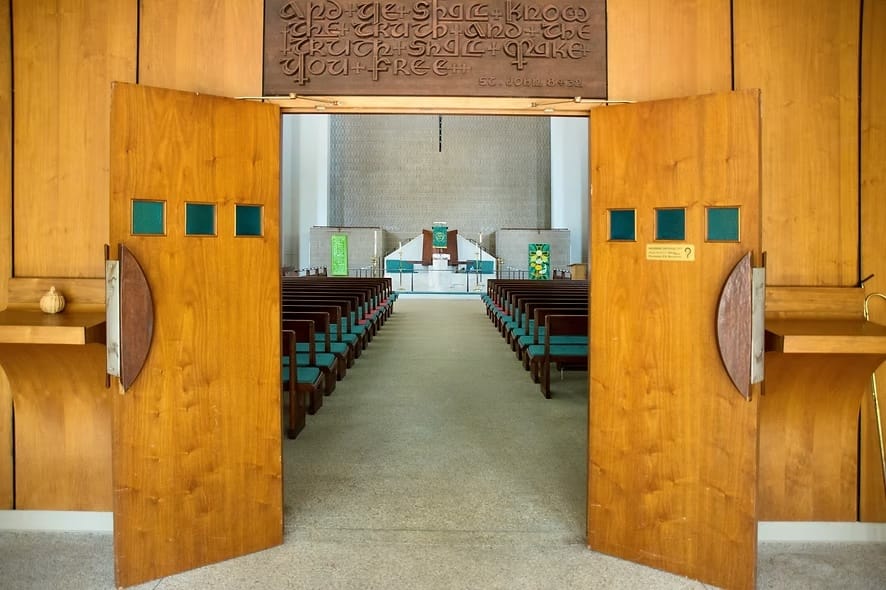
Lawmakers have spent three years making church land easier to build on. Now the bottleneck is the church.
University United Methodist’s situation is increasingly common. Congregations across the country are shrinking or shuttering, and their land, often well located, has drawn the attention of affordable housing developers and policymakers alike. Since California passed SB 4 in 2023, letting congregations build fully affordable housing by right, a wave of "Yes in God's Backyard" laws has followed: Virginia and Florida have passed similar laws, and bills are pending in Massachusetts, Illinois, Kentucky, and New Jersey. Washington, Maryland, and Minnesota offer narrower incentives.
The housing has been slower to follow. California’s law had yielded 94 permitted units and not one finished home as of this summer, and the reasons go beyond financing. Affordable projects depend on tax credits and other public money that’s in short supply, and nearby residents often push back. Congregations that see their land as a legacy are wary of ceding control, and few have anyone with the time or expertise to manage a development. “The reality is that clergy and church leaders are in a crisis mode,” says the Rev. Sam Marullo, a former Georgetown sociology professor who retired as minister of affordable housing for the United Methodist Church’s Baltimore-Washington Conference. “And none of them are trained or equipped or understand very much about real estate.”
To close that gap, large multifamily firms, specialist developers, denominations, and intermediaries are moving in, each with its own way of structuring deals. If even a small share of struggling or closing churches turn some of their land into housing over the next decade, the result could run to hundreds of thousands of new homes.
In this Letter:

In struggling urban markets, the path to preserving affordable apartments may begin with creating more expensive ones


A workshop for GPs on finding the right JV partner, structuring the deal, and negotiating operator-friendly terms


A quarterly read on early-stage feasibility activity with our friends at TestFit
Covering the future of real estate and the people creating it