
When Will Spec Office Get Built Again?
Office demand is recovering, but speculative development in most markets remains stubbornly out of reach
Office demand is recovering, but speculative development in most markets remains stubbornly out of reach

New data from Tailorbird shows why two-thirds of real estate operators blow their capex budgets and where AI could actually help
Tracking the past three months of notable land use and zoning decisions with Shovels Decisions


Federal housing policy is gridlocked and state legislatures are moving at uneven speeds. City councils and local planning boards are making more consequential decisions than they have in years.
Local land use has always been where the built environment actually gets made. What has changed is the stakes. A decade ago, a notable zoning decision meant a contentious variance or a disputed subdivision. Today it might mean a city issuing $35 million in bonds for affordable housing or enacting a moratorium on data centers while rewriting its zoning code from scratch.
This is our quarterly look at the local decisions that matter, tracked in partnership with Shovels Decisions (formerly ReZone), which ingests public agendas and meeting minutes from municipalities across the country. For Q1 2026, Shovels analyzed 6,344 decisions, spread across 16 states and five major themes.
The defining themes this quarter: municipalities pushing back on data centers outside the Sun Belt; stadium and event districts emerging as vehicles for large-scale mixed-use entitlement; cities funding their own housing without waiting for LIHTC or HUD; office park, mall, and hospital campus conversions now the templates rather than the exception; and cities stretching local regulatory tools well beyond their original purpose.
Let's dive in.
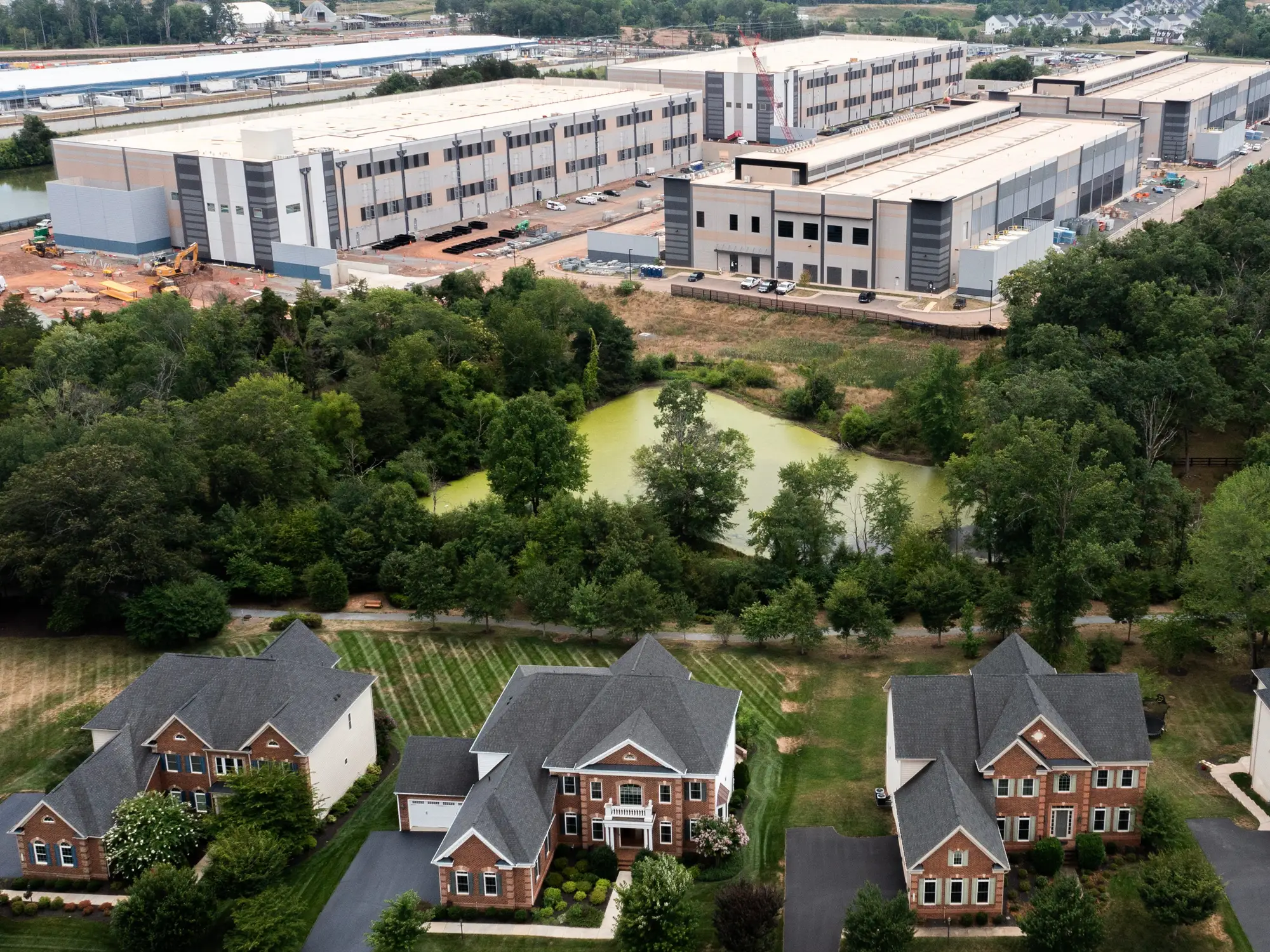
If Q3 2025 was the quarter of the data-center green light, Q1 2026 was the quarter of the red light, at least outside the big Sun Belt corridors. Q1's data-center decisions split between approvals and denials, sometimes in the same city, and even in the same week.
On January 12, Madison, WI enacted a temporary moratorium on new data-center zoning certifications (Section 28.140), citing infrastructure and environmental impact concerns. On February 4, Caledonia Township, MI passed a matching moratorium on applications for zoning and building review. Both jurisdictions used nearly identical rationale: water, power, and traffic are being consumed faster than the zoning code can account for them.
Just six days after Madison's moratorium, on January 20, Naperville, IL denied the Karis Critical Data Center, rejecting a conditional use application in a historically tech-friendly corridor. When a city with a track record of welcoming tech investment starts saying no, it’s worthy of note.
On February 11 in Provo, UT, the Provo Planning Commission recommended approval of the B+F Timpanogos Tech Center, which would have been the first project entitled under Provo's new Data Center Overlay (DC) zone. The commission's recommendation came with conditions: water-conscious design, grid awareness, and ongoing performance requirements. On March 11, the City Council voted 7-0 to deny the underlying zoning change, saying it wanted to complete an economic development study before making a long-term land-use decision.
The takeaway: Cities are no longer processing data centers as generic industrial uses. The pattern points toward custom overlays like Provo's, moratoriums while codes get rewritten as in Madison and Caledonia, and outright denials in legacy industrial-zoned sites with nearby residential areas like Naperville. Underwriting data centers in 2026 requires a local political strategy, not just a fiber map.
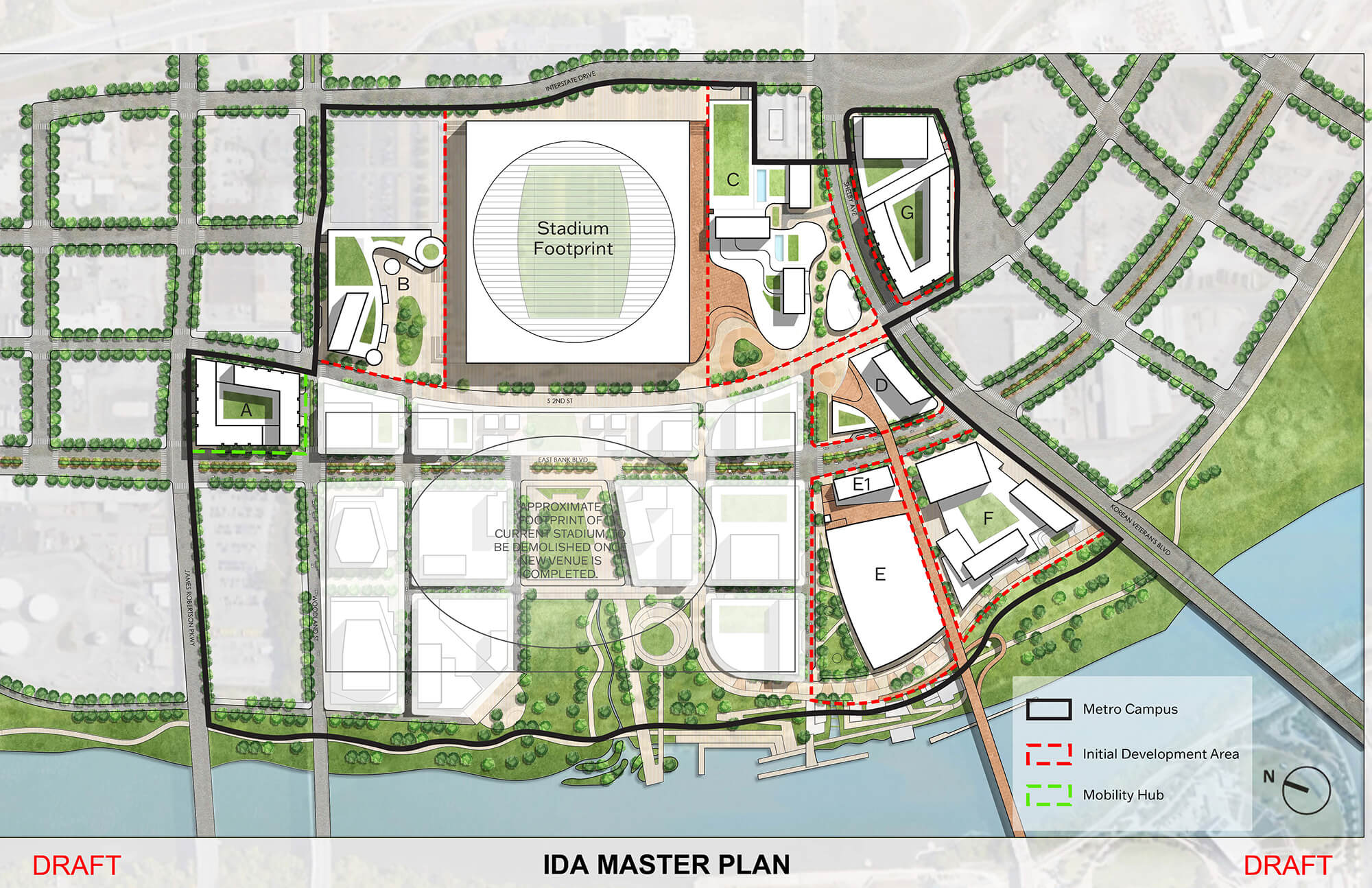
What started as a few isolated bets on sports-anchored development has become a recognizable municipal strategy. Cities are using event venues and cultural anchors to unlock entitlements, financing, and political support for mixed-use projects that would otherwise take decades to move.
We flagged the Ball Arena redevelopment in Denver in Q4, and Nashville's East Bank earlier this year. Since then, the trend has expanded. Stadium districts are becoming the backbone for large-scale, mixed-use redevelopment.
Nashville, TN. On January 20, Metro Council passed BL2025-1150 on third and final reading (29-2-1), authorizing a development agreement, a 35-year ground lease with two 30-year extension options, and a campus operations agreement with the Tennessee Performing Arts Center. TPAC pays nominal $100 per year rent, but contributes $400,000 annually toward infrastructure for 15 years and covers all construction costs, with $500 million in state funding and $100 million in donor contributions required by December 31, 2026, or Metro can terminate.
Two weeks later, on February 3, Metro authorized $660 million in general obligation improvement bonds (RS2026-1771, 36-0) to fund the balance of the capital plan, with East Bank infrastructure as a primary beneficiary.
Arlington, TX. On March 10, the Arlington City Council approved the development agreement for Anthem, a roughly 45-acre redevelopment of the aging Lincoln Square shopping center into a high-density mixed-use district. The same meeting produced the Anthem Public Improvement District, an Event Agreement for the 2026 FIFA World Cup, and a resolution supporting the Java House Grand Prix of Arlington, the inaugural NTT INDYCAR Series street race run through the city's Entertainment District. AT&T Stadium will host nine FIFA matches, more than any other venue in the tournament. Two weeks later, Arlington approved an adjacent Wolverine Interests mixed-use development agreement.
Three sports events and a megamall redevelopment, one agenda. Arlington is using the political momentum of major events to move projects that would face much harder scrutiny on their own.
Orange County, FL. On January 27, the Board of County Commissioners unanimously approved $97.1 million in additional construction management services for the Orange County Convention Center, bringing the Phase 5A Grand Concourse contract to about $129.4 million. Orlando is spending to defend its position as the largest single-site convention venue in the country. The logic is the same as Nashville and Arlington: anchor the infrastructure, and the mixed-use development follows.
Wichita, KS. On February 10, Wichita's city council formalized the financial guardrails for a potential multi-hundred-million-dollar Performing Arts facility funded from sales-tax proceeds, including a mandatory private-sector match. It is the same playbook as Nashville's TPAC but financed differently: referendum-linked sales tax rather than a ground lease.
The takeaway: The financing mechanisms here vary, from ground lease in Nashville, public improvement districts in Arlington, sales tax in Wichita, and construction management spend in Orlando. But the underlying logic does not. Cities are discovering that event venues and cultural anchors generate the political will and public investment that mixed-use redevelopment cannot produce on its own.
This is the trend we were most surprised by. Across different states with very different politics, cities used Q1 2026 to commit their own capital (bonds, sales-tax revenue, direct land contributions, housing trust funds) to affordable housing, without waiting on LIHTC allocations or HUD programs. They’re using municipal credit and voter-approved revenue directly.
Wichita, KS. On February 10, Wichita passed a coordinated set of resolutions establishing a $120 million endowment for housing and homelessness from sales-tax proceeds and a Wichita Homestead Property Tax Relief Program legally requiring property-tax reductions if the sales-tax initiative is approved at referendum. The resolutions also establish implementation guardrails for the roughly $850 million in projected sales-tax revenue, with the Performing Arts allocation covered in the previous section. Tying housing relief and property-tax relief together on a single ballot is deliberate political design: it broadens the coalition of voters who have a reason to say yes.
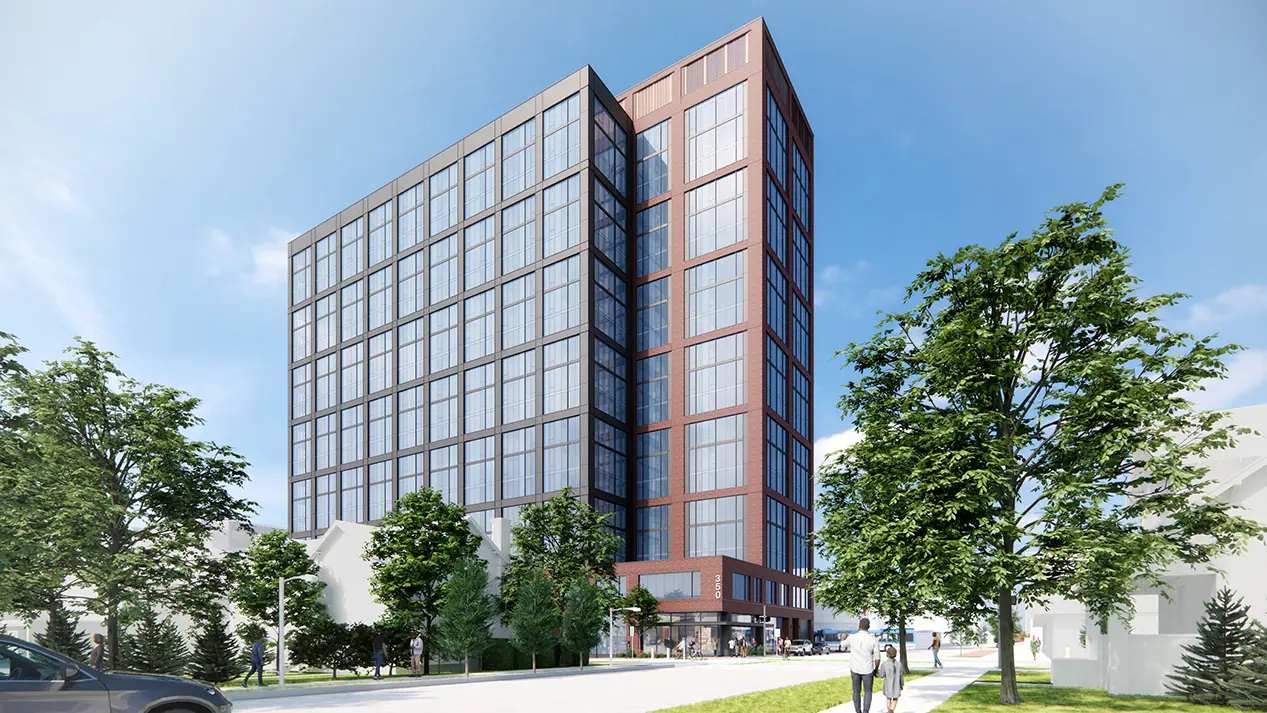
Ann Arbor, MI. On January 20, the council authorized the Notice of Intent to issue Capital Improvement Bonds for the 350 S. Fifth Ave. affordable housing project (330 units, 20 stories, downtown), approved the development agreement (PUD Site Plan SP25-0009), and approved a Transformational Brownfield Plan for the same site. On March 16, the council followed through with the $35 million bond issuance, adopted the broader Ann Arbor 2050 Comprehensive Land Use Plan and approved the Arbor South mixed-use infill agreement. In a single quarter, Ann Arbor issued bonds, approved a PUD, adopted a 25-year land use plan, and closed a second infill agreement — a city making a structural bet on its downtown density.
Madison, WI. On February 24, Madison awarded up to $2.97 million in city Affordable Housing Funds plus $2.99 million in federal HOME funds (plus land and loans) for 27 new owner-occupied units under the 2026 Affordable Homeownership RFP. A week later, on March 2, the council added $4.0 million of general obligation (GO) borrowing supported by TID 44 to the 2026 EDD Land Banking program, funding a 17-parcel, approximately $6.2 million strategic land acquisition, effectively putting future affordable-housing sites on the municipal balance sheet.
Albany, NY. On March 18, Albany amended Chapter 375 (Unified Sustainable Development Ordinance) to overhaul its inclusionary zoning policy with a tiered requirement structure and a fee-in-lieu buyout that feeds a Housing Trust Fund. The amendment creates a direct revenue pipeline from market-rate development to a city-controlled pool, without depending on annual appropriations or federal allocations.
Nashville, TN. On February 3, Metro established the Voluntary Attainable Housing Incentive Program (VAHIP), a formal framework incentivizing developers to build attainable (middle-income) housing. Voluntary programs like VAHIP are increasingly common as cities try to address the missing-middle gap without triggering state preemption fights over mandatory inclusionary zoning.
Fresno, CA. On January 29, the council resolved to contribute $10.5 million and three city-owned parcels to Parkview Apartments. On February 26, it approved $11.7 million of city funds for the Park at South Stadium project (174 mixed-income units). Fresno is writing checks, not just tax-credit pass-throughs.
New York City. On March 26, the City Council voted 50-0 to approve Communication MN-6 (M 0057-2026), appropriating $3.1 billion in new Fiscal Year 2026 revenues under Charter § 107(e). The appropriation is not earmarked for housing specifically. But a mid-year true-up at this scale materially expands the capital envelope without new debt or taxes.
The takeaway: Seven cities, five states, and no two financing structures alike. What they share is the assumption that waiting for federal or state housing support is no longer a viable strategy.
Office-to-residential conversion has stopped being a story about individual projects and started being a story about market structure. In California, the Builder's Remedy is compelling cities to approve projects they would otherwise block. Elsewhere, developers are making the same bet without needing to be forced. Q1 2026 produced six conversions across five states, plus a hospital campus redevelopment, ranging from a suburban office park in Walnut Creek to a dead mall in Provo rezoned for 1,383 units.
The projects confirm what the last several quarters have been suggesting: conversion is no longer experimental.
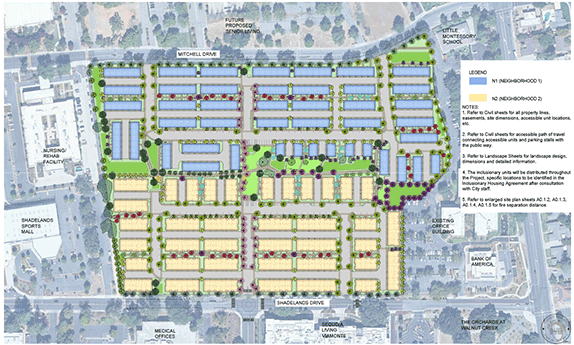
Walnut Creek, CA. On February 12, the Walnut Creek Planning Commission approved Mitchell Townhomes, a 422-unit development by The Spanos Corporation replacing roughly 330,000 square feet of office space in the Shadelands Business Park. The project was processed under the Builder's Remedy, which lets a qualifying housing project bypass local zoning when a city's Housing Element is non-compliant. Walnut Creek had no discretionary tools to block it, and 55 units (13%) are deed-restricted for low-income households. The most consequential Builder's Remedy outcome we have tracked: a suburban office park converted to 422 townhomes because state law required it.
Sunnyvale, CA. On February 23, Sunnyvale approved a 20.55-acre Use Permit and Subdivision Map to demolish six industrial/office buildings and replace them with a 329-unit residential project with ownership housing and accessory commercial.
Provo, UT. On March 11, Brixton Capital secured Concept Plan approval and a Zone Map Amendment for a 23-acre, 1,383-unit mixed-use redevelopment of Provo Towne Centre, rezoning the parcel out of RM (Manufactured Home Park) and SC3 (Regional Shopping) into a dense, transit-oriented mixed-use district.
Ann Arbor, MI. The 350 S. Fifth project, covered in the previous section, also belongs here: a 330-unit, 20-story affordable tower on a long-vacant downtown parcel.
Lowell, MA. On January 22, Lowell's Planning Board approved the redevelopment of 463 and 281 Moody Street by New North Canal LLC, demolishing 116 aging units and constructing 160 modern senior and family units in their place.
Orange County, FL. On January 13, the county approved a Substantial Change request to repurpose underutilized office entitlements near UCF into a roughly 900-bedroom student housing project.
Saint Paul, MN. On February 18, the council approved establishment of the Fairview/St. Joe's Tax Increment Financing District to finance the redevelopment of a major downtown hospital campus into a mixed-use district.
The takeaway: Six conversions across five states in a single quarter, plus a hospital campus. A year ago these projects were notable exceptions; now they are the baseline.
Two cities rewrote landlord-tenant law in a single meeting, one city modernized its entire zoning code, and one city codified what its municipal real estate cannot be used for. None of it shares a single ideology. What it shares is a willingness to use local regulatory tools for purposes those tools were not originally designed for.
Philadelphia, PA. On March 30, a single Philadelphia committee meeting rewrote the rules for landlords and tenants in the city. Bill 250330-A gives tenants good cause protections against eviction, extends anti-harassment protections to tenant organizations, codifies an implied warranty of habitability, and establishes a formal right to organize. The same meeting added a proactive inspection regime for all rental properties, replacing a complaint-driven system that effectively let landlords avoid scrutiny as long as tenants did not complain. The two measures shift meaningful leverage from owners to tenants. Cap-rate implications for Philadelphia multifamily should materialize over the next 2 to 4 quarters.
Providence, RI. On March 5, Providence amended Chapter 27 of the City Ordinances, a broad modernization prioritizing residential density, rowhouses, and adaptive reuse. For a city with Providence's housing constraints, reorienting the base zoning code toward density and adaptive reuse is a more consequential move than any single project approval.
Seattle, WA. On March 10, Seattle passed CB 121164 establishing a permanent legal restriction on the use of any city-owned real estate for federal civil immigration enforcement staging. Using a land-use ordinance rather than a policy resolution makes the restriction harder to reverse and gives it legal teeth that a simple council statement would not. Other cities are likely to study the mechanism.
New Haven, CT. On February 24, the New Haven Legislation Committee unanimously rezoned the former Church Street South housing complex site, adjacent to Union Station, into a new Transit-Oriented Community district. Two details matter: the Right of Return for former residents is codified into the rezoning itself, not a side agreement that can be quietly dropped and the committee removed certain Special Permit requirements inside the district, lowering the discretionary hurdle for transit-adjacent projects. Cities trying to combine density with equitable redevelopment of legacy public housing sites should study the structure.
A Note on the Data
All of the decisions in this piece come from Shovels Decisions, which ingests every public agenda and meeting minute it can find in the U.S. To track your own decisions, create a free Shovels account.

How a new model for rural communities built on shared identity is driving both demand and backlash

The U.S. modular construction industry has struggled for decades without a large-scale institutional buyer. The Department of Defense may be changing that.


Meet the 100 people shaping the future of the built world, Part III
Covering the future of real estate and the people creating it
