
Special Edition: Realpage Cuts Off EliseAI
Multifamily operators in the lurch; have the PMS wars begun?
Multifamily operators in the lurch; have the PMS wars begun?

Small-balance residential bridge loans are a bright spot for private credit

Drake targets $5-20M equity in industrial outdoor storage and manufactured housing. The model, the returns, and why the overlooked niches keep delivering.

Don’t miss Thesis Driven’s Buy Box deep dive on Drake next Wednesday, September 24. Register here (for accredited & institutional investors only).
At Thesis Driven, we love niches. We’ve written before about why the best opportunities in real estate often live in corners too small, too messy, or too operationally complex for the largest pools of capital.
Asset classes like industrial outdoor storage, manufactured housing, marinas and student housing all demand hands-on execution—whether it’s rolling up fragmented owners, improving community infrastructure, or managing an operating business within the four walls of the real estate. And for those willing to do the work, the payoff is higher and more durable yields.
We typically highlight the operators and developers bringing those niche strategies to life. But behind the most successful operators are strategic investors willing to underwrite the risk and structure capital to scale. Today, we’re focusing on one of those investors: Drake Real Estate Partners.
Drake is led by co-founders David Cotterman and Nicolas Ibáñez, who were introduced in 2012 by a mutual Harvard Business School professor. In 2016 they brought in partner Jonathan Garonce, and together, they built a top-tier private equity shop with the entrepreneurial spirit of a family-backed platform, creating a franchise around market inefficiencies.
Today, they target ~$5-20 million equity checks in opportunities sourced alongside property type specific, geographic specific “sharp shooter” operators, generally in secondary and emerging markets, and property types like industrial outdoor storage and manufactured housing that institutions often overlook.
The result is a differentiated model that’s delivered net realized returns of +20% IRR and 1.9X equity multiple across more than a decade of investing.
In this letter, we’ll break down:
Drake has carved out a niche by focusing on the part of the market that larger managers can’t reach efficiently.
Their sweet spot is equity checks in the $5-20 million range (but can go even smaller than $5 million if the asset is part of a roll-up strategy), translating to total deal sizes of $10-90 million. That’s the territory where institutions struggle to deploy at scale but where entrepreneurial operators and family-backed sellers are still active, translating to less competition, more favorable entry pricing, and the potential for outsized risk-adjusted returns.
“We look for inefficient buy dynamics,” David Cotterman, Co-Founder and CIO of Drake Real Estate Partners, says. “Distress, mis-marketed assets, estate and family transition assets are what we like to find. We always like to buy below replacement cost, have a deep value-based philosophy, and favor assets with strong in-place cash flow.”
“That cash flow is critical; it means our returns don’t depend as much asset appreciation, and we always underwrite our exit caps conservatively relative to spot cap rates today. We’re typically generating cash-on-cash yields from day one, which gives us real downside protection in uncertain markets.”
Examples of strategies include rolling up small industrial assets into institutional-quality portfolios, buying and upgrading manufactured housing communities, and building an income-producing industrial outdoor storage portfolio. In every case, the emphasis is on adding value through hands-on execution rather than waiting for the market to bail them out.
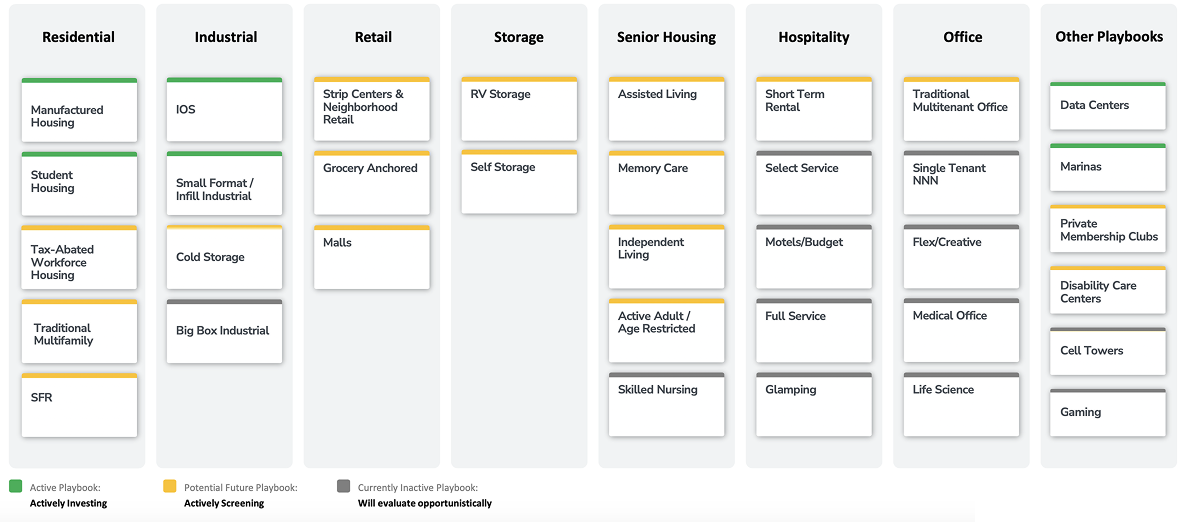
Key features of Drake’s investment model:
“Our operating partners are an extension of our team,” says Jonathan Garonce, Partner and Head of Asset Management. “They bring deep local expertise—whether it’s a property type, a market, or even a specific sub-sector. Many are vertically integrated, which means they can handle the day-to-day execution of our business plans.”
“Our role is to underwrite independently, collaborate on the business plan, and then stay shoulder-to-shoulder from acquisition through exit.”
The approach gives Drake the flexibility to move into niches that demand local knowledge, from marinas to student housing to infill industrial. Drake can pivot nimbly between these, and others, thanks to this partnership model.
While Drake has flexibility across property types, most of its capital has been concentrated in a handful of themes that reflect long-term supply-demand imbalances. About 80% of Drake’s equity invested since inception has been deployed in residential, industrial, industrial outdoor storage, and manufactured housing.
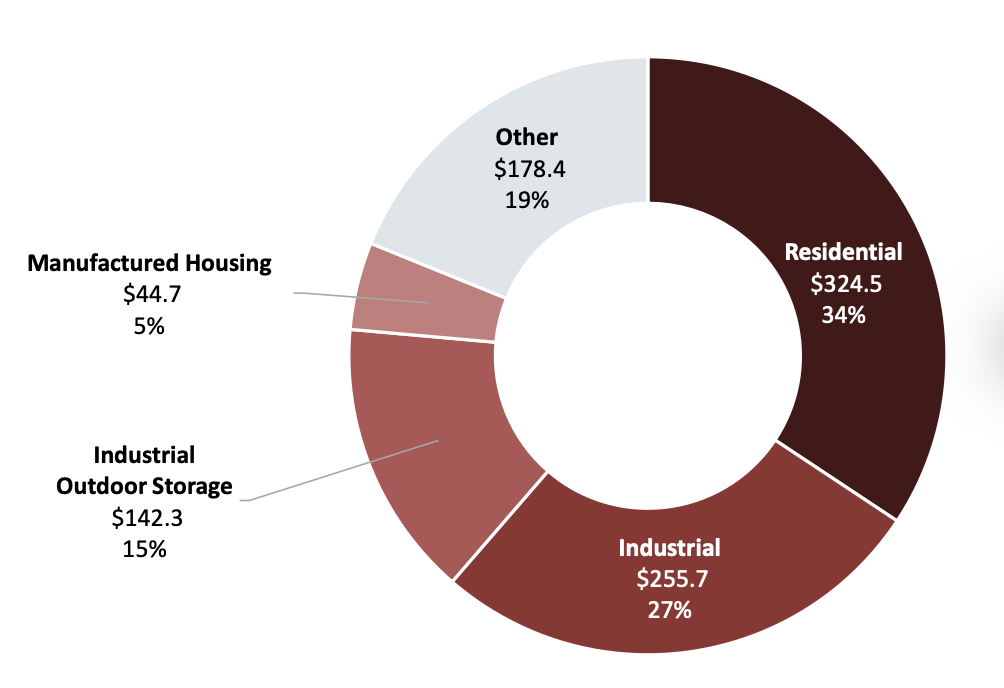
The common thread is operational complexity paired with secular demand tailwinds—settings where entrepreneurial operators can add real value.
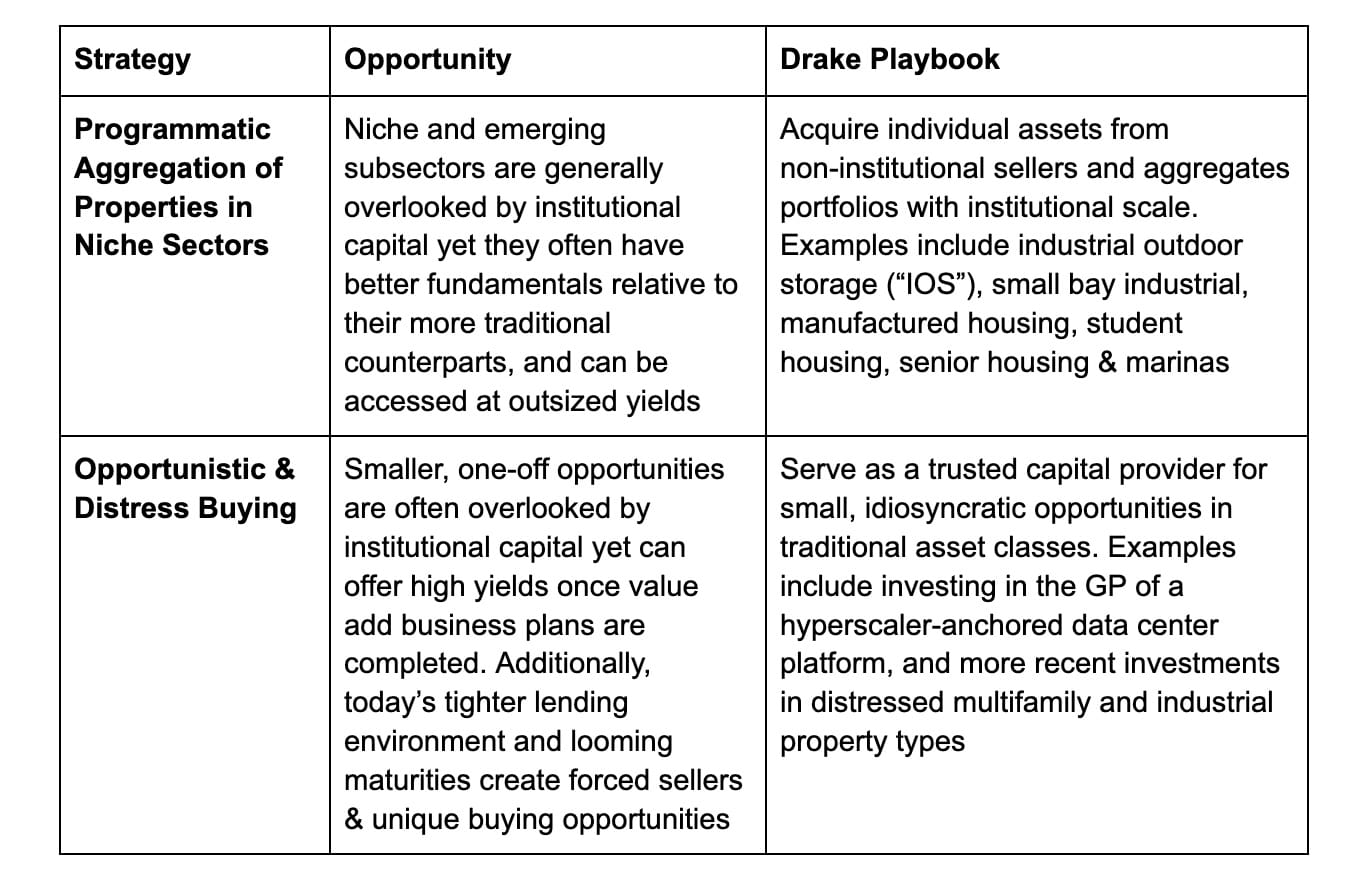
Drake currently employs two primary strategies:
Drake is built around three partners who approach real estate from different but complementary angles—one from the institutional world (David), one from a family office (Nicolas), and one from the ground-up execution side (Jonathan).
The firm was started when David Cotterman and Nicolas Ibáñez were introduced by Arthur Segal, founder of TA Realty and a real estate professor they both studied under at Harvard Business School. David had previously been a principal in the real estate group at MSD Capital, Michael Dell’s family office, where he put more than a billion dollars to work across property types after beginning his career in development at Urban Partners. Nicolas had been building the real assets arm of his family’s firm, Drake Enterprises, which today manages more than $1.4 billion, giving him a long-term, family office perspective on capital and culture.
In 2016, they brought in Jonathan Garonce, who had been running principal real estate investments at a family office after his time in Merrill Lynch’s private equity real estate group. Jon became the execution partner—working closely with and overseeing the firm’s operator partner relationships.
The team is 20 strong across acquisitions, asset management, finance, and IR, with 58% female or minority representation.
“We’ve always believed alignment has to be real,” says Nicolas Ibáñez, Co-Founder and President of Drake. “Our team and families invest meaningful capital in every fund, and our compensation only works if the investments perform.”
“We take the same approach with operators—most of our partnerships are programmatic, with co-investment and shared hurdles so everyone is pulling in the same direction. That creates a culture that’s flat and collaborative, where decisions get made quickly and the same people stay involved from acquisition through exit.”
This level of continuity is unusual in private equity real estate, where responsibilities are often handed down to junior staff (many operators describe the frustration of negotiating a joint venture with senior partners, only to find themselves reporting day-to-day to a 26-year-old analyst).
For Drake, the operating partner isn’t just a vehicle for execution—it’s the core of the model. Nearly all of the firm’s 180-plus acquisitions have come through its network of local operators, and more than 90% of those have been repeat partnerships.
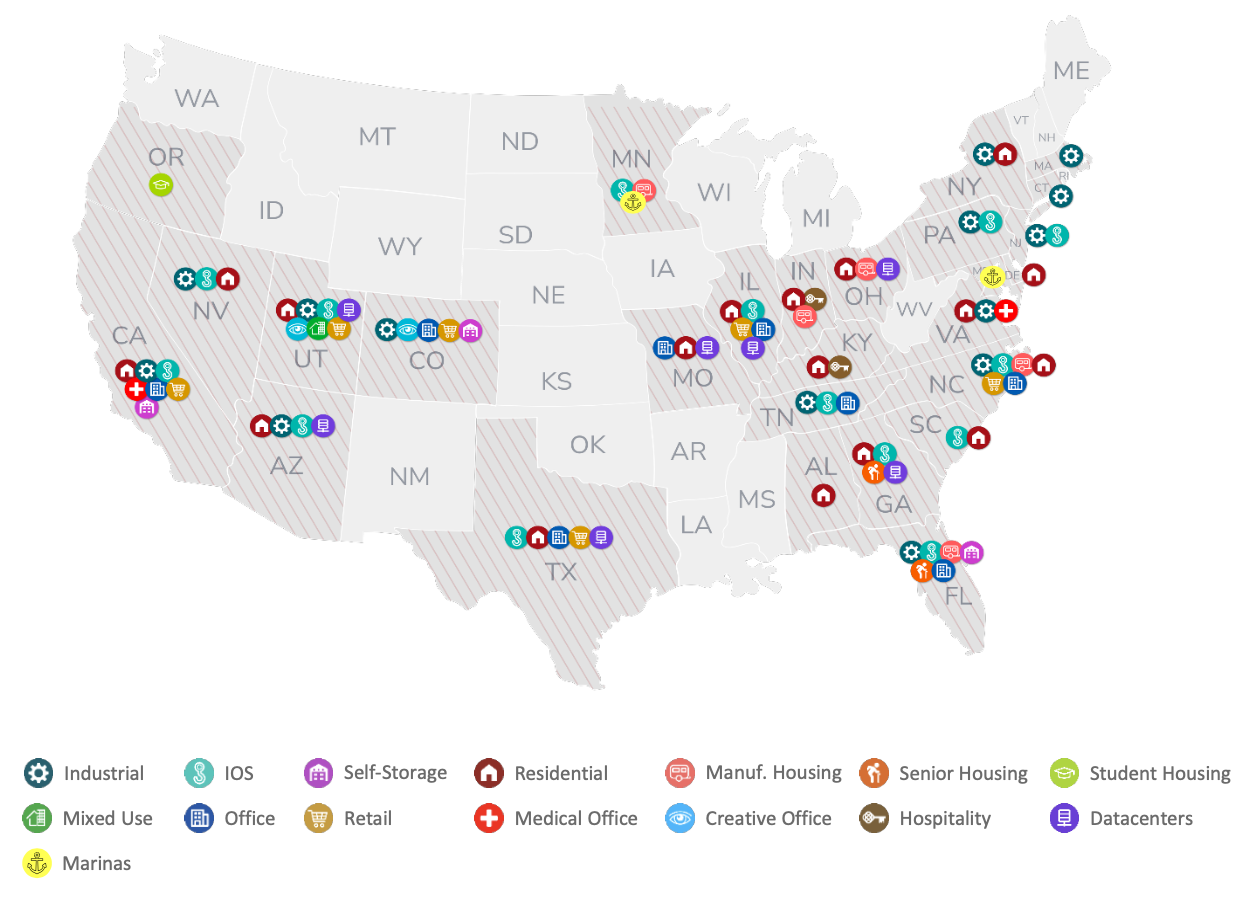
The profile of these partners is consistent. They are usually smaller, entrepreneurial groups with deep local knowledge, a niche focus, and proven track records (oftentimes generating consistent unlevered yields north of 8%). Most are vertically integrated, i.e., they handle their own property management, leasing, and capital projects. That integration gives them speed and control, while Drake provides an institutional lens around asset management, capital, financing, and reporting.
What operators should know about working with Drake:
This approach plays to each side’s strengths. Operators identify opportunities and run the day-to-day. Drake brings capital, structure, and continuity as the same people who greenlight a deal are still in the room when it’s time to lease, refinance, or sell.
For operators, the value is clear: Drake can help turn local expertise into scale, bundling smaller assets into institutional portfolios and providing the capital and governance needed to grow. But the expectation is clear too—alignment must be real, and execution has to be repeatable.
The best way to understand Drake’s model is through the types of projects it’s executed across sectors, identifying inefficient entry points and bringing institutional expertise to sub-institutional projects.
Miami Truck Parking (Industrial Outdoor Storage) ~ Miami, FL

This project illustrates Drake’s original thesis in IOS: upgrading underutilized land into income-generating infrastructure tied to logistics demand.
Greensboro Industrial ~ Greensboro, NC

This is an example of buying “smart” into a complex situation, below replacement cost, and creating value through lease restructuring.
Colton Multifamily ~ Inland Empire, CA

A large-scale multifamily repositioning that shows Drake’s ability to enhance value through targeted renovations and improved tenant experience.
Industrial Outdoor Storage Portfolio ~ Nationwide
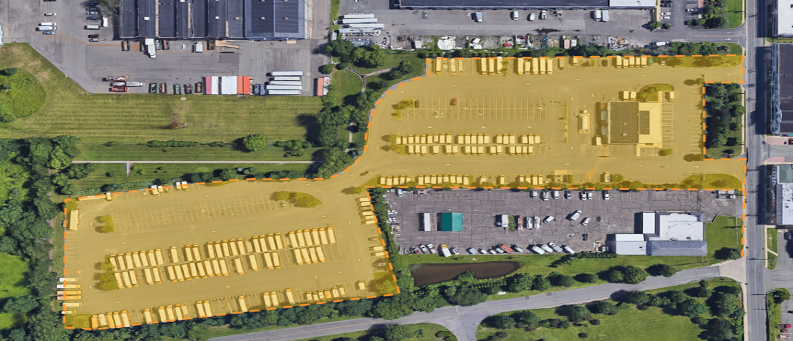
Active programmatic aggregation strategy of resilient IOS properties targeting high unlevered yields.
Together, these projects highlight the through-line in Drake’s strategy: buying into inefficient situations, improving operations with the right local partners, and exiting into institutional demand.
We’re excited to dig deeper with the founding team on Wednesday, September 24th at 3pm EDT to discuss the evolution of Drake’s strategy, how they partner with operators, and where they see opportunities today.
Register here (for accredited & institutional investors only).
All Fund-level performance metrics are unaudited and calculated net of fees, carried interest and expenses, but gross of federal and state income taxes. Asset-level returns are presented herein gross of management fees, carried interest, income taxes (if applicable) and other fund expenses, the application of which would reduce such rates of return. These metrics represent the unaudited performance based on actual cash flows of each investment.
-Paul Stanton

Office demand is recovering, but speculative development in most markets remains stubbornly out of reach


We've been building AI acquisitions agents with real estate GPs. On August 13, we're opening the hood in a live 2-hour workshop
Covering the future of real estate and the people creating it