
Deep Dive: Real Property Captive
As real estate's insurance-cost crisis grows, captives gain popularity and embrace membership-club selectivity
As real estate's insurance-cost crisis grows, captives gain popularity and embrace membership-club selectivity

Eight lessons on why AI pays off for some firms and not others
A quarterly look at feasibility study activity with our friends at TestFit
Location data has dramatically improved over the past decade. How is the real estate industry taking advantage of these new insights?

Thesis Driven dives deep into emerging real estate themes and operating models. This week's letter is a guest post from Michelle Tan, Co-Founder and CEO of a stealth startup at the intersection of real estate and analytics. She was previously Director of Finance at Culdesac and part of WeWork. Today’s letter explores new sources of location data that real estate investors are using to inform their decisions.
As the saying goes, real estate is about “location, location, location.” But for decades, the way real estate investors and operators have used location data has largely stayed the same. In day-to-day decision-making, real estate firms spend significant time and effort analyzing financial data–such as rent comps and property P&Ls–but rely upon Google Maps and intuition for location data.
Over the past few years, however, new ways of leveraging location data in real estate have emerged, changing how investors and operators approach site selection, due diligence, and asset management. Today we will analyze the growing role location data plays in real estate, specifically addressing:
Location data is defined as any data point that can be traced back to a geographical location on Earth; it could be a pair of longitude-latitude coordinates, a geographical area, or a land parcel.
There are 3 common sources of location data: public, paid, and proprietary.
The following market map illustrates the landscape of major location data providers across 10 categories:
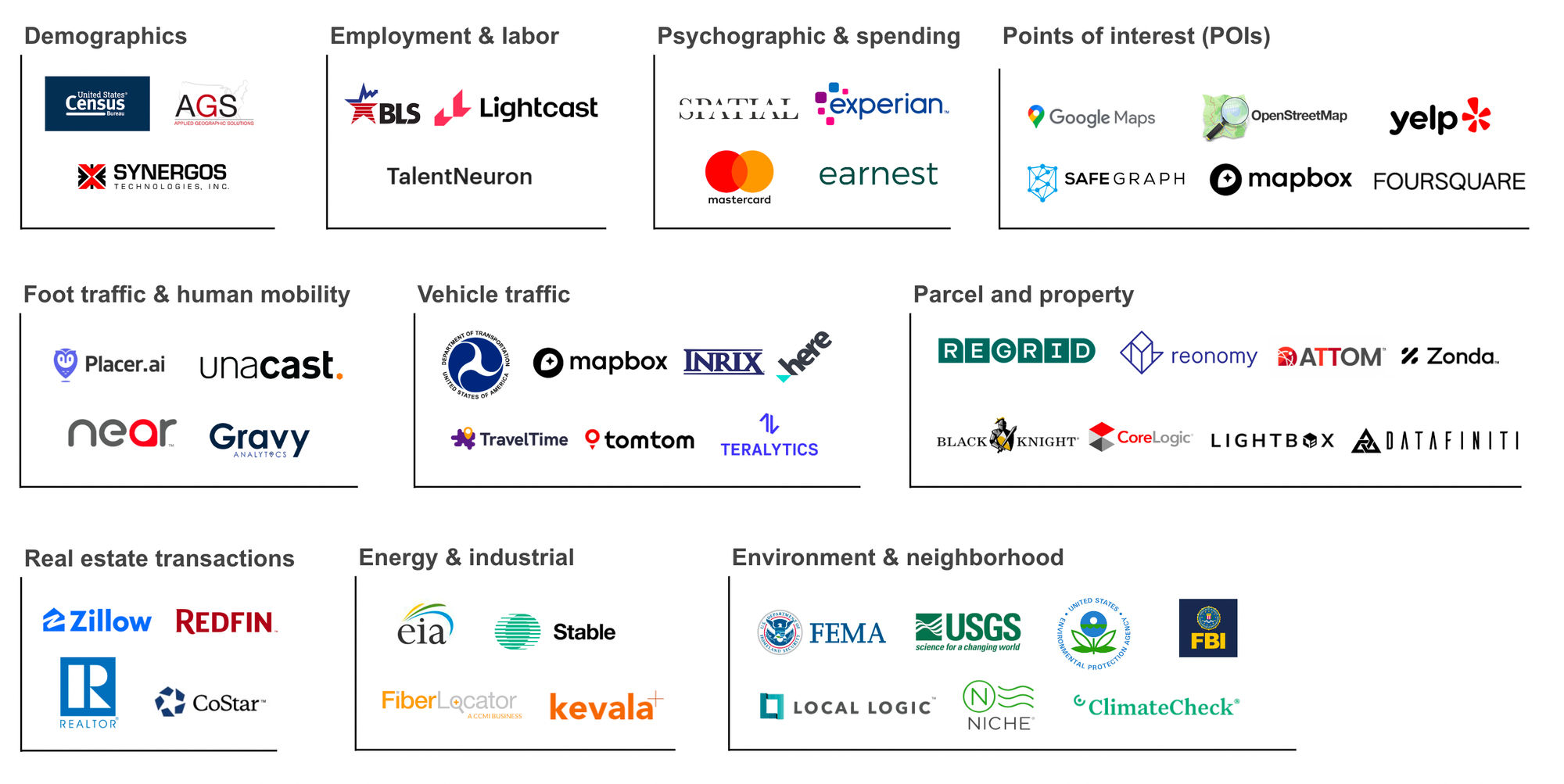
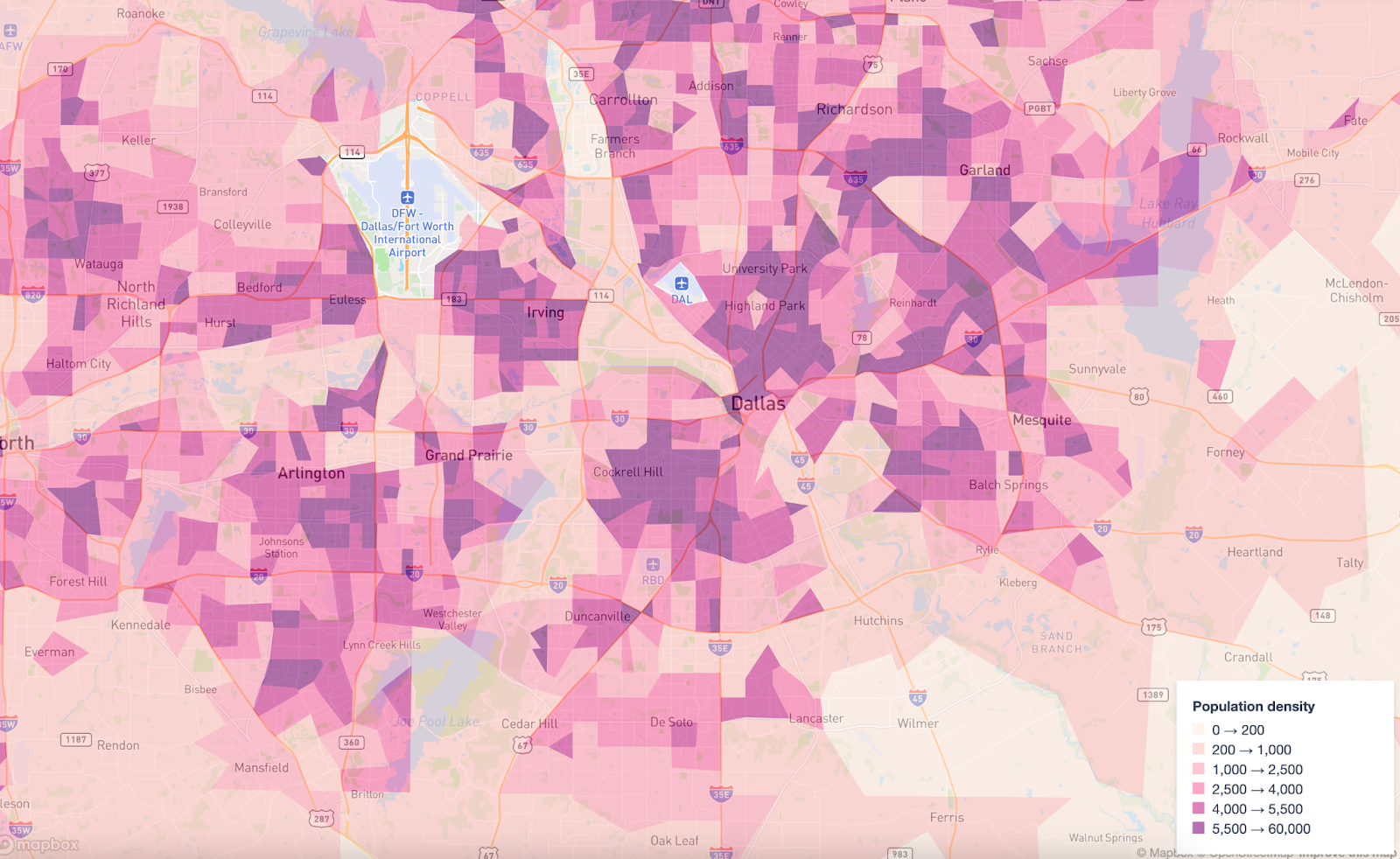
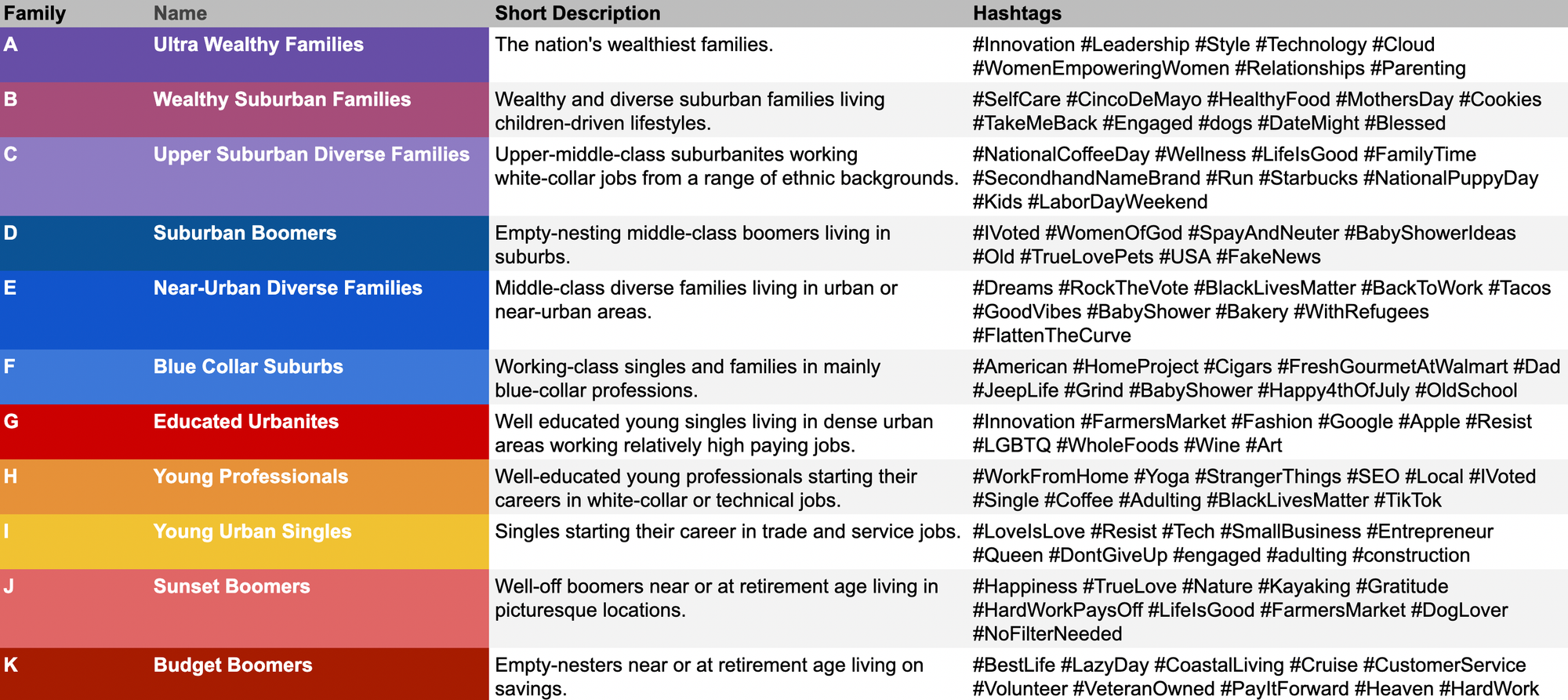
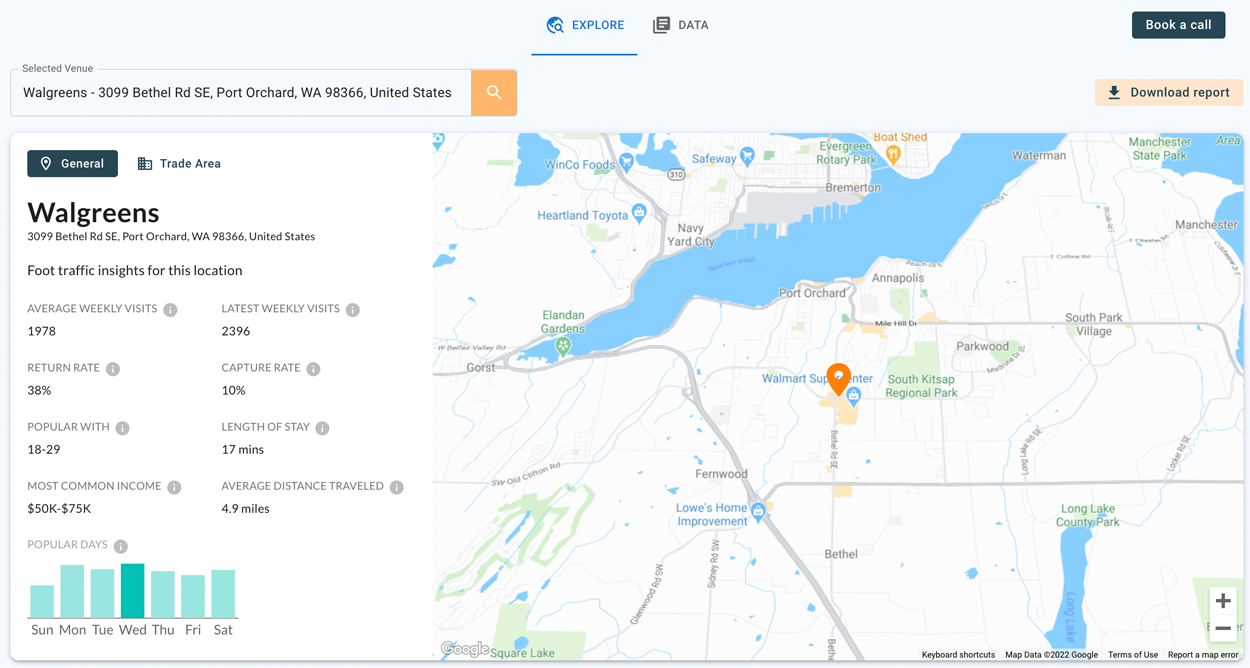
Each category of location data can help answer different questions for a real estate investor, so it’s worth a brief overview of each category:
Thesis Driven is a reader-supported publication. To receive new posts and support my work, consider becoming a free or paid subscriber.
In the past, it was not easy for real estate firms to work with location data unless they were a firm like JLL or Prologis with big teams of GIS analysts. Location datasets often come in large geospatial files. Analyzing location data required specialized software with a steep learning curve, like Esri’s ArcGIS. Because of that, location data analytics was often either considered the specialty of urban planners or delegated to brokers.
Today, more real estate firms have started to bring location data analytics in-house, gaining more control over how they use location data to make decisions. This is partly made possible by the development of business intelligence software such as Power BI and Tableau. These tools make it easier for real estate professionals to engage directly with location data versus relying on a data analyst or GIS analyst. Real estate-focused data analytics tools such as Cherre help real estate asset managers further enhance their data capabilities.
The emergence of an ecosystem of location data providers also accelerated the adoption of data in real estate. Real estate professionals historically relied heavily on public sources for location data. Because the built environment changes constantly, the release schedules of the public data are often too infrequent for investors and operators who want more real-time information.
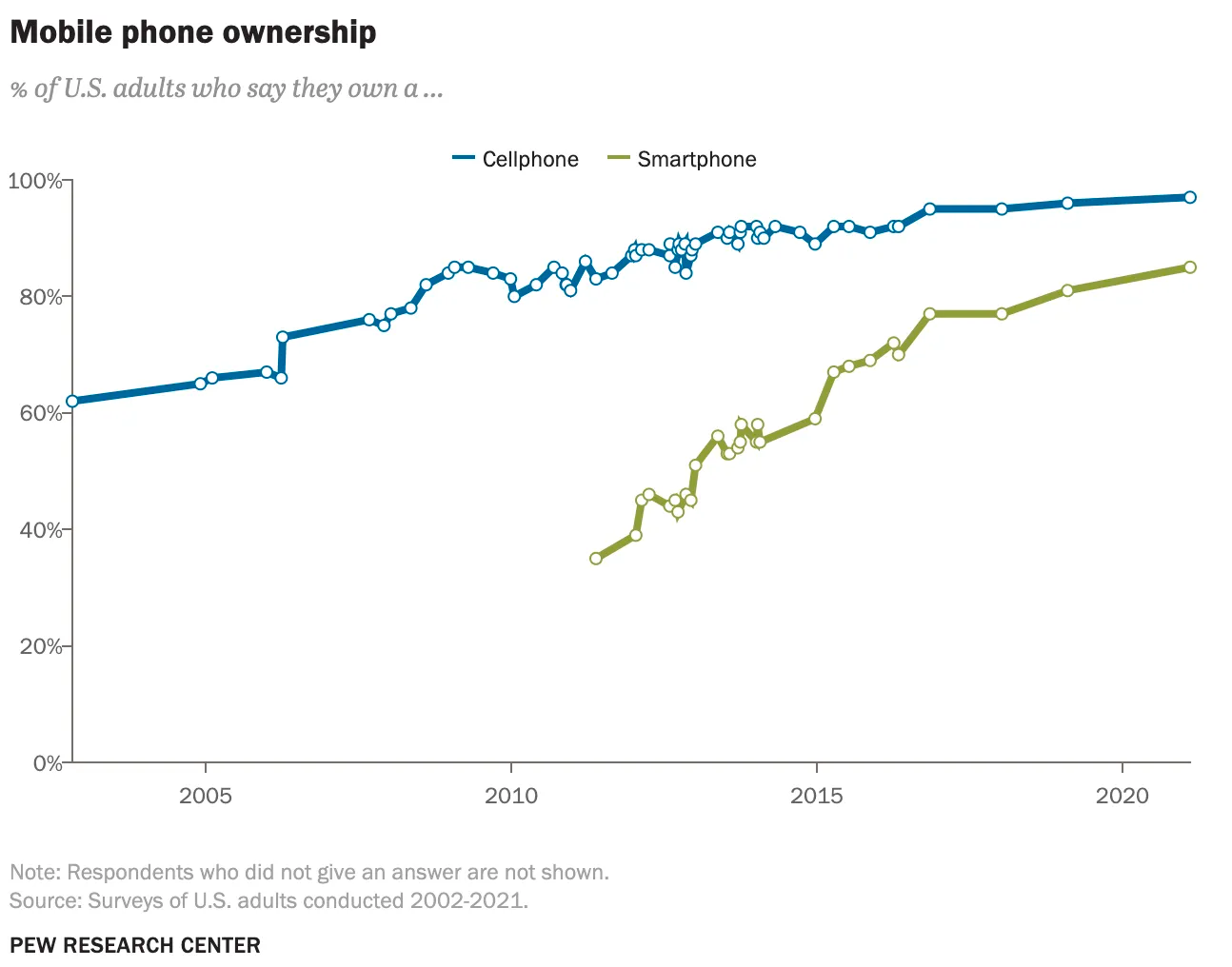
New sources such as mobile apps, navigation software, and social media provide location data that’s close to real-time and more granular than public sources. Instead of looking at the general population within a zip code or county from a survey last year, a real estate investor can understand how small clusters of people move and behave as recently as this month. This kind of insight about a location and the people around it was impossible before smartphone ownership became prevalent in the past decade.
What sets real estate data users apart from data analytics in other industries is that each firm often has a distinct investment strategy which informs its approach to deal sourcing and due diligence. Therefore, each firm has a different set of location data needs, especially across asset classes.
Commercial real estate
Commercial real estate owners and operators have been early adopters of location data. Datasets such as foot traffic and consumer spending matter a lot to retail and office owners, whose asset value depends on their tenants thriving.
Haosai Wang at Boyd Watterson Asset Management said his firm uses foot traffic data from Placer.ai to understand return-to-office trends at assets they own. “Before Placer.ai, we would ask a property manager to sit at an office building for a day and count how many people go into the office. Using Placer is definitely a more scientific method.”
Brigham Dallas, Owner and CEO at Hello Sugar, a wax and sugar salon chain recently started using demographic and consumer spending data from AGS to inform their site selection process. “We added 50 locations in the last 12 months. Seeing the demographic and customer segmentation data on a map has been super helpful for us to expand our territories more strategically,” says Brigham.
Industrial real estate
Since the Infrastructure Investment and Jobs Act was signed into law at the end of 2021, industrial and infrastructure developments such as EV charging, data centers, and renewable energy have accelerated across the nation.
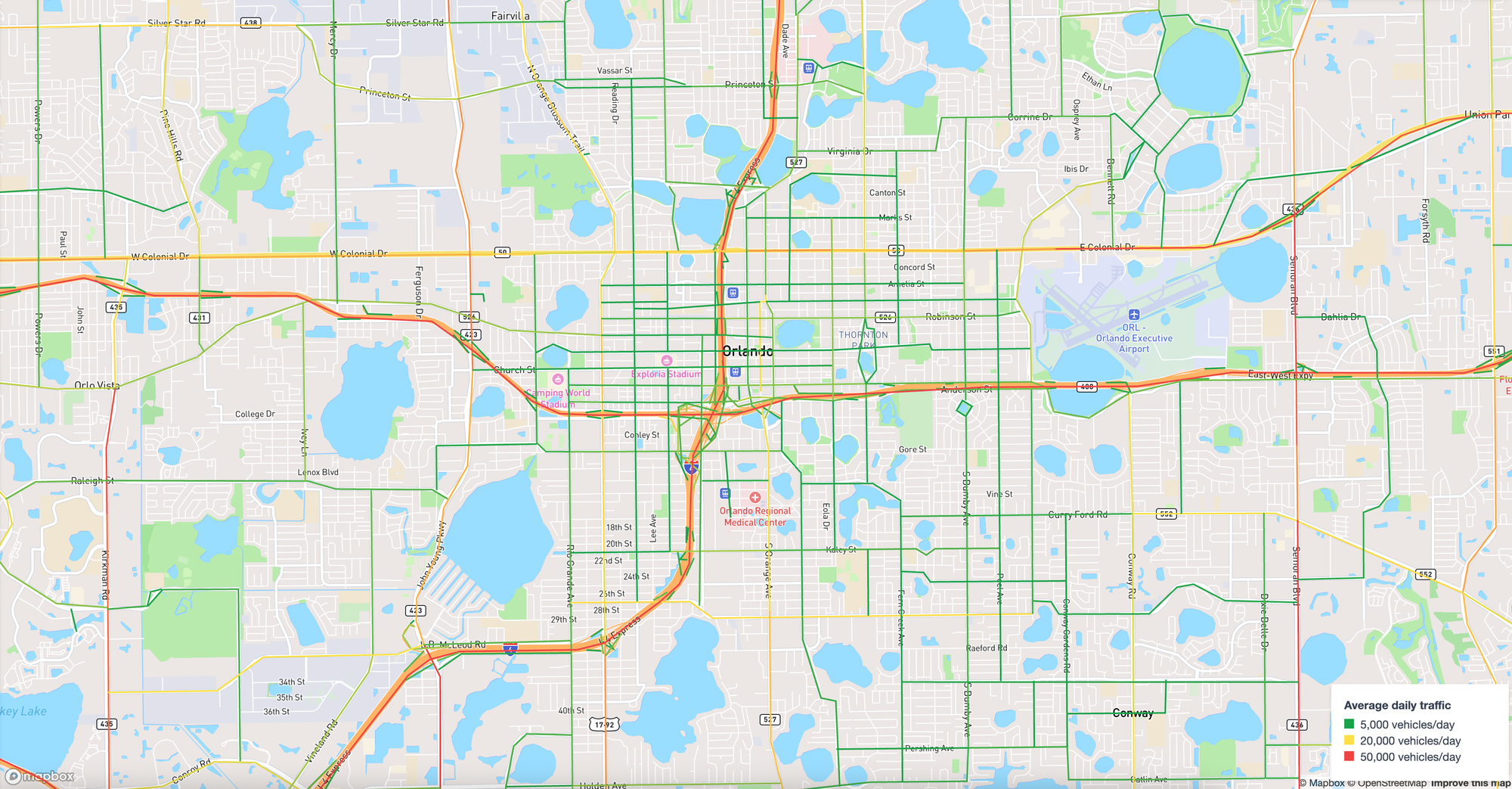
Compared to commercial real estate, the site selection criteria of industrial developers are often more complex and harder to gauge with intuition. While it's possible to estimate which roadways have busier traffic by driving around, it’s much harder to understand where water or natural gas lines are without displaying the data on a map.
Sean Kiernan is the co-founder and COO of EV Realty, a charging infrastructure developer for commercial EV fleets. He comes from the solar development world and has embraced location data since the start of his company. He led the development of an internal tool that takes in datasets such as vehicle traffic, electricity transmission lines, and zoning information and generates a proprietary site score to help his team evaluate a site quickly. “The value of the tool is to eliminate the noise — areas you don’t want to go. Then you get to a manageable size of opportunities and can apply rigorous analytics to figure out what’s good and what’s great.” says Sean.
Multifamily real estate
Multifamily real estate developers and investors have historically taken a much more “broad strokes” approach when it comes to working with location data. They use the education, income, and family size data of an entire submarket to approximate the demographic mix of their project. In comparison to commercial real estate investors, they are typically less focused on the data of a specific intersection or block at the hyper-local level.
This is starting to change as developers adapt to a new environment shaped by the revitalization of urban areas post-COVID, domestic migration from higher-cost coastal areas to lower-cost areas, and shifts in family formation and home-buying behaviors.
Roy Chen, Head of U.S. Real Estate at Gopher Asset Management invests in multifamily developments across the Southeast region. “Traditional real estate data such as rent comps and sales comps are lagging indicators of consumer behavior and are no longer sufficient for us to understand population migration within the U.S. This is why we use alternative data sources like demographic and foot traffic to help us predict the performance of submarkets we are entering into,” says Roy. His team uses the data for due diligence, unit mix design, and educating investors about new markets.
While location data is powerful, up-front investment and team buy-in are needed to figure out the right datasets and tools and incorporate them into a firm’s day-to-day workflows. Here are a few examples of use cases where real estate firms can gain an edge by investing in location data:
Learning about unfamiliar markets: for firms expanding into new geographies or working with international LPs, location data helps them learn about a market quickly and communicate their thesis to stakeholders.
Emerging asset classes: emerging real estate uses ranging from renewable developments to ghost kitchens have new site selection and investment criteria, and location data helps investors and operators iterate their playbooks quickly.
Rapidly growing businesses or large deal pipelines: firms deploying assets at scale, such as building an EV charging network or rolling out a franchise nationwide, need to make a large number of location selection decisions from an even larger pool of options. Location data helps firms to filter out the noise so that they can focus solely on the good options.
“Data-driven decision-making” has long become a part of today’s corporate speak. Real estate as an industry has not been at the forefront of using data, largely due to the inaccessibility of location data and the complexity of decision-making in the physical world. There are reasons to believe that with the emergence of new datasets and analytics tools, this is changing.
While physical site visits are here to stay, a new generation of real estate decision-makers might take out an iPad on a site tour, look at the story the location data tells them, and run a back-of-envelope calculation in a couple of taps. Ultimately, location data is a tool to help real estate firms make more efficient and smarter decisions, making our physical world a more thriving and prosperous place.
—Michelle Tan
Thank you for reading Thesis Driven. This post is public so feel free to share it.

A quarterly look at feasibility study activity with our friends at TestFit

Multifamily operators in the lurch; have the PMS wars begun?


Office demand is recovering, but speculative development in most markets remains stubbornly out of reach
Covering the future of real estate and the people creating it