
Special Edition: Realpage Cuts Off EliseAI
Multifamily operators in the lurch; have the PMS wars begun?
Multifamily operators in the lurch; have the PMS wars begun?

Small-balance residential bridge loans are a bright spot for private credit

Small, founder-led experiential resorts are achieving high occupancy and premium pricing, but they don’t fit traditional capital models.

Today's Thesis Driven newsletter was guest written by Isaac French, the founder of Live Oak Lake, a micro-resort in Texas, and the Experiential Hospitality masterclass and community.
The conventional wisdom in the hospitality business is that scale is everything. A new category of small, founder-led properties is proving otherwise, outperforming larger competitors on occupancy, ADR, guest loyalty, and brand equity, without the overhead of a traditional hotel operation. Micro-resorts are purpose-built experiential lodging properties, typically five to 20 keys, within drive distance of a major metro, usually built and operated by the person who conceived them.
I know this business from the inside. In 2021, I built Live Oak Lake, a 7-cabin property on five acres of raw Texas land outside Waco, for $2.3 million, cobbled together from a construction loan, maxed-out credit cards, and money borrowed from friends and family. The idea was simple: a village of cabins tucked into nature, close enough to Austin for a weekend escape, far enough to feel like a different world. About a year and a half after opening, it sold for $7 million. The valuation was driven by 150,000 Instagram followers, 80-plus percent direct booking rates, and first-year occupancy of 94 percent.
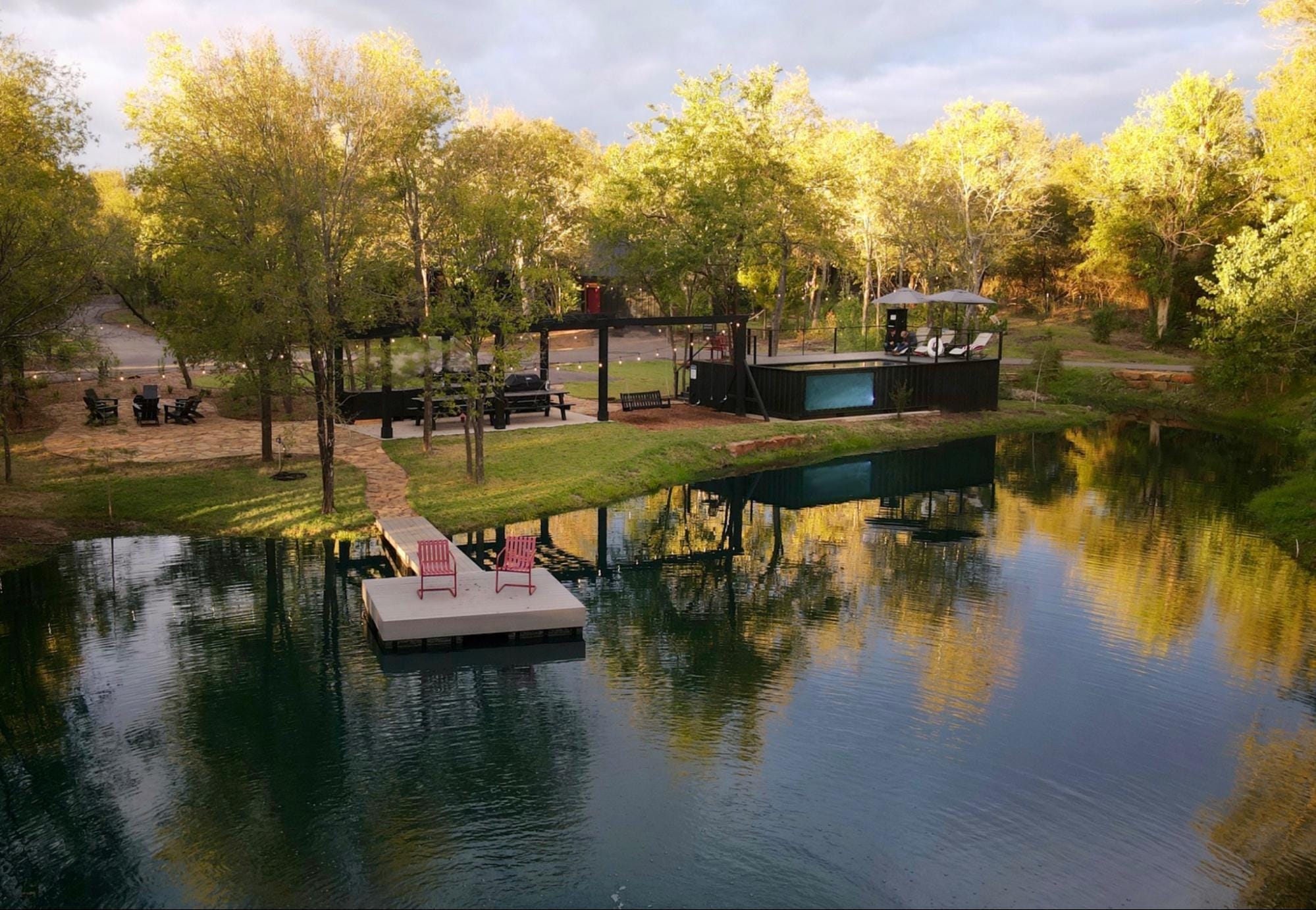
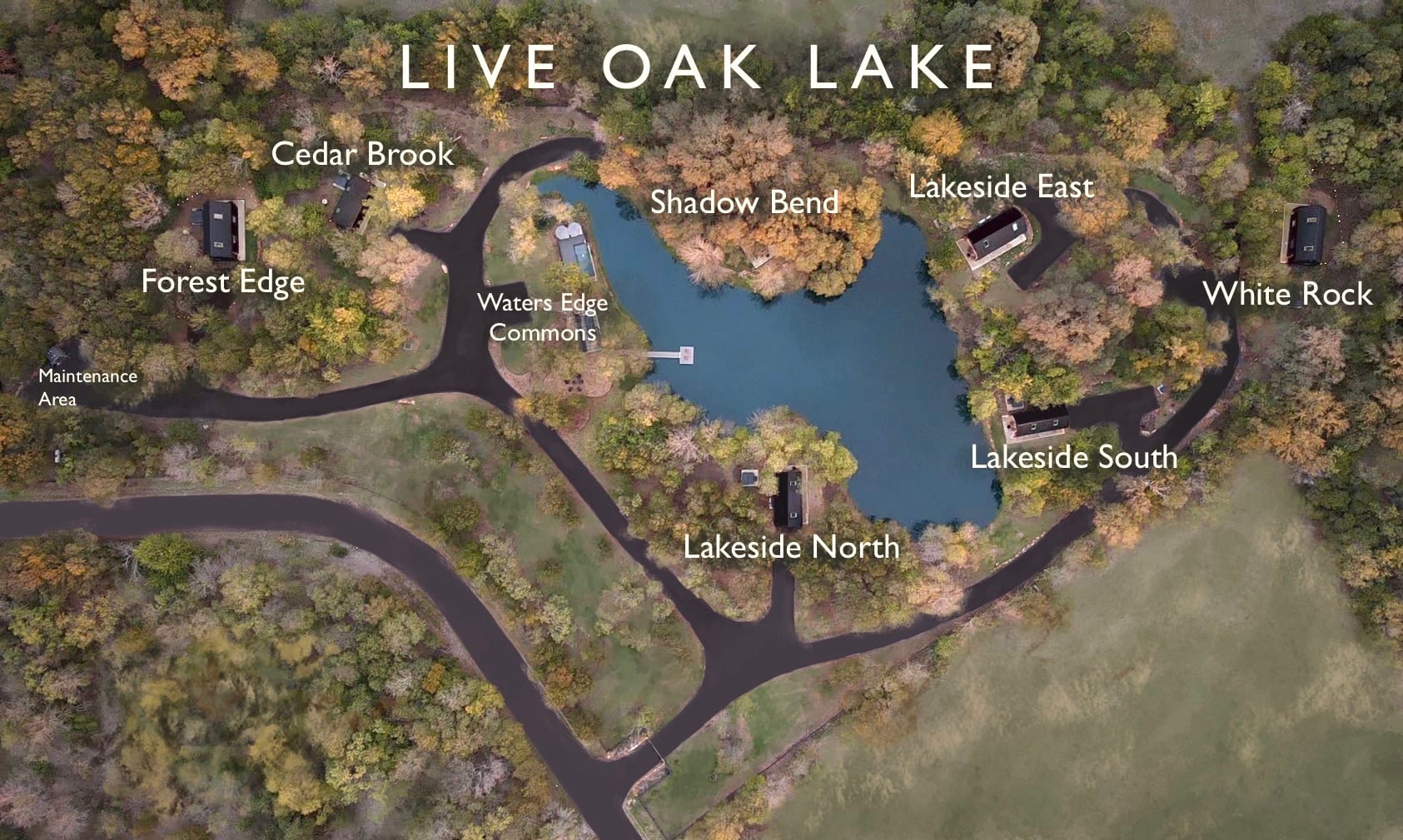
That experience has since played out across dozens of properties built by a new generation of founder-operators, and institutional buyers have taken notice. In 2024, Onera was acquired by Summit Hotel Properties, a publicly traded REIT. Marriott bought Postcard Cabins. Under Canvas acquired The Fields. These exits mark a category that has moved from novelty to investable.
The trajectory is clear. What is less clear is how to finance the next wave of properties at a scale that lets the best operators grow without giving up what makes them worth investing in. The exits are arriving before the capital structures designed to produce them, and that gap is what this letter is about.
This letter covers:
The instinct to sleep somewhere interesting is not new. Glamping operations, boutique inns, and treehouse rentals have existed for decades, scattered and mostly invisible to the broader market, with no shared language and no investment thesis to organize around.
Airbnb changed that. The first part of the story is well known: distribution was suddenly democratized, a homeowner with a spare room or cottage could reach thousands of potential guests, and travelers who had never considered anything outside a hotel began booking yurts in Utah and A-frames in the Smokies. Experiential lodging entered the mainstream.
The second part gets less attention: commodification. As professional property managers scaled up, the average listing began to look more like a managed apartment than someone's home. The distinctiveness that made the platform compelling started to erode.
That erosion created an opening. A different kind of operator stepped in: someone who bought land, built something from scratch, and opened it to strangers — a founder creating a place worth traveling to rather than a manager optimizing a listing. COVID accelerated what was already in motion, spiking drive-to demand and cementing short, regional trips as a permanent fixture of American leisure rather than a pandemic concession.
By 2022, a coherent category had emerged with its own operators, its own economics, and growing recognition beyond the hospitality world.

The landscape of successful micro-resorts is still small enough to map: Bolt Farm Treehouse in Tennessee, Onera in the Texas Hill Country, Dunlap Hollow and The Cliffs at Hocking Hills in Ohio. These properties share no brand or management company, but their defining characteristics are remarkably consistent.
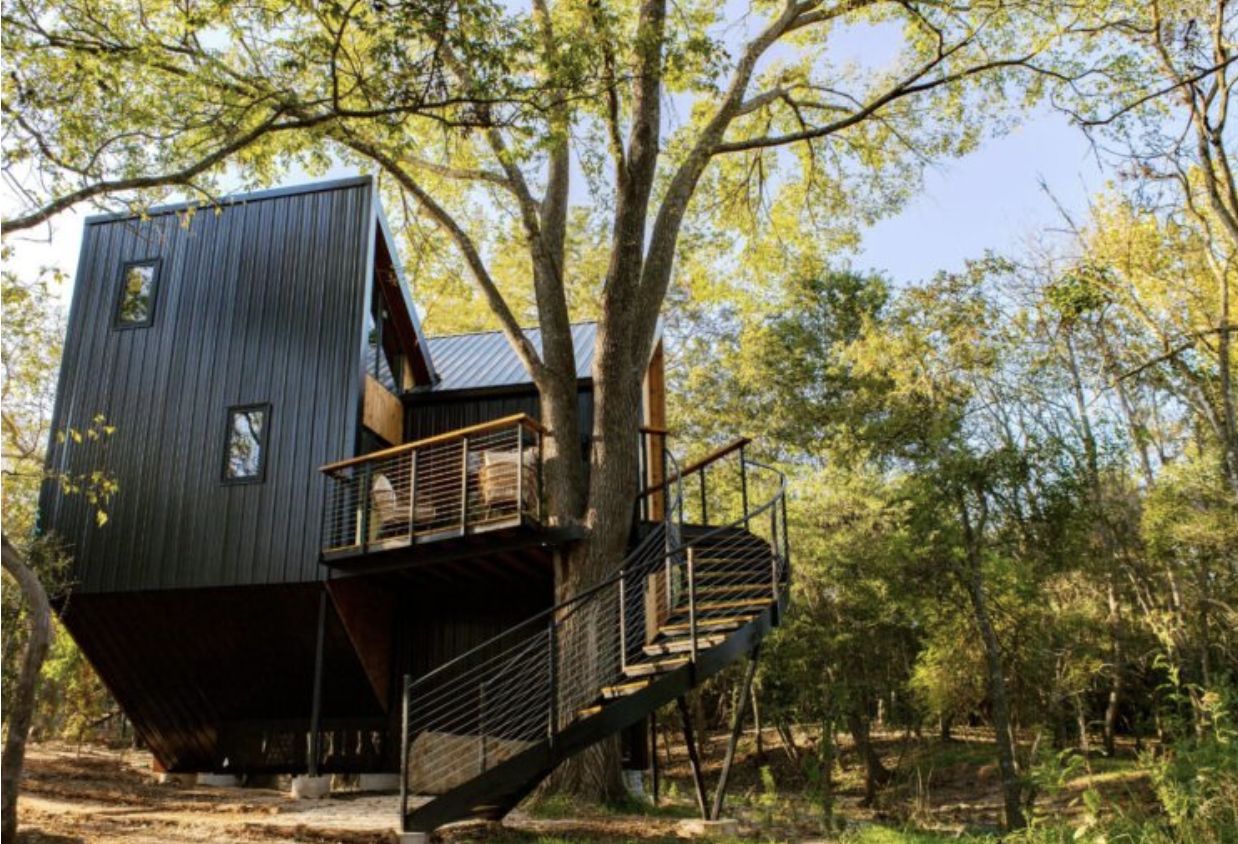
The founder's presence runs through everything: the design, the hospitality, the marketing. Guests know who built the property and why. That biographical thread runs through the Instagram account, the welcome guide, maybe even the music playing when you walk through the door. Every successful micro-resort has a visual identity strong enough to move organically through social platforms, personal rather than corporate, specific enough to stop someone mid-scroll. The industry calls it "Instagrammable," but what it produces is word-of-mouth, and that’s what drives bookings.
The best operators tell their story in public from day one, posting before they have land or money, bringing in followers through the fundraising, the land clearing, the framing, and the small disasters, so that by opening day the waitlist already exists. The storytelling and the business are the same operation, and the brand equity that results is not dependent on any online travel agency (OTA) or platform.
Where a micro-resort is located relative to a major metro is one of the most consequential decisions, because that distance determines the entire business model. A property 90 minutes out draws from an enormous pool of two-night weekend travelers, while five hours out requires longer stays, bigger marketing budgets, and a different guest with more time and commitment.
Every successful property has a reason to exist beyond comfort or convenience. The Cliffs has topography dramatic enough to justify the trip alone. Bolt Farm has treehouse architecture embedded into a mountaintop that registers as aspirational the moment you see it. Onera has unit types hovering above a creek and through a forest with a quality that photographs can barely capture. Nobody drives three hours for a comfortable mattress — the place is the point.
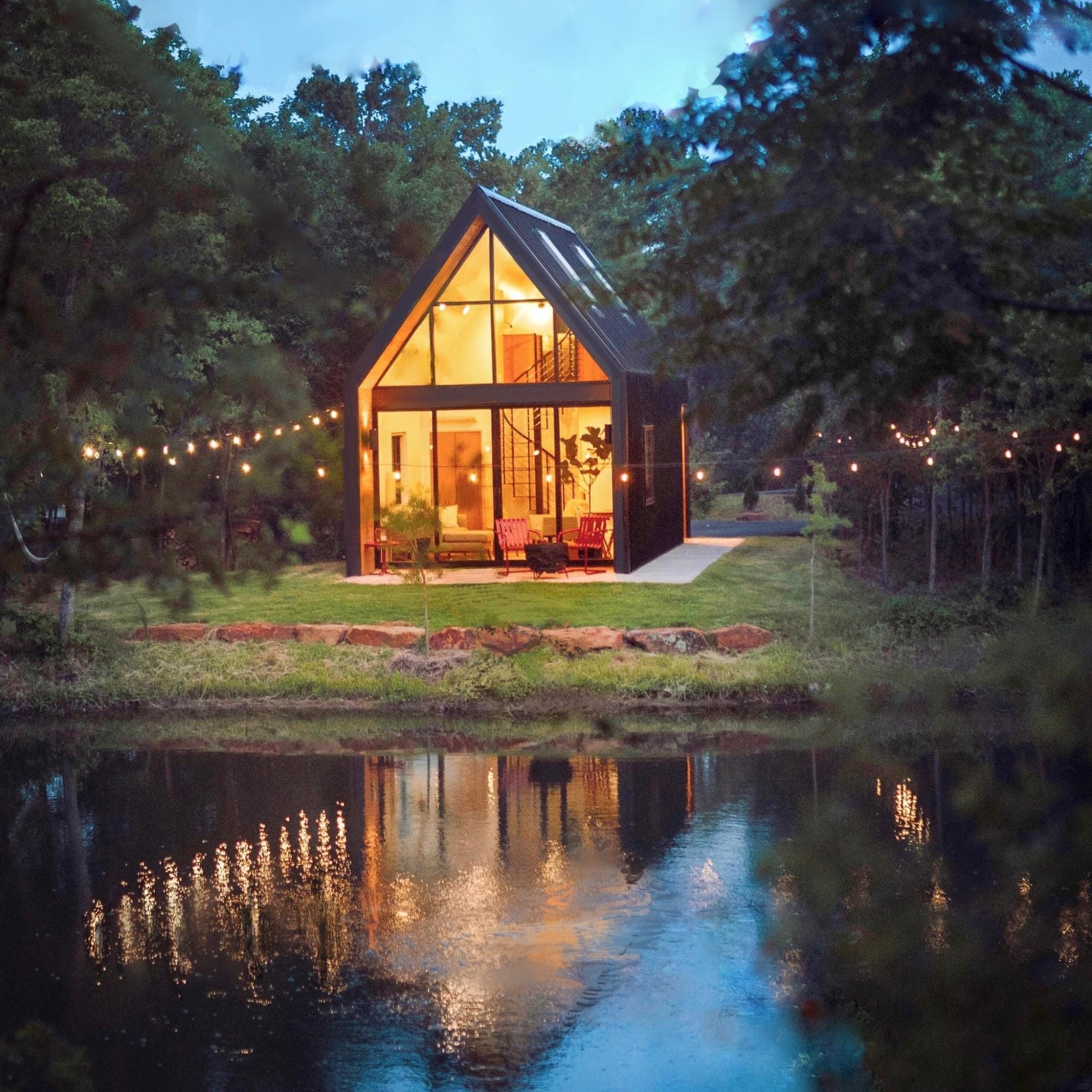
The economics follow from all this. A 12-key property at 85 percent occupancy and $350 per night ADR generates roughly $1.3 million in annual revenue. At that scale, the operator knows the guest, maintenance is manageable, and the brand stays tight without the overhead of a front desk or a RevPAR consultant eating margin. Scale to 50 keys and the revenue math still works, but the intimacy disappears and the founder becomes an absentee owner with a hospitality problem. Small key counts are a structural advantage in this sector.
For investors evaluating which operators and properties are worth backing, these characteristics function as a due diligence framework. Is the founder legible in the place, the brand, and the storytelling? Does the concept have a visual identity strong enough to spread without a marketing budget? Is there a genuine reason to exist beyond a luxury experience in nature, a landscape, a design concept, a point of view that makes the property irreplaceable? In a category where the brand is the asset, these questions are the underwriting.
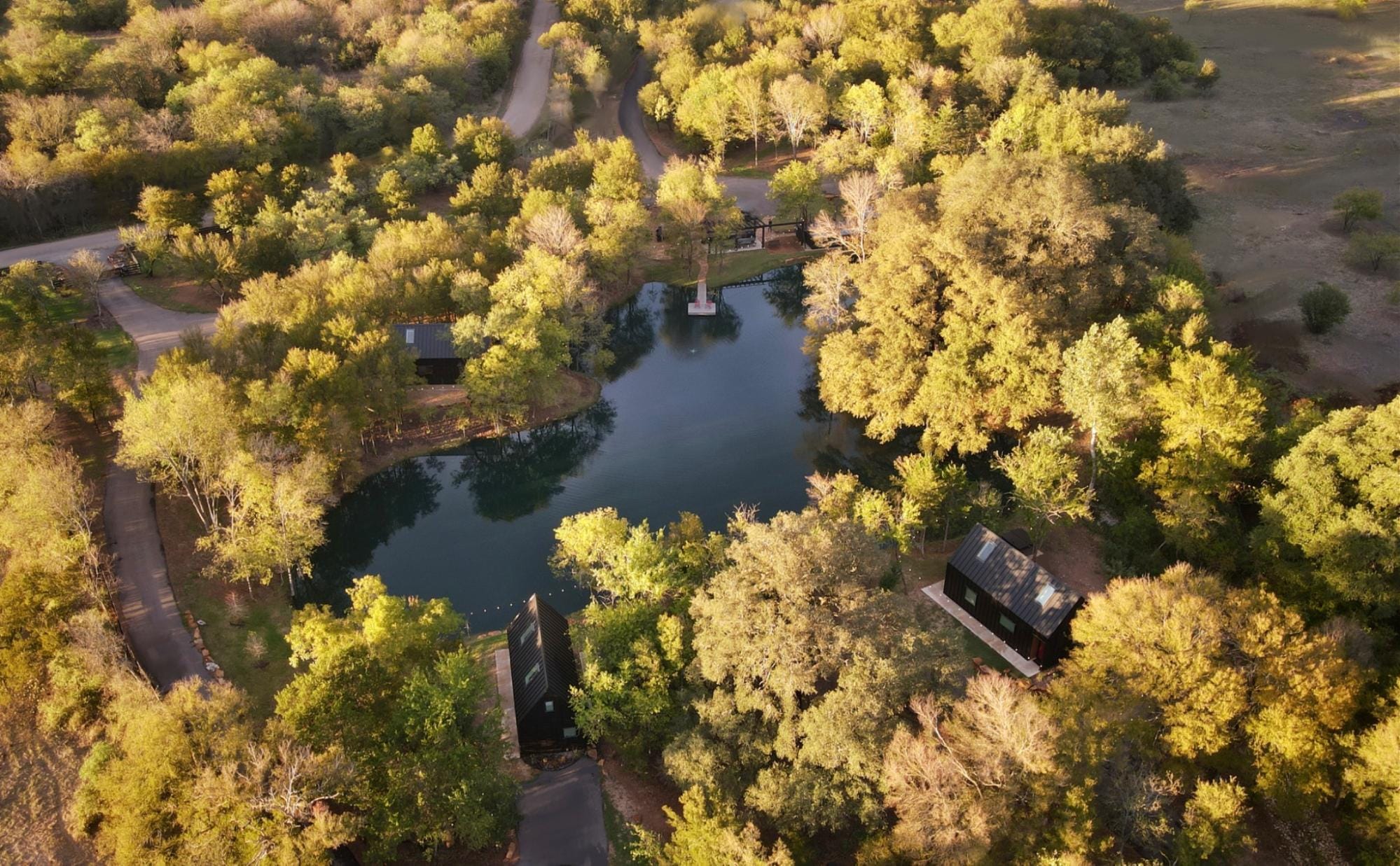
This is not passive income. Hospitality is already one of the most operationally demanding businesses in real estate, and micro-resorts add a layer: raw land acquisition, rural permitting, bespoke construction where nothing is off the shelf, brand-building from zero, and guest operations that are highly personal by design.
The founder-led model is a genuine competitive advantage that carries real operational risk. The brand is often inseparable from the individual who built it, which creates genuine succession and scalability problems that most underwriting ignores. Burnout is common and underreported. Several of the most celebrated properties in the country are quietly wrestling with founder transition right now. For investors, the asset they are buying is partly a person, and that has direct implications for how these properties should be valued and capitalized.
Founder dependency means something specific across the entire lifecycle of the investment. At the performance level, the founder's presence drives occupancy, ADR, and guest loyalty in ways that are real but hard to transfer. When that presence is strong, the metrics follow. When it wanes, performance tends to suffer. Unlike a stabilized hotel where management can be replaced without touching the asset's identity, a micro-resort whose founder checks out is a fundamentally different product than the one that was underwritten.
At the valuation and exit level, this can compress the buyer pool. The properties commanding premium multiples are those where the brand has achieved some independence from the founder, building a recognizable visual identity, loyal repeat guests, and direct booking rates that prove demand is not platform-dependent. Assets trading at a discount are those where the founder is the product in a way that does not survive transfer. A founder who burns out before the brand has achieved independence creates a misalignment between personal timeline and asset readiness that is one of the more predictable failure modes in this still-young category.
The goal is a brand strong enough to outlast the founder's most intense season of involvement, while remaining distinctive enough that guests still feel their presence.
The capital markets haven't caught up to this category. Most micro-resorts are self-funded or stitched together with SBA loans, business lines of credit, and personal savings. The category is generally too small and too operationally complex for private equity or most family offices, and no obvious institutional home has emerged.
Two financing structures are beginning to close that gap, with SBA programs serving as the bridge between them.
Rewards-based crowdfunding has emerged as a genuine financing tool for the category. Over the past few years, more than 20 operators have raised between $400,000 and $1 million on Indiegogo or their own sites in a matter of months, pre-selling stays in exchange for discounts and perks without giving up equity.
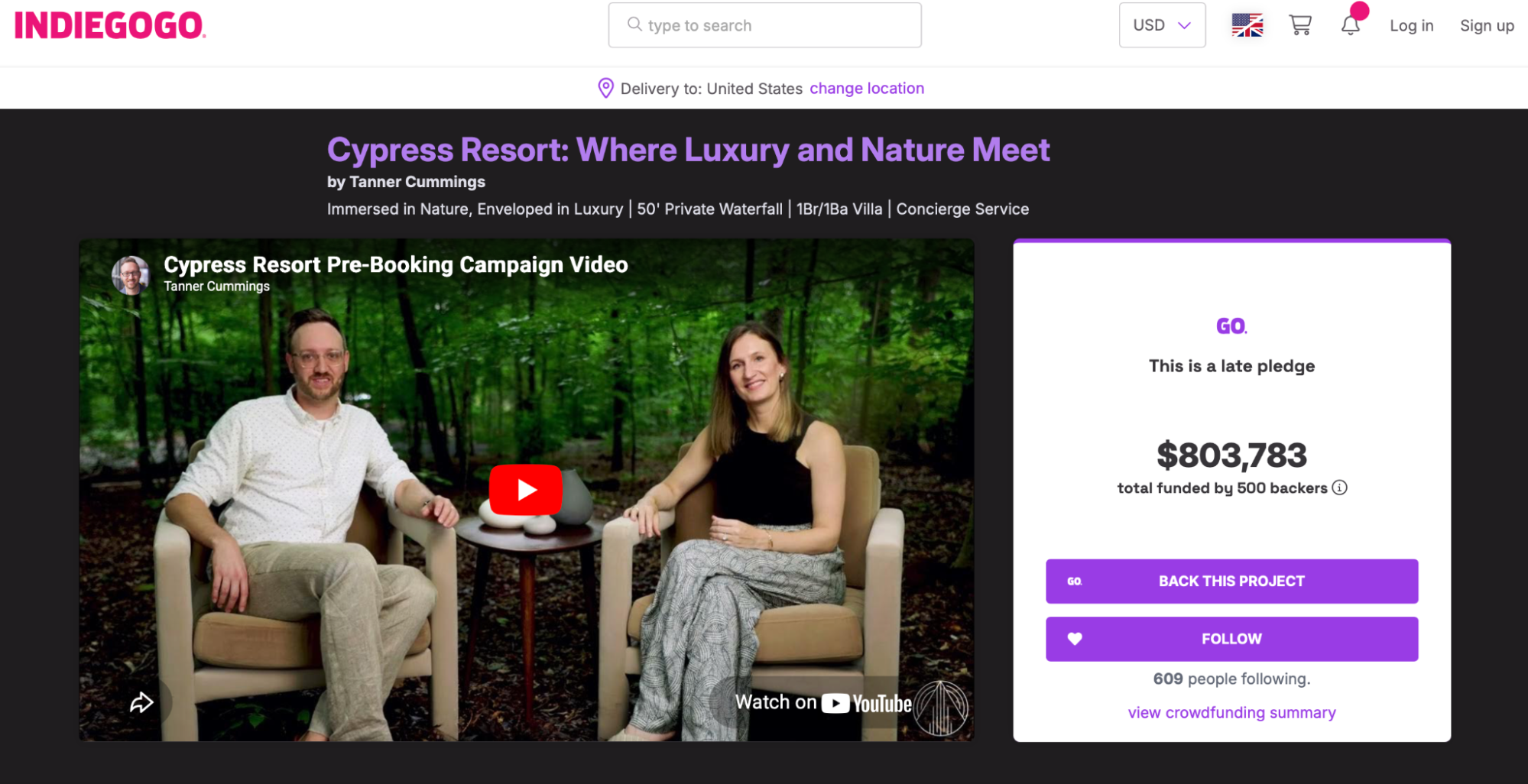
The mechanism works because the audience that wants to stay at a micro-resort is often the same audience that dreams of building one. Backers are frequently future guests, and the founder's public story, the same narrative driving occupancy, is also the pitch.
A well-run campaign also validates demand before construction begins and can be the difference between securing a construction loan and not. Lenders who would not otherwise consider a 10-key cabin project in a rural county take notice when a founder has already pre-sold $600,000 in future stays to 2,000 backers. The execution requirements are real, but for a founder with a compelling concept and the ability to communicate it, crowdfunding is one of the most accessible capital tools available at the earliest stage.
For operators who have proven the concept and are ready to build, the SBA 7(a) and 504 loan programs are the most practical financing tools available. The operators who know how to navigate them have a meaningful financing advantage.
The GP fund structure is the more institutional answer. The model aggregates eight to 15 micro-resort projects under a single vehicle anchored by an experienced developer-operator, with each project retaining its individual identity and operator. The fund provides shared back-office infrastructure, a pooled capital raise, and a pathway to permanent financing or exit.
The LP base for a micro-resort fund is a structural challenge in its own right. Traditional real estate allocators are accustomed to stabilized cash flows, clear exit timelines, and assets they can benchmark against comparables. Micro-resorts offer none of those things cleanly. The pitch is built on cash flow, brand equity, and real estate appreciation, supported by growing evidence that institutional buyers are willing to pay premiums for what only founder-led operators can produce.
The central challenge for any GP fund in this category is that the value is often inseparable from the founder who created it. A fund that installs professional management to optimize RevPAR is buying a small hotel and destroying what made the asset worth acquiring. The structures that will work are those that keep founders economically invested and creatively autonomous.
The capital stack, properly sequenced, looks like this: rewards crowdfunding to prove the concept, SBA or construction lending to build, and GP fund aggregation for scale or liquidity. Each stage enables the next.
The risks at each stage are real. Crowdfunding fails without disciplined execution of both the campaign and the build. SBA programs move slowly and require operators who know how to package a rural hospitality deal for a conventional lender. GP funds in this category remain largely theoretical: the model exists in adjacent spaces like boutique hotel funds and vineyard aggregators, but no one has yet built the definitive micro-resort vehicle.
Live Oak Lake sold to a group of high-net-worth investors at $1 million per key, an 8% cap rate. The institutional acquisitions that followed in its wake involved sophisticated buyers with real underwriting standards paying genuine multiples for founder-built hospitality assets. Until recently, a GP pitching a micro-resort fund could not point to any of this.
The demand data supports the trajectory. By March 2023, global spending on experiences was reportedly up 65 percent compared to 2019, while spending on goods was up just 12 percent, a gap that has only widened since. Drive-to leisure in particular has proven remarkably resilient despite inflation and higher interest rates.
One counterintuitive tailwind: AI. As generated content proliferates and algorithmic experiences flatten the digital landscape, the appetite for places made by real people with taste and intention will grow. Founder-led hospitality is a direct beneficiary of that shift.
Exits are arriving, demand is proving durable, and the operator base is quickly maturing. But the category is still missing the capital infrastructure to match, and the gap is closing more slowly than the opportunity warrants.

The micro-resort category is past the point of novelty and not yet at the point where institutional capital knows how to engage with it.
The fundamentals are strong. Small key counts protect the intimacy that drives premium ADR. Guest loyalty is built on experience rather than points programs. Brand equity compounds because the founder is present, engaged, and making the place worth returning to.
The capital markets were built for a different kind of hospitality asset: larger, more standardized, easier to benchmark. Micro-resorts don't fit those templates, and the fund structures, lending products, and investment vehicles that match the actual shape of this category are still being invented.
What makes this category so unusual is that the assets are built by people who genuinely love what they're doing, and that love is load-bearing. It shows up in the occupancy numbers, the reviews, and the repeat bookings. Guests feel it.
I remember guests who came back three times in our first year, each time bringing someone new. That is what happens when a place is genuinely cared for, and it is very difficult to manufacture or replace.
The capital structures that figure out how to support that without optimizing it away will have found something worth building.

Office demand is recovering, but speculative development in most markets remains stubbornly out of reach


We've been building AI acquisitions agents with real estate GPs. On August 13, we're opening the hood in a live 2-hour workshop
Covering the future of real estate and the people creating it