
Los Angeles, 2036
A city built around cars and entertainment could be remade over the next decade by forces now transforming both
A city built around cars and entertainment could be remade over the next decade by forces now transforming both

In struggling urban markets, the path to preserving affordable apartments may begin with creating more expensive ones
Office demand is recovering, but speculative development in most markets remains stubbornly out of reach

A city built around cars and entertainment could be remade over the next decade by forces now transforming both

Los Angeles is a city that people love to hate. For real estate professionals especially, working here can feel like playing on hard mode: anti-owner politics, unpredictable regulations, and high construction costs make one wonder whether it might be time to pack up your bags and head elsewhere.
The critics have a point. Over the last few years, Los Angeles has passed a raft of pro-tenant, anti-landlord policies, including rent-increase caps, eviction restrictions, and emergency price controls that have long outlived the crises that justified them. While each of these policies is individually defensible as a response to real renter hardship, taken together they amount to a systematic transfer of value from owners to renters. The result is a flight of capital, an inability to build, and a steady increase in the cost of living as more people fight for what little housing there is.
Things might finally be changing. Los Angeles is on the brink of two profound technological shifts: the maturation and mass adoption of autonomous vehicles, and the decentralization of media production. While these changes bring some cause for alarm, they also bring cause for optimism. Self-driving cars will decrease the demand for parking, removing one of the region's most pernicious obstacles to density. And as AI and powerful digital tools drive down the cost of production, a new kind of small, nimble entertainment company becomes possible, one that doesn't need a studio system behind it. Together, these forces could remake the city's culture as more people flock here, thrive here, and create the conditions for a new wave of housing development. The Los Angeles of 2036 might be a very different place, and a better one.
I care a lot about the city: it’s where I was born. My parents came out west in the 1980s to make movies; my sisters and I graduated from Santa Monica High School. Whatever mixed feelings I might have about Los Angeles today, I have a stake in the city’s future.
There is a common saying: “As California goes, so goes the nation.” By exploring the ways that technology trends might reshape the political economy of Los Angeles, we can gain insight into the coming transformation of urban America as a whole.
Los Angeles’ malaise has deep historical roots. Unlike San Francisco, settled by cosmopolitans arriving by sea, Los Angeles grew on Midwesterners coming overland by train, coaxed to the coast by the dream of owning a small piece of the West.
As historian Mike Davis recounts in his 1990 City of Quartz, Los Angeles’ characteristic non-culture emerged out of the constant, low-grade conflict between its constituent populations: the pre-existing Hispanics, incoming Anglos, and Hollywood’s international creative class. These groups never forged a shared civic identity. Instead, they settled into decades of détente, reinforced by the City’s “strong council, weak mayor” political system. Lavish mansions went up mere miles from neglected ethnic neighborhoods as everybody fought to hold on to their small scrap of paradise.
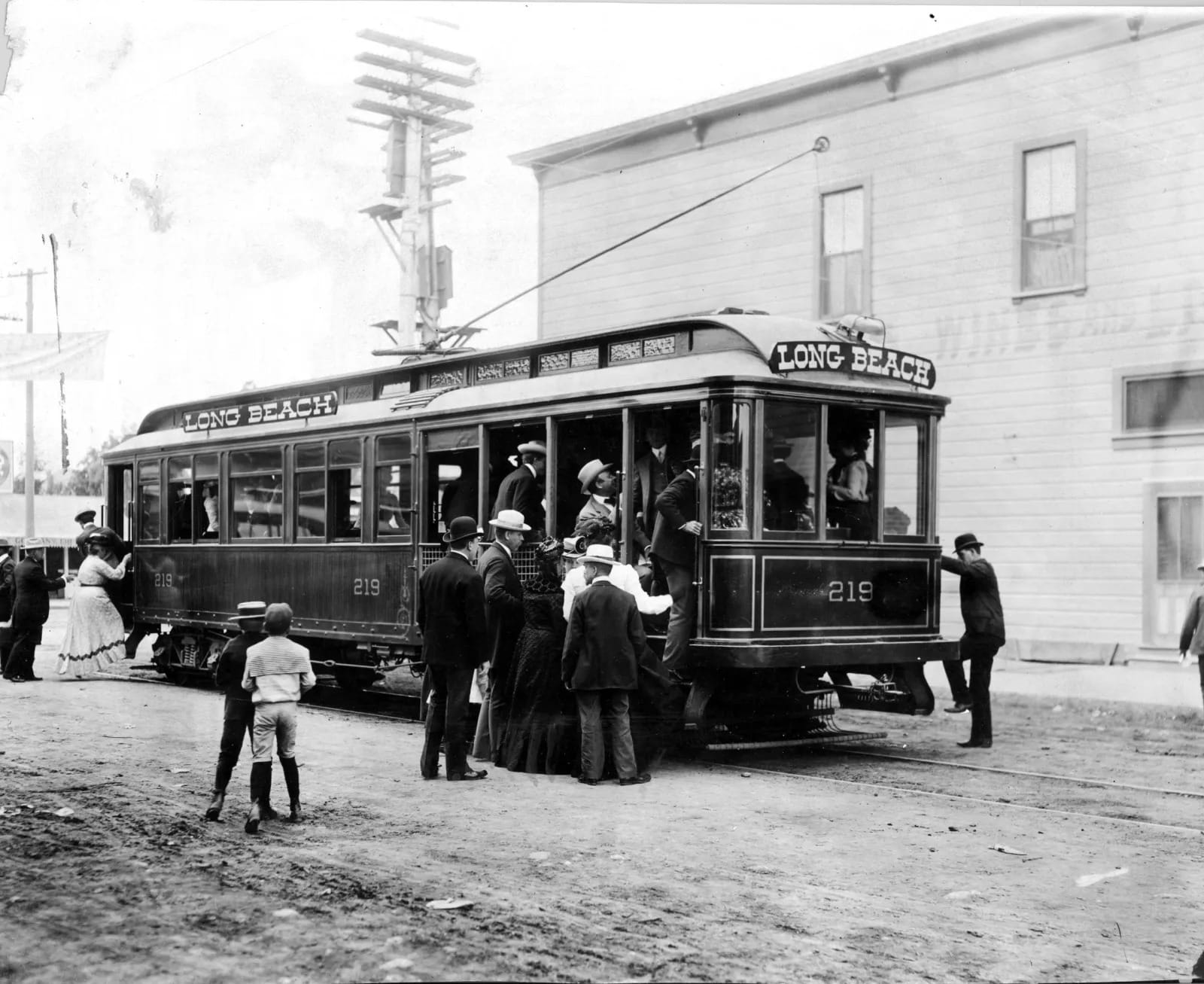
The car is the best symbol of LA's slide into dysfunction and low-density sprawl, and it arrived later than most people think. Los Angeles may be the US city most commonly associated with the automobile, but the metro of the 1920s was a city of transit, with hundreds of miles of electrified railways. Only in the post-war boom did the city tear out its tracks and lay down its freeways. And while cities across the country embraced the car, Los Angeles was uniquely transformed: cities built just a few decades earlier were already committed to their dense urban forms, while cities built just a few decades later could design themselves around the car completely. Los Angeles, with one foot in the old world and one foot in the new, changed most profoundly.
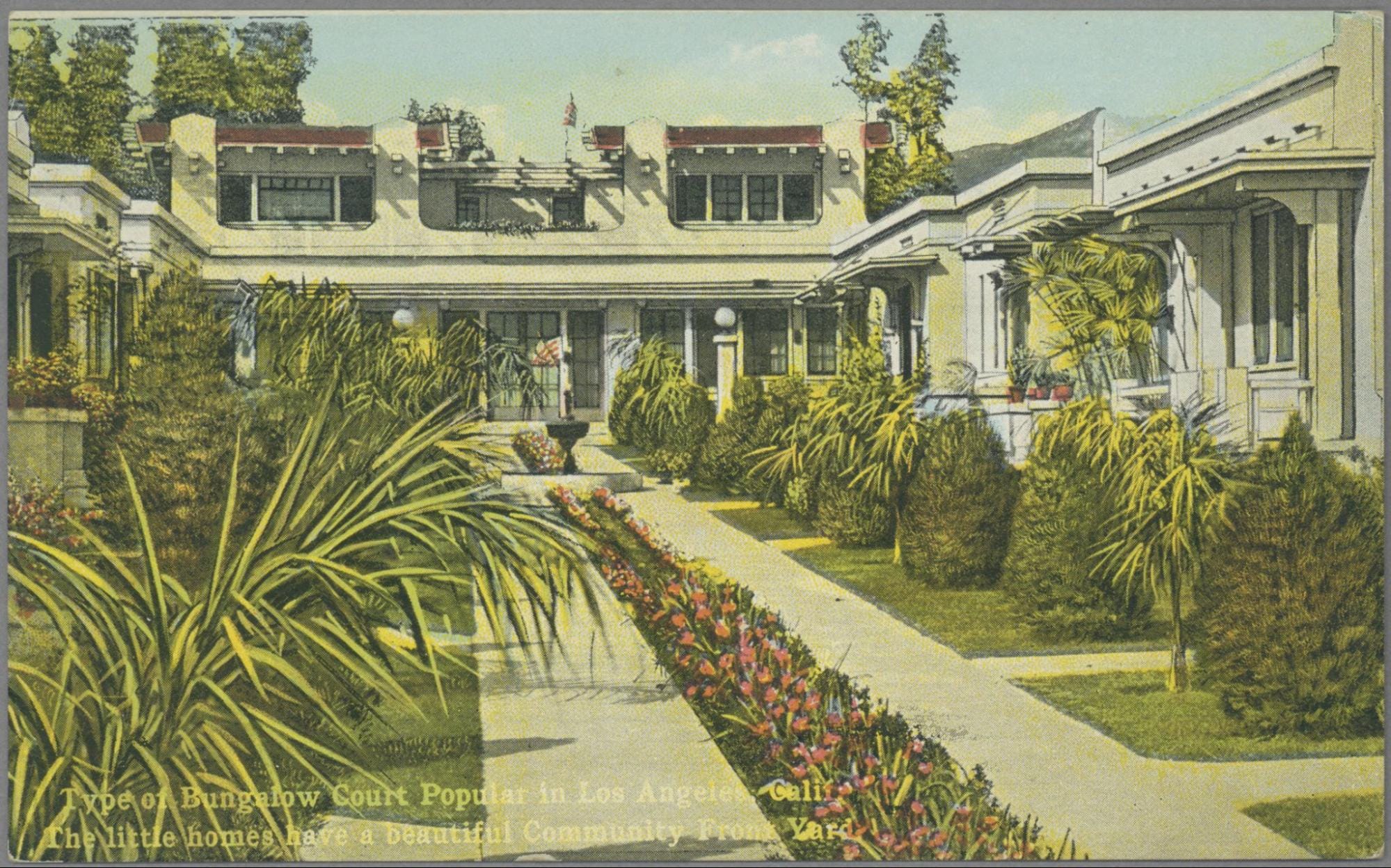
In the decades before the war, Los Angeles’ predominant multifamily housing typology was the "bungalow court," a cluster of small cottages ringing shared gardens. American cohousing decades before its time, bungalow courts were built in an open, low-slung style suited to the temperate local climate, their relative affordability making them accessible to the region’s middle class. The rise of the car, however, eventually marked the end of the court. By mid-century, rising land values and increasing parking requirements made bungalow courts economically obsolete, and development shifted to the "Los Angeles dingbat." Valued by builders as a cost-effective way to put a housing unit on top of a parking space, the dingbat would — for better or for worse — come to define the city’s post-war aesthetic.
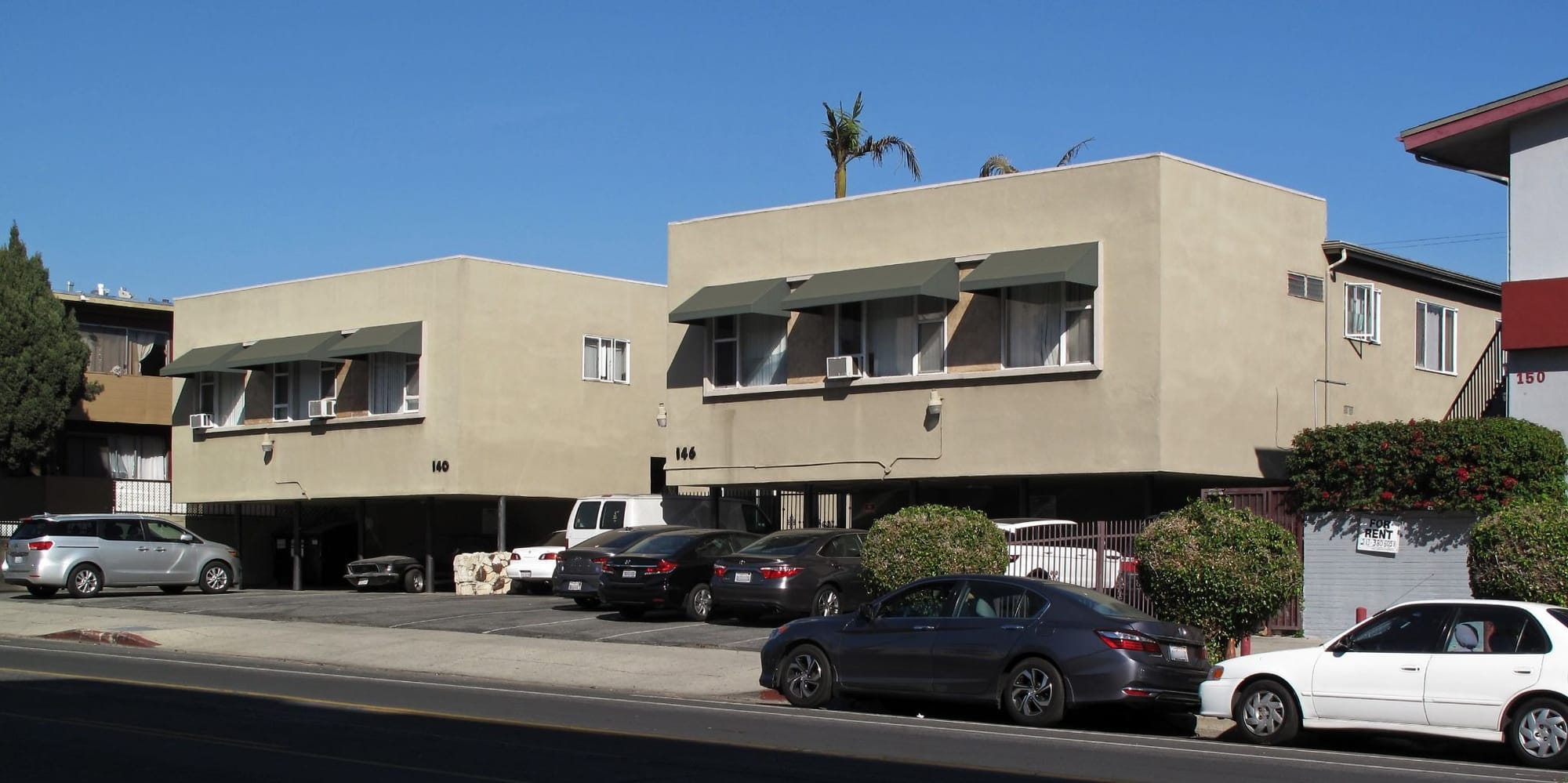
Eventually even the dingbat became obsolete, and Angelenos increasingly refused to build at all: over 70% of today’s Los Angeles County was built before 1960. Once the cheap land ran out, these now car-dependent communities realized that further density would create congestion by bringing in more car owners, at the same time that existing homeowners realized that their own assets would appreciate the more they restricted new supply. The result was decades of "slow growth" politics: the owner-friendly Prop 13, and a downzoning initiative that cut the city's buildable capacity from a 1960s peak of roughly ten million people to just four million by the end of the 1980s.
For decades, parking was the city's biggest obstacle to fixing itself. Donald Shoup, the UCLA urban planning professor who wrote The High Cost of Free Parking, argued that parking functions as a tax, transferring value from the general population to car owners specifically. People demand it out of fear of congestion, but that demand is exactly what throttles development and drives up the price of the housing that does get built.
Autonomous vehicles, after a decade of false starts, might finally break that cycle. Angelenos can now take a Waymo from the Venice boardwalk all the way to Downtown Los Angeles, and many are choosing to do so. Eventually, this could enable people to meet more of their transit needs without personally owning a car, substantially reducing the need for parking — and putting density back on the table.
Self-driving isn’t all upside, though: lower transit costs induce new demand, and doomers warn of an endless gridlock. One solution would be a deeper integration with Bus Rapid Transit, reusing existing road infrastructure to move people an order of magnitude more effectively than cars, and at a fraction of the cost of trains. Los Angeles is criss-crossed with roadways: dedicating even a small percentage of them to BRT would transform mobility in the city.
More than most other cities, Los Angeles’ car culture and its development malaise are deeply linked. The rise of autonomous vehicles promises to cut the city’s Gordian knot and remove one of its most fundamental blockers to density.
Who would want to live here, though?
Hollywood is in crisis.
Entertainment, Los Angeles’ most iconic industry and a significant source of its employment, is in a decades-long decline. The rise of social media and cheap user-generated content has cut what audiences will pay, squeezing margins. The industry got a reprieve during the pandemic, when hundreds of millions were stuck at home, but has since regressed, with the 2023 writer’s strike serving as both the symbol of the decline and a warning of more to come.
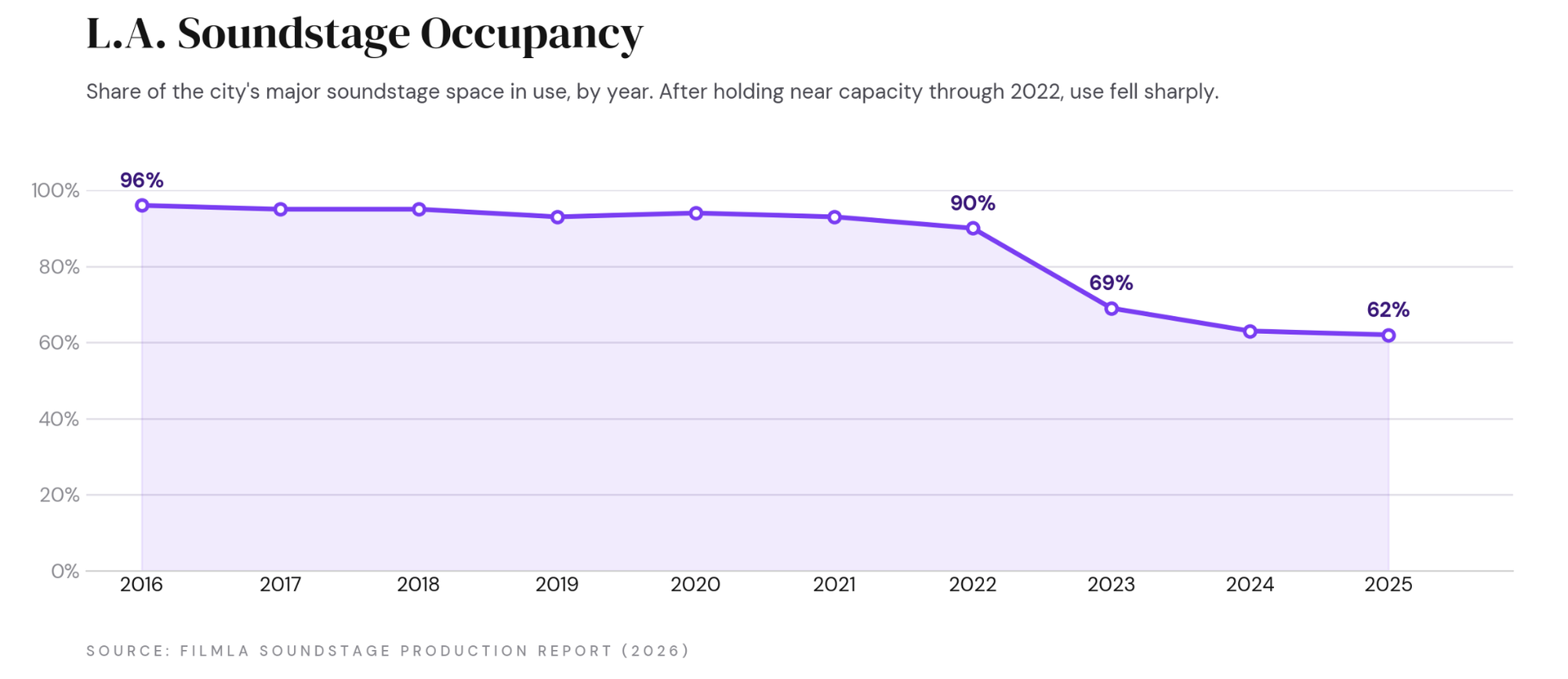
Artificial intelligence is accelerating these trends. Studios, pressed for cash, are laying off workers and using AI for everything from storyboarding to generating final production content. At the low end of the market — marketing media and short-form “microdramas” — actors are being displaced en masse. Debates about the ethics of model training and the nature of authorship are combining with economic displacement to create a real and growing movement to restrict the use of generative models in the arts.
AI will certainly change the economics of media production. The real question is what the new economic equilibrium looks like. As with autonomous vehicles, there is some cause for optimism. The video game industry, Hollywood’s cousin, has shown little willingness to pay for assets generated by AI, suggesting that intention still matters to how people perceive value. AI may prove useful as a production tool and as a source of commodity content, but people will likely continue to value stories told by people.
After all, chess computers became completely unbeatable decades ago, but people still like watching humans play each other.
Rather than replacing artists, AI might help push Los Angeles’ entertainment industry to consolidate around a new economic unit: the creator collective. These are groups of friends making art together: a dozen or so creatives supported by a production team of half that size, navigating algorithmic distribution while spreading resources across several creative bets at once. New corporate models, like Colorado’s “Artist Corporation”, will make it easier for these groups to form and run.
These creator collectives sit between two extremes: legacy studios, whose rigid cost structures leave them capable of little beyond sequels and VFX-heavy blockbusters, and the AI slop that will likely dominate the bottom of the market. Such collectives could become an increasingly important source of artistic output. Mixing technical savvy, lean operations, and rich social bonds, these groups could take creative risks that other groups can’t.
Recent history backs this up. The 2026 sleeper theatrical hits Obsession and Backrooms were made by young directors on shoestring budgets who spent years honing their craft on YouTube, generating returns on investment 20x - 200x greater than most Hollywood blockbusters.
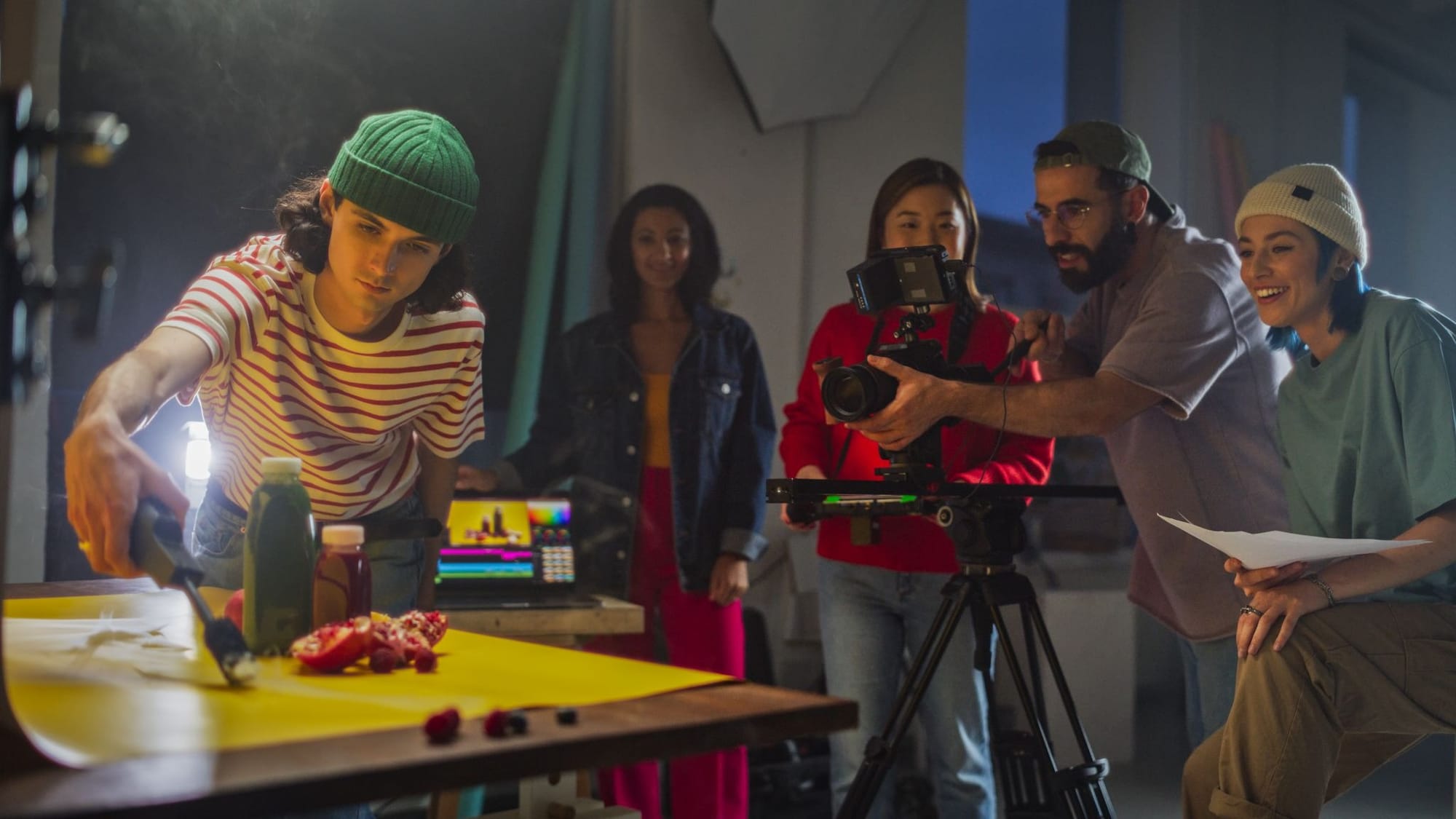
So if small and nimble production teams become the new norm, a question remains: why Los Angeles specifically, and not New York, New Jersey, or someplace abroad? The answer is networks — and not the TV kind. While major media production can be lured away by tax incentives, creatives mostly want to be around other creatives. The musician Brian Eno coined the term “scenius” to describe a “scene’s genius,” the artistic alchemy that emerges from people working and living in close proximity to one another.
This influx of new, early-career creatives will drive demand for a new kind of housing: flexible, social, affordable. Paired with a declining need for parking, the city has a real chance to revisit its earliest aspirations and rebuild itself as a city of broad-based housing ownership.
Los Angeles’ housing dysfunction is a product of its scarcity: “slow growth” did not stop real growth. As people continued to come to the city in search of opportunity, competition increased for what housing there was. In 2024, the city documented significant overcrowding in some neighborhoods, a problem price controls alone can’t solve.
The root of the problem, as Conor Dougherty argues in his 2020 book Golden Gates, is that the people who would benefit most from new development, new residents, don't yet exist to advocate for it. The result: a lack of development alongside a deep hostility toward the people who might provide it. In popular discourse, "landlords" and "developers" are portrayed less like economic actors and more like mythological adversaries, ruining the city's character while extracting obscene wealth from local communities.
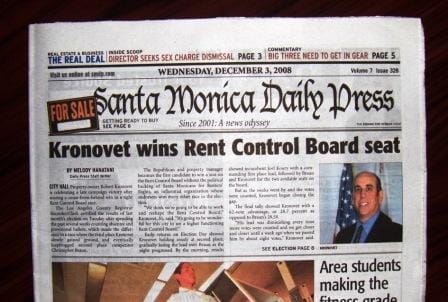
I have seen these politics up close. When I was in high school, my father wound down his production company and went into property management. Energetic and charismatic by nature, he became a local celebrity in 2008 when, running as a pro-ownership candidate in opposition to Santa Monica’s entrenched SMRR (Santa Monicans for Renter’s Rights), he won a seat on the city’s rent control board in an electoral upset. I would watch him spend the entirety of his term advocating for increased home ownership, only to be voted down and ridiculed time and time again.
He tried to make change through politics; the problem was economics. In the early 20th century, the city’s boosters sold an ideal of private home ownership for all (as long as you were white). They saw density as a threat to that ideal, wary of large apartment buildings, and the rentier relationships (and ethnic diversity) they implied.
For Los Angeles to escape its quagmire, it will need to rethink ownership itself.
Most of the city’s residents cannot afford a $1mm “starter” home, but many could afford a smaller piece of shared housing: shares in a co-owned house, or a unit in a bungalow court. Once densification stops looking like a giveaway to the few and starts looking like a way to distribute wealth more broadly, new political alignments can emerge, like our aforementioned creator collectives joining multigenerational families to demand housing they can actually own.
Much of this "missing middle" doesn't need costly ground-up development or years of permitting. Los Angeles has an abundance of large, historic homes built for households that no longer exist, many already split, often awkwardly, into duplexes or triplexes. A coliving strategy that adds rooms to existing spaces would create naturally affordable density, without the long entitlement fight new construction requires. Recent state laws like SB 9 and SB 684, which legalized lot-splitting and infill development, have made it easier than ever to turn single-family parcels into functional bungalow courts. By-right infill densification may well become the city's dominant strategy within a decade.
The goal is to create a ladder of ownership. A new transplant might rent a room from a coliving operator, who offers easy discovery and predictable operations. As they establish themselves, they might buy into a resident-owned house, taking on greater commitment in exchange for an ownership stake and an opportunity to build wealth. As they begin making longer-term relational commitments, they might trade into a bungalow court, living for years alongside their chosen family.
Upstart operators are already moving on this thesis. Phil Levin at Live Near Friends has spent the last few years establishing a “Custom Compounds” practice, converting single-family parcels into co-owned bungalow courts. My own Zaratan Coliving has been refining a low-overhead, resident-driven operating model to unlock value-add coliving as a viable niche development strategy.
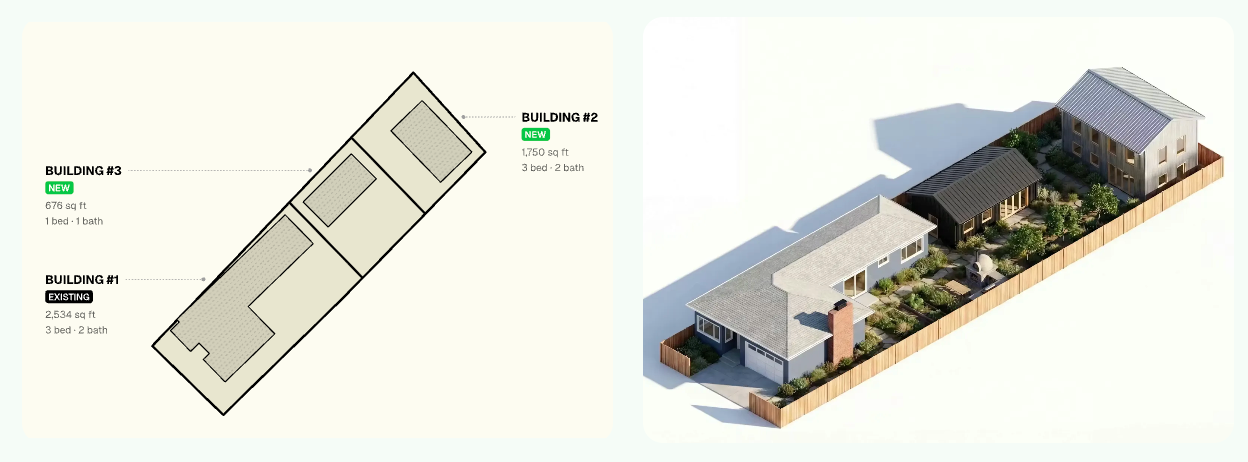
These models and others like them could revitalize the city’s development ecosystem. Entrepreneurial sponsors would find myriad entry points, from small-scale value-add funded by friends and family all the way to institutionally-backed ground-up development. This activity would support its own cottage industry of service providers, helping groups share ownership, handle governance, and access capital.
The result: more density, more broadly distributed ownership and wealth, and a long-overdue fulfillment of the city's original promise.
In 1971, English architectural critic Reyner Banham wrote Los Angeles: The Architecture of Four Ecologies, dividing the city into four zones: the coast, the hills, the plain, and the freeways. Each had its own character, architectural style, and internal logic.
For Los Angeles in 2036, imagine a fifth: the cross-city parkway. The elimination of street parking would free up hundreds of lanes citywide, enough to turn some of the city's boulevards into car-free parkways mixing BRT, bicycle lanes, and pedestrian thoroughfares. These new urban axes — Santa Monica, Olympic, Venice, Wilshire, and Pico Boulevards are all candidates — would unify the city, providing residents a place to meet, recreate, and move across fourteen-plus miles.
For those used to the interminable slog that is planning in Los Angeles, this might seem like a pipe dream. It might also be inevitable.
The original Los Angeles dream was private: a house, a yard, a car, a small piece of the West. The 2036 dream might be more collective: a smaller piece, more densely inhabited, more deeply connected, and finally available to everyone.

The carry trade is dead, and capital is moving to whoever can manufacture cash flow. Takeaways from a day with more than 250 investors and operators in emerging real estate.


Falling birth rates, shifting migration, and an aging population are already reshaping demand across real estate, faster than most of the market has priced in

How a generation of superstar chefs and obsessed diners remade urban neighborhoods, inflated rents, and priced themselves out of the streets they made desirable.

How autonomous vehicles will break the economics of convenience retail

Covering the future of real estate and the people creating it